

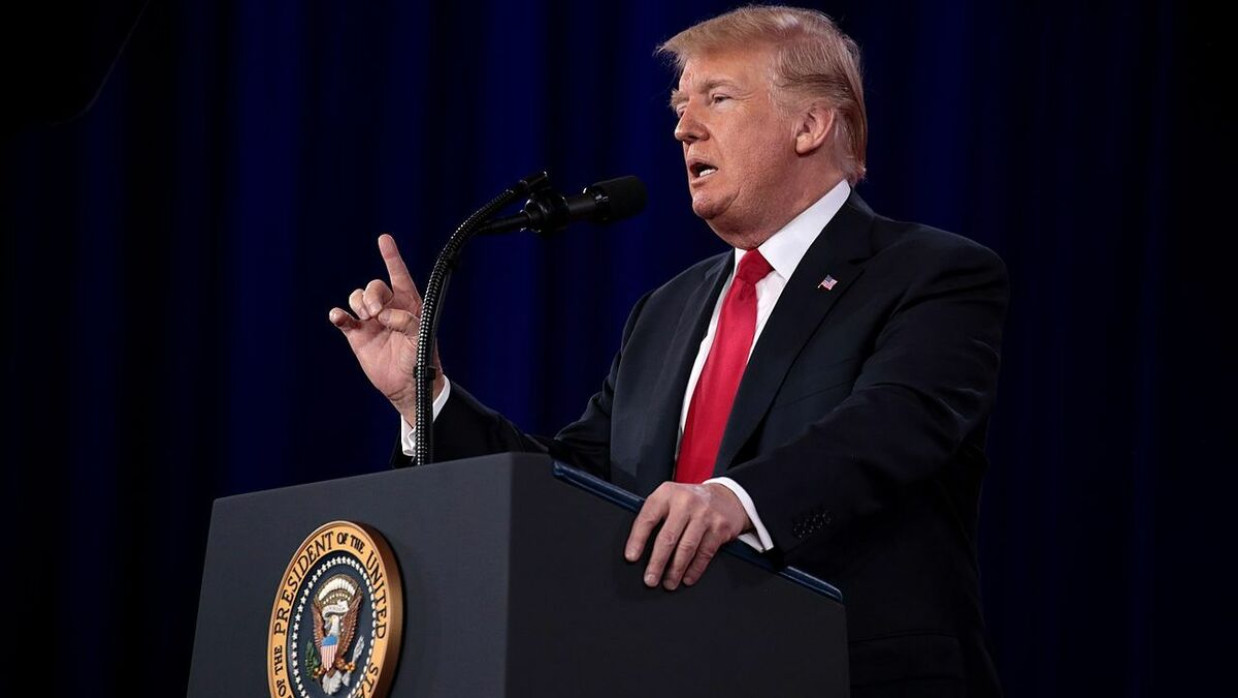
In a time when America faces increasing tension from both the international community and internal concerns, the administration of Donald Trump appears to be entering an era of difficulty. A drop in favorable public opinions, a highly unpopular war with Iran, and an increasing perception that America's true interests are not being protected have created a political reality in flux. With increased pressure and changing attitudes, particularly among independents, the midterms of 2026 seem like an important watershed moment. The emerging era is one where Democrats have increased power in their struggle for dominance in the House.
Politics in the Era of Crisis and Conflict
With just two years left before the next midterm elections in the US, this election year will be very different from all previous ones, owing to several factors specific to President Donald Trump's tenure. Whereas, at first glance, Trump's presidency appeared to be characterized by ever-increasing presidential powers and influence, recent developments suggest it is approaching an inflection point at which these powers can either be further strengthened or begin to wane. Deteriorating popularity, the controversy of the ongoing Iran war, and a growing discontent with domestic policies have made the 2026 midterms increasingly likely to result in Democrats regaining control of the House of Representatives.
Declining Popularity: From a Political Asset to a Burden for the Administration
Trump’s dwindling popularity is clear from the latest surveys conducted across the country that have shown the president's support levels declining to about 30%, with more than 50% disapproval and even 55-60% disapproval. What is significant about this trend is its uniform geographic and political distribution, indicating something larger than an emotional shift in opinion.
One major factor behind the administration's declining popularity is economic insecurity. Where previously the U.S. economy's prosperity and strength were the cornerstones of Trump's political appeal, recent public opinion polls show that voters are dissatisfied with inflation, rising fuel costs, and the resulting decline in purchasing power. In particular, the ongoing war with Iran is blamed for causing international turmoil and disrupting the world's oil markets, thus exacerbating economic hardships faced by ordinary Americans.
An equally important trend is the evolving position of independent voters and young Americans belonging to the Generation Z cohort. Given that members of this generation are beginning to reach voting age, how they relate to Trump's political style and actions is an important issue. Many younger voters consider Trump's unpredictability and divisiveness to be negative qualities, thereby rejecting the president's message.
Finally, there is evidence of discontent among some Republican voters as well. In particular, public concern centers on the administration's commitment to fighting terrorism and its strategic vision for the future.
The Iran War: An Irresponsible Political Move that Backfires
The ongoing war with Iran, which has been ongoing since late 2021, is perhaps the most defining feature of Trump's presidency. Initially, it appeared to be an example of the president’s power and determination. In reality, it may become a source of problems for the government. Surveys show that most Americans have negative attitudes toward this dispute.
One reason why the public opinion about the Iran war is negative is the actual impact that the conflict is having on American society. Specifically, due to disruptions in oil supply routes through critical straits, including the Strait of Hormuz, the price of fuel has risen in the U.S. Thus, whereas previous wars resulted in increased national solidarity, the Iran conflict has divided people and eroded presidential popularity.
Moreover, the ongoing Iran war has had a disruptive effect on the political discourse of the GOP. Some members of Congress have criticized the administration for failing to obtain approval for military operations in Iran, as well as for pursuing the war without clearly defined goals or a strategy. Therefore, it seems safe to say that the Iran war is likely to become an additional factor of political vulnerability for Trump.
Public Perception of the Iran War: A Conflict Seen as Serving Israel, Not America
Another growing factor that is shaping the political opposition to President Trump's policy toward Iran is the perception by the American population of the nature of the war itself. This is not limited to issues of expense, strategy, or implementation, but is becoming a major point of view that the war itself is not benefiting America.
Poll data show that 56% of the respondents are convinced that the conflict in question benefits Israel more than America, whereas 29% think that this is wrong. This view has great political significance because it changes how Americans see the war in general. Instead of viewing this confrontation as a matter of national security, people are now beginning to see it as a war waged to advance allies' interests and geopolitical commitments.
This attitude is confirmed by the widespread opposition to the military campaign. Polls show that a considerable majority of the respondents is against this war, including 53% who do not approve of the strikes on Iranian targets. Moreover, when asked about the prospects for further escalation of this conflict, 80% oppose the use of ground troops in this theater of operations. Indeed, almost all Americans are strongly opposed to sending military forces to Iran.
At the same time, a considerable part of the population is increasingly keen to put an end to this war as soon as possible, despite failing to achieve all set objectives. Indeed, almost two-thirds of the respondents support a rapid termination of hostilities in Iran regardless of the consequences. One should note that this desire can be explained by the fact that today's Americans are increasingly worried about the situation both domestically and abroad.
In addition, the belief that the United States is waging a war that will bring benefits to Israel alone makes many Americans doubt the soundness of the country's foreign policy priorities and military commitments. Indeed, rising prices for fuel, risks of losing the lives of American servicemen, and the threat of a much wider regional confrontation make the situation even worse.
Even more worrying is that even those groups of voters who once supported this kind of policy are becoming increasingly doubtful. According to some polls, 71% of Americans prefer peaceful solutions over military escalation. As one can see, the situation regarding the Iran war is changing rapidly in recent months, and it may significantly affect American foreign policy.
As a result, such perceptions play a significant role in shaping people's attitudes towards Trump's foreign policy. Indeed, it is clear that such views will have a powerful effect on voting in the 2026 midterm elections.
Backlash on the Domestic Policies: Immigration and the Question of Leadership
While the aforementioned issues constitute foreign policy problems, the Trump administration also faces domestic policy-related criticism and challenges. For example, immigration policy has become less urgent than previously thought. Even though the policy had received approval before from Republicans, many polls indicate that there is less support now for Donald Trump’s strict immigration policy due to its humanitarian consequences, including separating families at the border.
Apart from this trend regarding the specific issue, the administration of President Trump is also under scrutiny for its leadership style. According to the surveys, the president is unpopular among voters as an individual due to poor diplomacy and conflicting policy pronouncements. In particular, the descriptors most often used in this context include "divisive," "unpredictable," and "confrontational." It seems evident that, to retain their influence, presidents should be seen as reliable political leaders.
Elections 2026: Why Democrats are Gaining Ground
Considering how unapproved the foreign and domestic policies pursued by the Trump administration have become, it is not surprising that the Democrats have recently seen a marked improvement in their fortunes in elections. The latest polling results show that Democrats maintain their lead over Republicans in all general election matchups by 1-5%. Despite being relatively modest, such leaders are significant in terms of congressional elections.
First of all, because the party out of power tends to gain additional seats in midterm elections, the Democratic Party stands a good chance of taking back the House of Representatives. This is further exacerbated by the extent of interest in the voting process among Democrats, as it is evident that interest plays a key role in determining turnout levels. Furthermore, due to redistricting, many swing districts will become Democratic.
Finally, the ongoing Iran conflict is likely to be a determining factor in shaping voters' preferences in the 2026 midterms. Given that many Republican politicians and presidential candidates openly advocate for a war with Iran, voters are likely to oppose their candidacy, thus further enhancing Democrats' odds of winning.
Changing Narrative: From Political Movement to Effective Governance
Thus far, the key distinguishing feature of the political environment during President Donald Trump's tenure has been the evolution of the story framework that underpins it. The initial burst of euphoria over his triumph stemmed from frustration with the status quo. In other words, the Trump political movement emerged from widespread populism that helped mobilize voters.
Nonetheless, maintaining such political momentum demands a shift to a more stable stage with effective leadership. Simply put, while initially, Trump's polarizing speeches helped him in his presidential campaign, they have since become irrelevant. In this regard, it seems reasonable to assume that Trump's political movement is transitioning into an institution.
Conclusion: Midterms as a Test of Strength for Both Sides
In conclusion, it is worth reiterating that the midterm elections in 2 to 3 years may prove decisive for the Trump presidency. Given the deterioration in approval ratings, unpopularity of the Iran war, and changing voter coalitions, Trump faces numerous obstacles in retaining his majority in the House of Representatives. However, as in previous midterm elections, this situation may still be improved by effective campaigning and competent representatives.


0 Comments
LEAVE A COMMENT
Your email address will not be published