

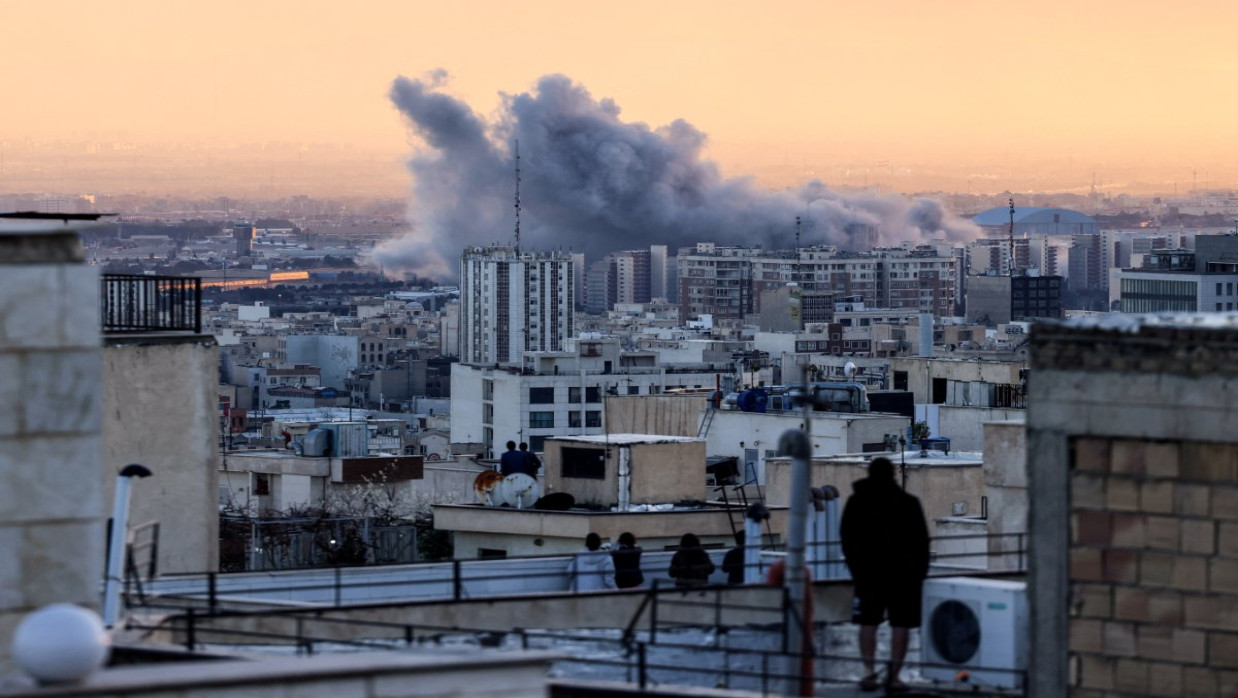
In the face of geopolitical crises, great powers tend to perceive intervention as neither an option nor a choice but a necessity. Emergencies call for action. Instability demands intervention. Moral imperatives blend with strategic calculations. However, the lessons of the past offer a pertinent warning: what may be perceived as an intervention of strategic genius today may be perceived as an enduring quagmire tomorrow.
The U.S., having spent nearly two decades bogged down in costly wars in Iraq and Afghanistan, has sought to reorient its priorities. Across the Obama, Trump, and Biden presidencies, a consensus has emerged: America must pivot away from the Middle East and toward the great challenges of the 21st century, namely China and the remaking of the global economy.
Yet once again, the U.S. finds itself inexorably drawn into the Middle East's gravitational orbit. However, the focal point of the Middle East's strategic maelstrom is now Iran. The question is no longer merely one of necessity for intervention. The question is now one of why great powers repeatedly walk into the same strategic trap.
The Illusion of Necessity
The rationale for intervention in the Middle East is often strong. Iran's ambitions, nuclear ambitions, and proxy wars across Lebanon, Syria, Iraq, and Yemen are all legitimate concerns. Policymakers perceive intervention as both strategically necessary and morally imperative.
However, the lessons of the past suggest that such calculations, although strong, may be an illusion. The illusion is that not all crises are strategic priorities. Grand strategy is not about intervening in every crisis. Grand strategy is about intervening only in the crises deemed of strategic priority.
The United States currently has pressing issues that will shape global power for generations: tech competition with China, economic restructuring, supply chain security, and protecting democratic systems from subversive attacks. However, every time America re-enters a conflict in the Middle East, it takes attention and energy away from these critical issues.
Britain’s Forgotten Lesson
To grasp America's present circumstances, it is necessary to consider Britain at the peak of its power and how it was not as powerful as it believed. In the late 19th and early 20th centuries, Britain was the undisputed leader of the world and the only true superpower. It controlled a quarter of global GDP and dominated vast territories on multiple continents.
However, Britain was also becoming increasingly mired in peripheral wars in Africa and the Middle East from the 1880s until the 1920s. The wars were initially considered necessary reactions to regional instability and threats to British interests.
One of the more interesting instances of British intervention occurred in Iraq during the 1920 revolt. Quelling the rebellion required more than 100,000 troops and a tremendous financial investment, equivalent to Britain's total education budget at the time. This was just one of several colonial wars Britain was fighting at the time.
At the same time, many more critical events were happening elsewhere in the world. In America, the United States was building an industrial economy unlike anything the world had ever seen before. In Europe, Germany was reindustrializing and modernizing its military despite having lost World War I.
Britain, too, was preoccupied with maintaining order in far-off lands and failed to invest enough in its economic and technological future. It was not defeated in a single fateful moment; it was gradually overtaken, and its position of global preeminence was undermined by distraction and overextension.
America’s Strategic Drift
The parallels to the United States’ position in the world today are striking. Like Britain before it, America is a global giant, unmatched in military power and economic influence. But power, history reminds us, is a dynamic concept. Power must be cultivated and sustained over time.
China is not bogged down in Middle Eastern wars. China is investing heavily in the technologies that will define the future. These technologies include artificial intelligence, quantum computing, renewable energy, advanced manufacturing, and robotics. These are not peripheral technologies. These are the foundational technologies for power in the 21st century. Russia continues to destabilize Western security through unconventional warfare. These destabilizing efforts include cyber warfare, information warfare, and strategic disruptions in Europe and beyond.
In this context, America’s military reengagement in the Middle East threatens to be a costly diversion. Every military deployment, every airstrike, every diplomatic hour spent managing Middle Eastern crises is a diversion of finite resources. The question is not whether the Middle East is a region of strategic importance. Clearly, it is. The question is one of proportionality. Is the Middle East region sufficient justification for the attention and investment it continues to command, especially in light of the systemic challenges posed by great power competition?
The Seduction of “Small Wars”
However, history has shown that great powers are often pulled into “small wars,” and these wars rarely stay small. They grow, evolve, and complicate. Tactical victories do not add up to strategic victories. They add up to further obligations, political, military, and humanitarian, that tie the great power down for a period of years or decades.
Even if the United States succeeds in its intervention in Iran, it will not mark the end of U.S. involvement in the region. Quite the opposite: it will mark the beginning of a deeper and more involved involvement. The act of intervention is merely the starting gun for a longer and more complicated commitment.
The Real Cost of Distraction
The greatest threat is not defeat, but gradual decline. Empires do not collapse because they are defeated in a great war. They collapse because they squander their resources, strategic vision, and ability to adapt to a changing world. For the United States, the cost of distraction is high. The coming decades will be marked not by regional wars and localized struggles for power. They will be marked by great changes: technological revolutions, economic revolutions, and ideological struggles over the nature and purpose of government. To succeed in such a world, America must practice strategic restraint. America must be able to distinguish between the urgent and the essential, between the visible and the vital.
Conclusion: Choosing the Future Over the Past
The Middle East is a region of great power intervention. It is a region where empires project power, seek stability, and often find themselves in a situation beyond their control.
Iran, in this sense, has the potential to become not just another challenge but also another imperial trap, one that provides the illusion of control while at the same time draining power from dealing with much more critical challenges elsewhere. The lesson of history is neither isolationism nor indifference. It is discipline. It is the recognition that power must be focused, not diffused; that priorities must be made, not assumed. For America to avoid the destiny of past powers, it must resist the temptation of old habits and reach for a new future.
As the British historian Paul Kennedy wrote of imperialism: “Imperial overstretch… leads to the relative decline of a great power, as its commitments exceed its capacity to sustain them.”
The question now is whether America will learn from history—or repeat it.

0 Comments
LEAVE A COMMENT
Your email address will not be published