

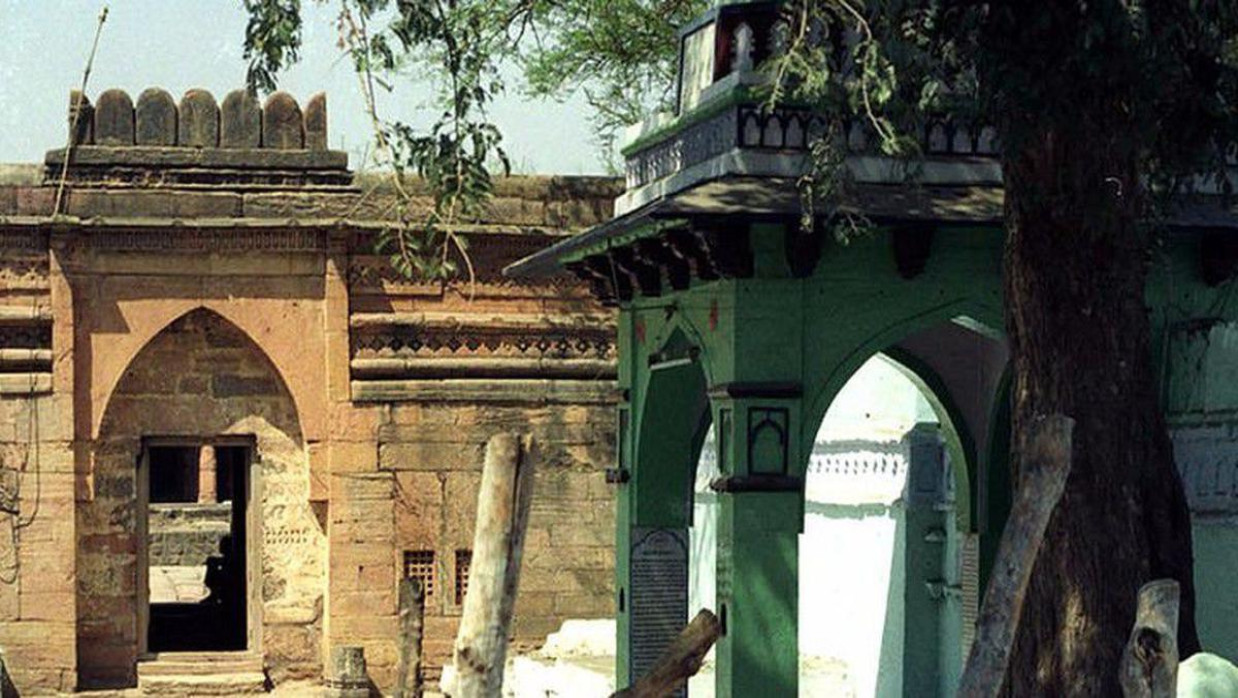
The Madhya Pradesh High Court on Friday held that the disputed Bhojshala-Kamal Maula mosque complex in Dhar district is a temple of Hindu deity Saraswati, reported Live Law.
A bench of Justices Vijay Kumar Shukla and Alok Awasthi quashed a 2003 order of the Archaeological Survey of India, which allowed Hindus to perform prayers on the premises on Tuesdays and Muslims to offer namaz in the complex on Fridays.
The bench said that historical literature and archaeological references showed that the site was a centre for learning Sanskrit and had a temple dedicated to the deity Saraswati.
The court directed the Union government and the Archaeological Survey of India to decide on how to administer and manage the property, Bar and Bench reported. “ASI will have full supervisory control over the preservation, conservation and regulation of religious practices,” the bench said.
On March 11, 2024, the Madhya Pradesh High Court directed the Archaeological Survey of India to carry out a survey of the site on a plea by a group called the Hindu Front for Justice, which has claimed that the mosque was constructed by “destroying” Hindu temples.
The Archaeological Survey of India found in July 2024 that the mosque was constructed using parts from earlier temples at the site.
The Hindu Front for Justice had argued that the Kamal Maula mosque was constructed during the reign of Alauddin Khilji between the 13th century and 14th century by “destroying and dismantling ancient structures of previously constructed Hindu temples”.
On Friday, the Madhya Pradesh High Court said it arrived at its decision on the basis of the precedent laid down by the Supreme Court in the Ram Janmabhoomi-Babri Masjid case from Ayodhya, according to Bar and Bench.
In November 2019, a five-judge bench of the Supreme Court held that the demolition of the Babri mosque in 1992 was illegal, but handed over the land to a trust for a Ram temple to be constructed. At the same time, it directed that a five-acre plot in Ayodhya be allotted to Muslims for a mosque to be constructed.
More than four years later, the Ram temple was inaugurated in Ayodhya in a ceremony led by Prime Minister Narendra Modi on January 22, 2024.
The Madhya Pradesh High Court on Friday remarked that every government has a “constitutional obligation to ensure preservation and protection of not only ancient monuments and its structures, including temples of historical and archaeological importance, but also of sanctum sanctorum as well as the deities of spiritual importance”, Live Law reported.
The article appeared in the scroll
0 Comments
LEAVE A COMMENT
Your email address will not be published