

A Shameful Legacy
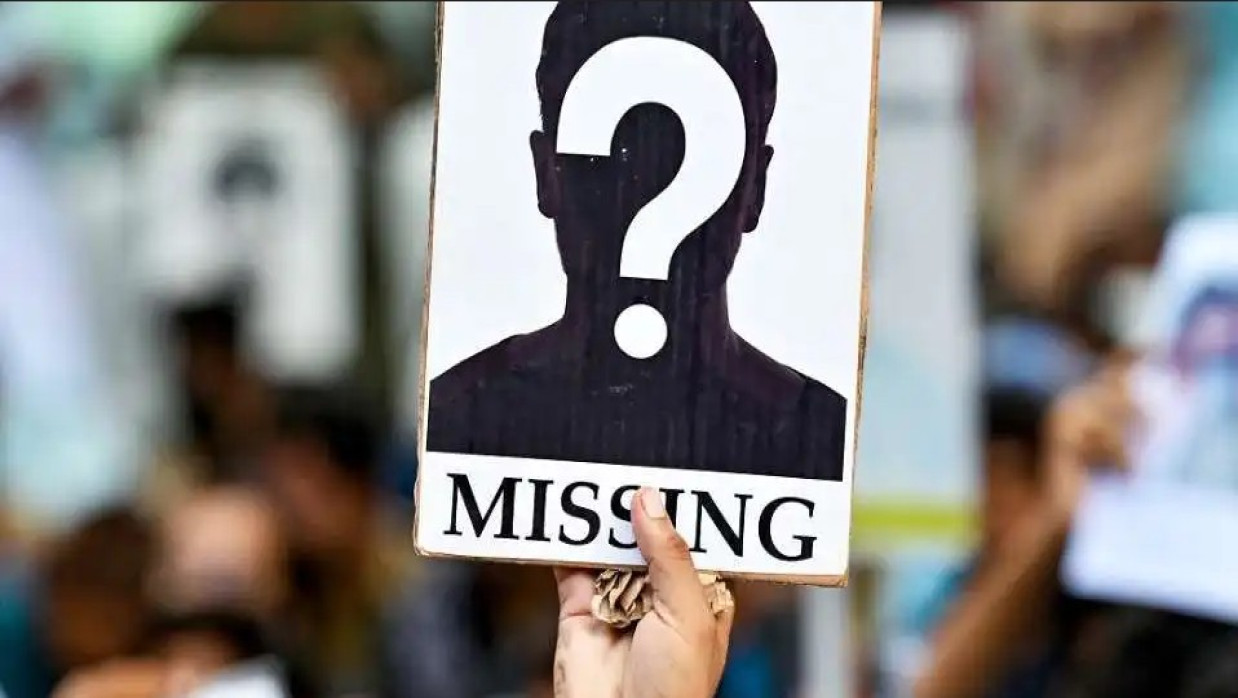
The purported enforced disappearance of 30-year-old fisherman Miraj Sheikh is shaping up to be a major test of Bangladesh’s human rights commitments and pledges to reform its security sector. According to Human Rights Watch, it's the first documented incident of its kind since the July–August 20;24 uprising, which brought Sheikh Hasina’s two-decade rule to an end. If proven true, the incident would suggest that many of the abusive tactics used by her government linger on.
Witnesses alleged that they had seen the members of the Coast Guard arrest Miraj on the night of 10 April, 2026, in Joymonir Ghol under Sundarbans in Mongla. Miraj's family alleged that officials at a Coast Guard office first told them he was "on an operation", and later that they never held him in custody. The Coast Guard has repeatedly denied arresting him and said it had no knowledge of his whereabouts.
Miraj’s family filed complaints, appealed to government officials and held a news conference, but received no satisfactory explanation. Following a habeas corpus petition filed by his father, the High Court on July 12 ordered law-enforcement agencies to locate Miraj and produce him before the court within 15 days. The authorities must comply fully and transparently with that order. Every official connected to the alleged detention should be questioned, relevant duty records examined, and available telephone, vessel-tracking and surveillance data preserved. (Human Rights Watch)
A Legacy of Secret Detention
According to international law, enforced disappearance is committed when state agents, or sometimes others acting with the authorization, support, or acquiescence of the state, arrest, detain, or abduct someone and then fail to disclose their fate or whereabouts.
Bangladesh's Commission of Inquiry found evidence of 1,569 alleged disappearances from 2009 to 20'24. The Commission noted this is a conservative estimate. Most of the victims were eventually released after secret detention. Hundreds remained missing or were later found dead. Several agencies were blamed, including the Rapid Action Battalion, Detective Branch, Counter Terrorism and Transnational Crime unit, and the Directorate General of Forces Intelligence (DGFI). The commission reported that torture is systematic inside hidden prisons.
One of the most well-known survivors is lawyer Mir Ahmed Bin Quasem, popularly known as Armaan. Arrested in 2016, he was released a few days after the collapse of the Awami League government in August 2024 after allegedly spending eight years in undisclosed captivity. He recounted the cost to human life when agencies operated with impunity outside any effective civilian or judicial oversight.
Reform Cannot Depend on Political Convenience
Following the uprising, the interim government acceded to the International Convention for the Protection of All Persons from Enforced Disappearance. It also introduced ordinances empowering the National Human Rights Commission to investigate disappearances independently and inspect detention facilities.
Those measures offered an opportunity to dismantle the machinery of secret detention. Yet the newly elected BNP-led government allowed the ordinances to lapse and proposed weaker legislation. Under the proposed framework, police would retain responsibility for investigating alleged disappearances, while the Human Rights Commission could primarily request reports from the government or the security force concerned. Rights advocates reasonably question whether institutions implicated in past abuses can credibly investigate themselves.
Political parties may come and go, but the state's responsibility to uphold the rights of its people remains. The BNP was also a victim of enforced disappearances under the previous government. It should know that effective oversight is not contrary to national security interests; it’s the best way to prevent abuses of state power for political ends.
Miraj Sheikh needs to be found, and we need to know why he was taken into custody. Bangladesh must re-establish the Human Rights Commission’s power to investigate and inspect detention facilities, and enact a legally sound criminal prohibition on enforced disappearance. Bangladesh must ensure that witnesses are protected and that officials at every level are held accountable for their actions. Until then, the hope that the 2024 movement embodied that fear and impunity would be replaced with justice and good governance will be lost.


0 Comments
LEAVE A COMMENT
Your email address will not be published