

On September 3, 2026, The New York Times published a sobering investigative report titled “Is Your City Prepared for Climate Disaster?” The article summarized a new global resilience index developed by AlphaGeo, ranking 72 major cities on their preparedness for climate shocks — floods, heat waves, droughts, wildfires, and coastal storms. Nine of the ten least resilient cities in the world are located in South Asia, a region that has contributed minimally to global greenhouse gas emissions yet bears a disproportionate share of climate impacts. As major governmental, non-profit, corporate, and civil society actors converge in New York City for the United Nations General Assembly and Climate Week, these findings cast a long shadow.
Among the least resilient cities were Dhaka, ranked 4th least resilient, and Chittagong, ranked 9th. For Bangladeshis, these rankings were painful but unsurprising. They reflect a reality long understood by residents, planners, and policymakers: our cities are not failing — they are under siege, especially as deepening climate change escalates climate disasters. The South Asian region as a whole is now experiencing cascading climate shocks that interact across borders, creating shared vulnerabilities that no single nation can address alone.
This essay examines why Dhaka and Chittagong scored so poorly, what structural forces shape their vulnerability, and what realistic pathways exist to strengthen their resilience. It also situates Bangladesh’s urban crisis within a broader regional context, including Nepal’s recent climate catastrophe, which has reignited global debates about climate compensation and justice.
Why Dhaka and Chittagong Are So Vulnerable
Geography They Cannot Escape
Bangladesh’s geography is both a blessing and a curse. Its fertile delta supports millions, but it also places its cities directly in the path of climate extremes.
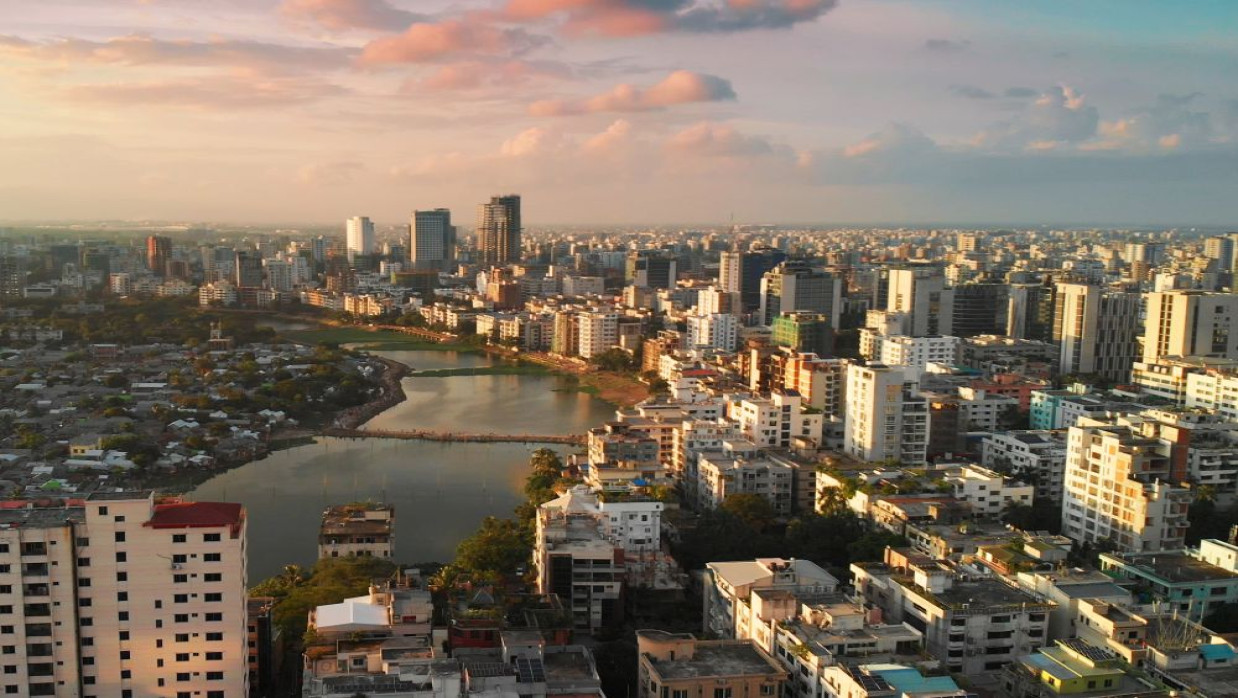
Dhaka sits atop the Ganges–Brahmaputra–Meghna floodplain, surrounded by rivers that swell during monsoon season. The city is naturally prone to riverine flooding, waterlogging, drainage congestion, and heat stress. Climate change magnifies these risks, making rainfall more erratic and extreme precipitation more frequent.
Chittagong’s position as Bangladesh’s primary port city exposes it to cyclones, storm surges, coastal flooding, salinity intrusion, and landslides in its hilly settlements. Rising sea levels threaten both residential neighborhoods and critical port infrastructure.
As Nepal’s recent disaster shows, even mountainous regions once considered natural buffers are now generating climate shocks of unprecedented scale.
Population Pressures They Cannot Slow
Dhaka is one of the densest cities on Earth, with some wards exceeding 50,000 people per square kilometer. Chittagong, though less dense, is still heavily crowded. High density amplifies climate risk: evacuation becomes difficult, drainage systems are overwhelmed, informal settlements expand into hazard-prone zones, and infrastructure is chronically overloaded.
Dhaka’s population exploded from roughly one million in 1970 to over twenty million today. No city — regardless of wealth — has successfully adapted to climate risks while growing at this pace. Rapid urbanization also limits the ability of governments to invest in long-term climate resilience, as resources are diverted to immediate service delivery and congestion management.
Infrastructure Gaps They Cannot Close Overnight
Bangladesh has made impressive strides in rural disaster management — cyclone shelters, early warning systems, and community preparedness. But urban adaptation has lagged behind.
Dhaka’s drainage system is overwhelmed every monsoon. Encroachment on canals and wetlands, clogged stormwater drains, insufficient pumping capacity, and uncoordinated urban expansion have created a systemic failure that magnifies every climate shock.
Chittagong’s port is the country’s economic lifeline. Cyclones can disrupt shipping, damage port facilities, flood industrial zones, and cause billions in economic losses. Infrastructure upgrades are underway, but the scale of risk is immense.
Nepal’s catastrophe illustrates how infrastructure gaps can turn climate hazards into mass-casualty events. When a glacier partially collapsed in Chinese-controlled Tibet, the resulting landslide and flood surged into Nepal at nearly 180 km/h, wiping out towns and severing highways. More than 6,000 people were dead or missing. The tragedy underscores how fragile infrastructure across South Asia is when confronted with climate-amplified disasters.
Governance Structures They Inherited
Dhaka’s governance is famously fragmented. Multiple agencies — city corporations, RAJUK, WASA, BWDB, DTCA, and various ministries — share overlapping responsibilities. This fragmentation leads to slow decision-making, weak enforcement of zoning laws, poor coordination during emergencies, and infrastructure projects that contradict one another. Chittagong faces similar challenges, though less severe.
Nepal’s disaster response also revealed governance gaps: remote districts remained disconnected for days, complicating rescue efforts and highlighting the need for regional coordination mechanisms that transcend national borders.
Economic Constraints They Must Work Within
Bangladesh’s urban governments operate within tight fiscal boundaries while juggling pressing development priorities — housing, transportation, education, healthcare, and industrial growth. These demands compete for limited public resources, leaving little room for large-scale climate adaptation.
Climate-resilient infrastructure is expensive. Major drainage overhauls, river restoration, coastal defenses, elevated port facilities, and heat-resilient urban design require billions of dollars — far beyond municipal budgets. Domestic financing alone cannot meet the scale of investment required to protect these cities from intensifying climate threats.
Bangladesh is among the world’s lowest per-capita emitters, yet it must spend disproportionately on adaptation simply because of where its people live and how global emissions have reshaped their environment. Nepal’s demand for $20 million in climate compensation reflects a growing regional consensus: countries that contributed least to global emissions should not bear the full financial burden of adaptation and recovery.
What Can Be Done? Realistic Pathways Forward
Despite these constraints, meaningful action is possible. The challenge is to distinguish realistic strategies from idealistic ones. The multi-faceted nature of resilience is being realized across the world. Boston Consulting Group, recently published an assessment “Redesigning Climate Resilience for a World of Financial Tipping Points”, which highlights how the fault-lines across climate, financial, and societal risk can be traced in high-income countries (like the US). Some learnings can be applied to Bangladesh:
Short-Term Priorities (0–5 Years)
Restore wetlands and canals. Dhaka’s natural drainage system has been compromised by decades of encroachment and waste accumulation. Enforcing existing laws and rehabilitating key canals can dramatically improve monsoon resilience.
Upgrade drainage in flood-prone wards. Desilting drains, widening channels, and installing pumps can reduce waterlogging and prevent the city from grinding to a halt every monsoon season.
Improve informal settlements. Raised walkways, improved drainage, sturdier roofing, and community-managed shelters can save lives without mass displacement.
Implement heat action plans. Cooling centers, public alerts, shaded corridors, and reflective roofs can reduce heat-related mortality.
Create municipal resilience taskforces. Small, empowered teams can coordinate projects across agencies, reducing fragmentation and improving emergency response.
Bangladesh should also explore regional early-warning systems with Nepal, Bhutan, and India, especially for glacial lake outburst floods and upstream river surges.
Long-Term Strategy (5–25 Years)
Strengthen secondary cities. Bangladesh must rebalance its urban system by strengthening Khulna, Rajshahi, and Sylhet to reduce pressure on Dhaka and Chittagong.
Restore rivers and expand nature-based solutions. Retention basins, river dredging, and mangrove belts can create ecological buffers that reduce flood peaks and storm impacts.
Build coastal and port resilience in Chittagong. Elevated infrastructure, surge barriers, and diversified logistics are essential to protect national economic stability.
Integrate climate into urban planning. Master plans must legally protect floodplains, wetlands, and high-risk hillsides. Stronger enforcement of building codes and zoning laws is essential.
Mobilize private sector investment. Public-private risk pools and resilience-linked loans can spur investment in adaptation.
Leverage international climate finance. Accessing global adaptation funds is not charity — it is climate justice. Nepal’s compensation demand should embolden Bangladesh to push for structured regional climate finance mechanisms, including Himalayan disaster funds and Bay of Bengal resilience bonds.
Conclusion: A Call for Justice and Pragmatism
Dhaka and Chittagong’s low resilience rankings are not indictments of their people or their governments. They are reflections of structural injustice: cities punished for emissions they did not cause, struggling against climate forces they did not unleash.
Yet these cities are not helpless. With targeted short-term interventions and ambitious long-term planning, they can reduce suffering, strengthen resilience, and reshape their future.
Climate resilience in Dhaka and Chittagong is not merely a national priority — it is a global responsibility. These cities are on the frontlines of a crisis created elsewhere. Their struggle is a reminder that climate justice is not an abstract principle but a lived reality for millions.
Bangladesh’s cities are under siege. Yet with vision, coordination, and global support, they can endure — and even thrive — in the climate-challenged decades ahead.


0 Comments
LEAVE A COMMENT
Your email address will not be published