

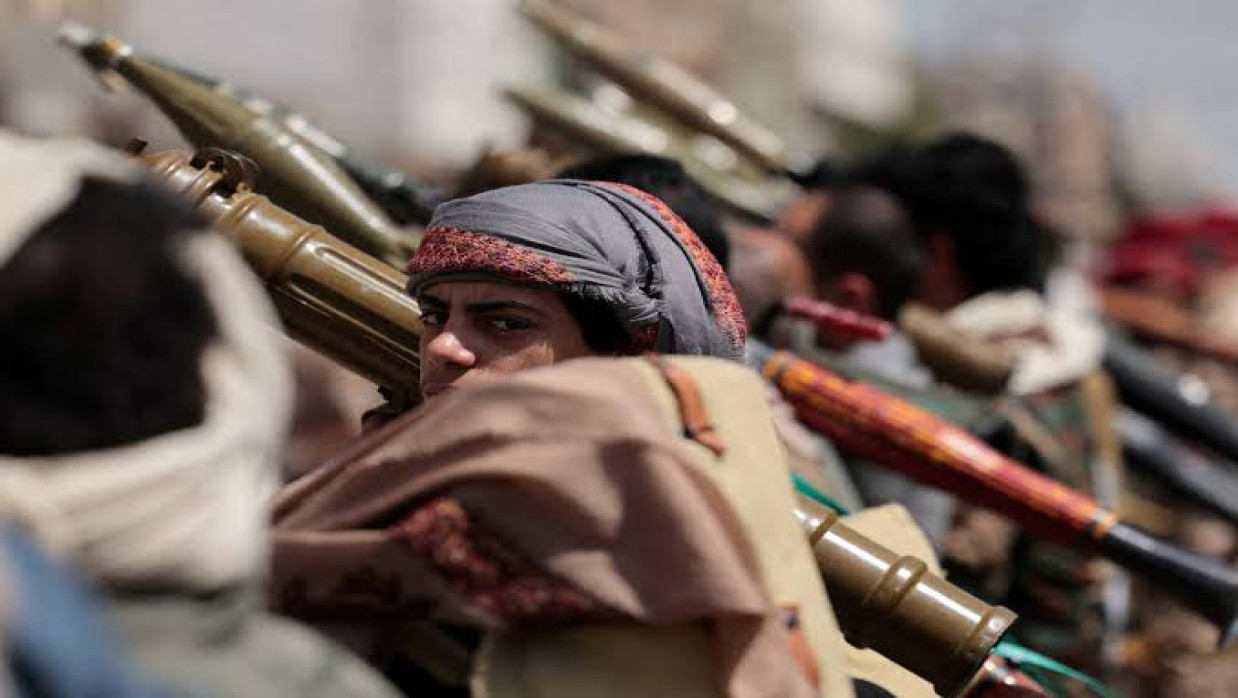
The Middle East faces an ever-complicated security environment where the capabilities of the non-state actors become a source of consequences that transcend national boundaries. The case of Houthi in Yemen provides such an example. While originally being a domestic issue of Yemen, the problem became more complicated, as it turned into the one that concerns state sovereignty, regional security, maritime trade and navigation. For Pakistan, the situation also gained an additional aspect due to its strategic partnership with Saudi Arabia as well as the special religious value of Haramain Sharifain.
The fact that Houthi is able to use missiles and drones not only in Yemen but also outside its borders shows how geography can turn into a tool of coercion. The Red Sea and Bab el-Mandeb constitute some of the key maritime chokepoints that connect Indian Ocean with the Mediterranean via the Suez Canal. Any disturbances there may have significant impact on maritime shipping, energy market, supply chain and even global economy. In reaction to attacks on merchant and commercial ships, the UN Security Council adopted Resolution 2722 in January 2024 demanding the immediate cessation of attacks on them in the Red Sea.
The danger also has a local aspect. Saudi Arabia plays an especially important role for Pakistan's security considerations, given the extent of defense relations between the two countries and the presence of Islam's two most sacred places. Pakistan has continually expressed strong condemnation of any attacks on Saudi lands and has stressed the importance of defending the sovereignty and integrity of Saudi Arabia. In September 2026, Islamabad condemned the attacks blamed on Houthis against civilians and energy installations in Saudi Arabia.
The attack on Makkah Al-Mukarramah with the use of a drone in September made the issue even more sensitive. Pakistani Deputy Prime Minister and Foreign Minister, Mohammad Ishaq Dar, denounced the attack and said that Pakistan is ready to help Saudi Arabia in ensuring the sanctity and security of the Two Holy Mosques. The same sentiments were expressed by Prime Minister Shehbaz Sharif.
The history of the Houthi movement can help to clarify why this matter is now a greater security issue. The group seized Sana'a in 2014 and has been building up its military power, which now includes missiles and drones. UN Security Council Resolution 2216 of 2015 required the Houthis to cease violence, pull out of territories which they controlled, and release weapons seized from government institutions. The resolution also urged the Houthis not to threaten other countries in the region.
This international context has been further elaborated by the passage of Resolution 2624 in 2022, which renewed the arms embargo, which was originally imposed as part of the Yemen sanctions regime, with the Houthi movement specifically subject to this arms embargo regime.
However, for Pakistan, the threat from Houthi cannot only be assessed militarily because the security of Saudi Arabia is not just military but also economic and religious. The Kingdom plays an important role in the world economy and energy sector with its infrastructure, and Makkah and Madinah are very important sites for the Muslim community globally. Hence, any sort of threat to Saudi soil with civil infrastructure and the Holy Sites has many more dimensions than just regional rivalry.
There has also been an institutional arrangement in relation to security ties between Saudi Arabia and Pakistan. On 7th August 2026, an agreement called the Makkah Joint Defence Agreement was signed between Pakistan, Saudi Arabia and Türkiye. The agreement specifies that an armed aggression against any of the three countries shall be treated as an armed aggression against all three while highlighting increased defence cooperation among them. It has been declared by the Pakistani Foreign Ministry that the agreement is in line with the right of self-defence individually and collectively.
The agreement does not define what form the response will take, but it is important in creating a system of consultations, deterring and coordinating the defence. At the end of August, the three countries agreed to formalize the consultations on the basis of Makkah agreements, including defense cooperation and the creation of a secretariat.
Maritime safety is an important part of Pakistan's approach to the situation. Since late 2023, attacks of Houthis on ships sailing in the Red Sea have shown how a war in Yemen may affect global trade. Pakistan has an obvious interest in ensuring the security of the sea route due to the dependence of its economy on maritime trade and the fact that Pakistani citizens and businesses operate throughout the area. Therefore, the security of ships, citizens and maritime property is one of the important elements in Pakistan's calculation of national security.
Pakistan's position does not mean an unambiguous approval of a military action. Pakistani officials have constantly called for diplomacy, dialogue and respect for sovereignty. It has even been noted that the Makkah Agreement is defensive in nature, and the officials continue to insist on restraint.
This duality is especially important in light of the fact that at the end of the day, Yemen needs a political resolution of its problems. UNSC has always been in favor of Yemen-led political process and in Resolution 2216 demanded resumption and acceleration of UN-sponsored negotiations. Thus, Pakistan is able to hold two positions at once: it supports the legitimate right of Saudi Arabia to protect itself from aggression while at the same time demanding a political settlement of the Yemeni problem.
The new policy of Pakistan is thus determined by several key principles. First, attacks against sovereign territory, infrastructure and shipping are unacceptable; second, freedom of navigation must be ensured; third, Saudi Arabia's sovereignty and security are vital interests for Pakistan; fourth, the inviolability of the Haramain Sharifain has special religious importance. However, diplomacy is always better than endless regional conflict.
The Houthi threat is an example of how contemporary conflict situations can quickly escalate beyond borders. Missile strikes and drone attacks launched from one region can have consequences for energy infrastructures, maritime shipping, and the stability of the region thousands of kilometres away. For Pakistan, the solution, consequently, cannot be limited to military considerations. It includes a combination of strategic alliance with Saudi Arabia, collective deterrence, maritime security, international laws, and support for diplomacy. The red lines of Islamabad are based on sovereignty, regional stability, security of sea routes and sanctity of the two Harams.

0 Comments
LEAVE A COMMENT
Your email address will not be published