

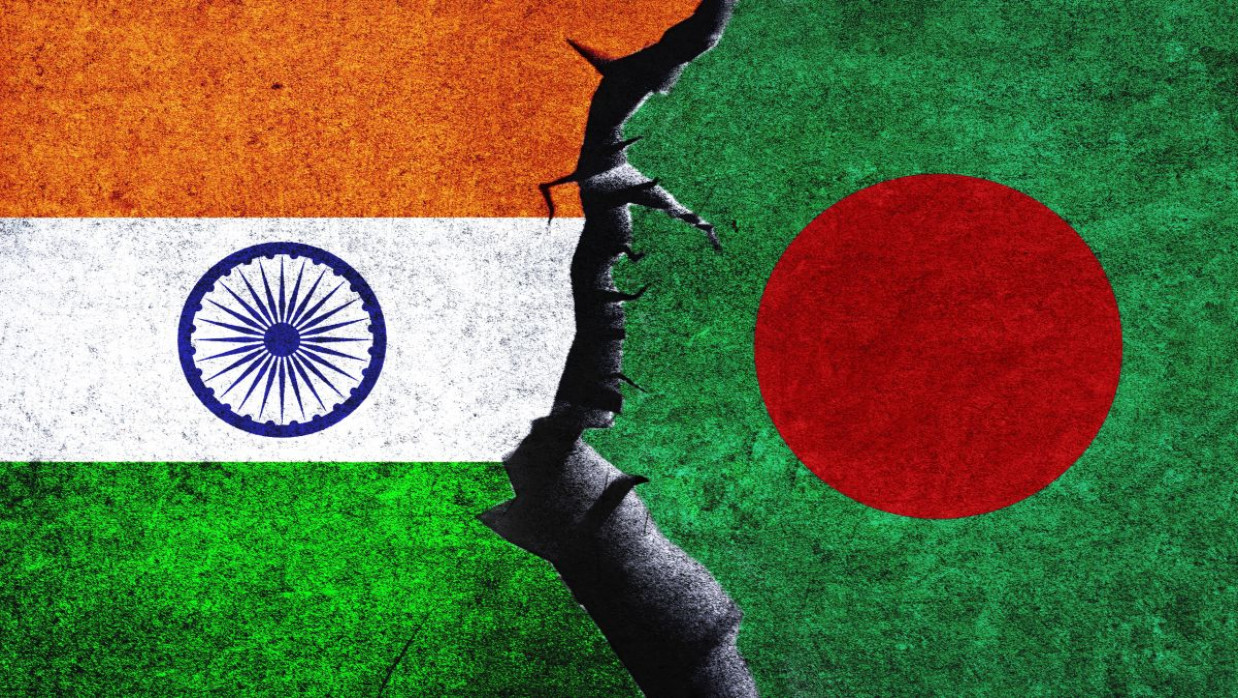
The presence of Sheikh Hasina in India, the matter of extradition, and the accusations of political interference in another country’s affairs have brought into focus fundamental questions relating to the foreign relations between Bangladesh and India. Apart from the matter of what will happen to Sheikh Hasina, the larger question that arises is whether the two countries can have an equal relationship between themselves.
A Relationship Confronting Its Most Difficult Questions
Geography makes Bangladesh and India inseparable neighbors, yet it is insufficient to foster political trust. Shared rivers, intertwined economies, cultural ties, historical experience, and common security interests have bound these two nations for years. However, their political interaction today faces a unique diplomatic challenge tied to political asylum, sovereignty, accountability, and the limits of regional intervention. It all started with the former Prime Minister of Bangladesh Sheikh Hasina’s escape to India on August 5, 2024, after a massive student-led revolution had interrupted her uninterrupted rule of fifteen years.
The continued stay of Sheikh Hasina in India has turned from a mere issue of humanitarian and diplomatic nature into a trial of India’s approach to the evolving situation in Bangladesh and a trial of Bangladesh’s ability to balance between accountability and the need to maintain constructive relations with its powerful neighbor.
The political climate has changed significantly since earlier times. The interim government of Bangladesh, which was headed by Professor Muhammad Yunus, a Nobel Peace Prize winner, ended its tenure in February 2026, and there is a new government under the leadership of Prime Minister Tarique Rahman. However, Hasina’s issue is yet to be sorted out.
The issue at hand is no longer whether India will surrender Hasina to Bangladesh. Rather, it is whether the two countries can maintain a stable relationship beyond politics and institutions that can protect regional stability from political disputes. In Bangladesh’s case, the issue affects its post-uprising political stability. In India’s case, the issue raises questions about its diplomatic responsibilities and legal obligations. For South Asia, the case shows how unaddressed historical disputes can undermine regional collaboration despite shared economic and political interests among states.
The July 2024 Uprising: A Political Turning Point
The 2024 uprising has fundamentally changed Bangladesh's political landscape.
Originating in students' protests against the government's job quota policy, the protest has grown into a national uprising for political responsibility, liberty, and non-coercive governance.
However, the government's response included a large amount of violence and deaths. The UN investigators on human rights reported that as many as 1,400 people were killed during the protest period. For the relatives of the dead, the uprising is an ongoing call for accountability. For survivors, it represents hopes for democratic engagement, accountable governance, freedom of expression, and protection against state coercion.
However, these hopes cannot be evaluated solely by the political fortunes of the Awami League and its rivals. This includes larger questions concerning the relationship between the citizen and the state.
Hasina's departure to India has created a politically charged situation. The supporters of Hasina see her as an ex-leader subjected to politically driven charges, whereas the critics see her government as repressive and corrupt. This has been central to the debate over whether she should return.
A more complex diplomatic issue arises when internal political issues become intertwined with a nearby country's foreign policy. India’s past relationship with Hasina has contributed to the view that many people in Bangladesh see India as having established ties with only one political party, rather than other parties in Bangladesh, through its institutions.
Whether these perceptions of Indian foreign policy are true is debatable, but they remain a diplomatic reality.
Sheikh Hasina’s Exile: Humanitarian Protection or Diplomatic Liability?
Political exile has a long history in international relations. Governments sometimes provide refuge to former leaders because of humanitarian concerns, political relationships, security considerations, or the potential consequences of forced repatriation. India's accommodation of Hasina must be understood in this light. From New Delhi's point of view, keeping a former leader of government on Indian soil does not necessarily amount to interference in Bangladesh's internal matters. India also has legitimate concerns about ensuring the extradition follows the rules.
However, Hasina’s continued stay in India has caused more controversy.
In August 2026, Hasina held a meeting with journalists in an online event held in New Delhi. This brought up the issue of whether she was using Indian soil for her political activity. This concerned Bangladesh because it could affect the country's domestic stability.
India, for its part, informed its Parliament that Hasina was not supposed to be engaging in any political activities within Indian territory. This makes a difference because offering asylum to a previous political figure and being complicit in activities designed to destabilize a sovereign government are two completely different issues. The former can align with humanitarian and national laws, but the latter becomes a diplomatic and legal problem if evidence proves it.
Even if Hasina makes political statements publicly, that doesn’t necessarily mean India’s government is involved. To conduct an objective analysis, it is necessary to separate facts from political conjecture.
Extradition, Judicial Accountability, and the Rule of Law
One of the biggest challenges hindering efforts to strengthen bilateral ties is the ongoing extradition issue. A bilateral extradition treaty between Bangladesh and India was signed in 2013; later on, in 2016, the treaty was amended. In December 2024, Bangladesh officially requested Hasina's extradition and continued to press for it after new developments in the judiciary. On November 16, 2025, a verdict of death in absentia was passed by the Bangladesh International Crimes Tribunal, sentencing Hasina for crimes against humanity for the crackdown on the 2024 rebellion. Hasina has denied all the charges and accused the court of being politically motivated.
The verdict has made demands for her extradition even more complicated by creating additional problems regarding fair trial, the death penalty, and the laws of both countries.
In November 2026, Bangladesh's State Minister for Foreign Affairs, Shama Obaid Islam, said India must follow the existing extradition process. She denied allegations stating that India has asked for a new trial before the extradition of Hasina. Three things need particular attention.
First, Bangladesh has the sovereign right to investigate and try any crimes that may have taken place within its jurisdiction, under its constitution and human rights laws.
Second, India is entitled to review the extradition application under its legal framework, relevant treaties, and national law.
Thirdly, the justice system seems more legitimate and credible if it consists of independent, fair trials based on solid evidence and defense.
The aspect of capital punishment makes things even more complicated since there are many human rights organizations that have expressed their concerns over the death penalty, especially where the trials have been conducted in absentia.
In other words, a credible justice process should consider both the suffering of victims and the rights of the accused. Justice cannot be associated solely with punishment, since its credibility lies in the process by which the perpetrator's responsibility can be proven.
Sovereignty and Allegations of Cross-Border Political Influence
Sovereignty still forms the bedrock of international politics. Under the UN Charter, other nations must respect a nation's political sovereignty, and interference in its internal affairs is prohibited. In Bangladesh's case, sovereignty issues are sensitive because of the country's past struggle for independence. The help India provided Bangladesh during the 1971 Liberation War is considered part of their common history. Nevertheless, historical friendship should not preclude modern disputes regarding sovereign equality. Friendship founded only on gratitude cannot replace reciprocity. This particular controversy is an example.
The Bangladeshi government accuses the Indian authorities of inciting political disorder through communication from Indian soil. Mobilizations of the Awami League, threats of a general shutdown, and acts of violence are mentioned. As per the report published by Prothom Alo in November 2026, it was seen that members of the Awami League had initiated political activities based on the anticipated return of Hasina; however, according to the police reports, some acts of sabotage have been carried out by people associated with the party. Such charges need to be probed.
Another distinction can be made between individuals operating in an international context and actions instigated or aided by government officials. Hasina's residence in India, by itself, does not amount to government involvement in destabilization.
Nevertheless, what should be pointed out is that in the diplomatic sphere there is the requirement of reciprocity, such that each accusation needs to be addressed accordingly by the two governments. It is legitimate for Bangladesh to expect that foreign soil is not used as a launching pad for attacking its institutions illegally. Likewise, India is justified in expecting that political accusations do not interfere in bilateral relations. The right approach, therefore, would be to work together on the basis of evidence.
The Political Cost of Perceived Unequal Relations
One of the most persistent challenges in Bangladesh–India relations is the perception of asymmetry. In terms of size, economic strength, and geopolitical influence, India far surpasses Bangladesh. While it has economic potential and regional importance, Bangladesh must account for this asymmetry when dealing with the other country.
Unequal treatment is due to the perception of discrimination in the treaty agreements, but merely asymmetry does not constitute discrimination. During Hasina's administration, collaboration took place in areas such as transportation, energy, trade, connectivity, and security.
India gained better access and connectivity through Bangladesh, which benefited its northeastern region. Bangladesh got cross-border infrastructure, energy supplies, and economic opportunities.
However, many doubted it was mutually beneficial enough, especially on water, border security, trade, and business treaties.
An October 2026 analysis by the National University of Singapore’s Institute of South Asian Studies described a relationship characterized by political strain but continuing interdependence in trade, energy, and water management. This distinction is essential. Political mistrust must not blind us to the concrete advantages of cooperation. Likewise, economic interdependence cannot excuse us from addressing equity and sovereignty. Agreements must be clear, benefits tangible, and mechanisms in place to discuss and resolve any differences that arise.
Water, Borders, Trade, and the Everyday Meaning of Diplomacy
While the controversy over Hasina is diplomatically significant, Bangladesh-India relations involve matters that affect ordinary people. Water rights are some of them.
The 1996 Ganges Water Rights Treaty is set to expire in December 2026. Extending it or drafting a new agreement is difficult, given seasonal water distribution, agricultural activity, environmental issues, and the survival of populations living off cross-border rivers.
Time constraints make these discussions even more urgent. There are also persistent border-related disputes. Claims of illegal entry, border shootings, border fence disputes, and migration problems have continued to mar bilateral relations over the years. Some trade restrictions have caused difficulties.
In 2025, India withdrew a transshipment deal that enabled some of Bangladesh's exports to other countries and imposed restrictions on selected imports from Bangladesh. This is not only a bureaucratic argument.
Water scarcity impacts farmers. Violence along the borders impacts families. Trade barriers impact workers, producers, and exporters. Connectivity disruptions impact business.
If political leaders let one foreign policy dispute take precedence over everything else on the bilateral agenda, they may neglect other important items. Thus, the task is to ensure the Hasina row does not obstruct cooperation where the two peoples share common interests. A developed relationship must navigate politics while maintaining cooperation.
India’s Strategic Interests and Bangladesh’s Foreign Policy Independence
Bangladesh's worries about India are more complicated than the political fate of Sheikh Hasina.
Bangladesh enjoys a strategically important location between mainland India, the states of northeast India, and the Bay of Bengal. Cooperation with Dhaka matters to India for connectivity, border management, commerce, and regional security. New Delhi is also concerned that Bangladesh is developing its own diplomatic and business relationships with China, Pakistan, and other countries. These concerns are perfectly valid in the context of the region's geopolitics.
Nevertheless, diversifying Bangladesh’s foreign relationships is part of its sovereign foreign policy and cannot be viewed as hostility toward India on its own. Nor can India’s foreign policy actions in pursuit of its security concerns be seen simply as efforts at domination of Bangladesh.
The difficulty arises when one nation views the other's policies as purely strategic rivalry between the two nations. It should be allowed to have friendly relations with India, China, the United States, Pakistan, Japan, and other nations simultaneously. India, in turn, has an interest in cultivating a stable, cooperative Bangladesh through mutually beneficial agreements rather than relying too heavily on relationships with particular political personalities.
A foreign policy built around institutions is more resilient than one dependent upon individual leaders. The departure of a political ally should not automatically lead to a deterioration in relations between neighboring states.
Public Trust: The Missing Foundation of Bilateral Diplomacy
Official diplomatic relations are carried out at an inter-governmental level, but their long-term credibility requires public trust. The mistrust of Bangladesh towards India is partly because of the impression that New Delhi had friendly relations with Hasina despite the problems of lack of credibility of elections, repression, and democracy. There are also worries in India regarding the issue of religious minorities, insecurity at the border, and political instability in Bangladesh.
These should be addressed based on facts. Violence against religious minorities deserves unequivocal condemnation, regardless of the identity of perpetrators or victims. At the same time, individual incidents should not be used to characterize entire national or religious communities.
Both countries’ media organizations bear significant responsibility.
Sensational headlines, unconfirmed reports, selective reporting, and political disinformation could turn political disagreements into public hostilities. This danger is even greater on social media, where heated rhetoric can spread quickly. The journalistic profession must distinguish between facts and politics, know the relevant laws, and consider the ramifications of diplomacy for ordinary people. No amount of goodwill will restore goodwill between these two nations. Reciprocity and responsiveness are essential.
Can Political Exile Become an Instrument of Regional Instability?
History offers many examples of exiled politicians affecting events in their home country.
Exile does not end political influence, as former leaders could still have party connections, money, international links, and means of communication. Nevertheless, political work by exiles does not mean illegal meddling. Whether it is illegal depends on the form it takes, whether it incites or coordinates violence, and whether officials of other states knowingly participate in it.
Regarding Hasina, her decision to return to Bangladesh in December 2026 has created some uncertainty. This can be interpreted as a commitment by her supporters, but as an effort to control the political regime in Bangladesh after the uprising by her detractors.
None of these interpretations imply that Hasina will indeed make her way back.
On the contrary, the legal challenges remain quite significant, as Hasina still has a valid conviction, the process of extradition, and many open diplomatic negotiations to deal with.
Indeed, even those in the Awami League are not entirely convinced of Hasina's intentions in returning. The broader concern is whether the whole affair fosters polarization or undermines efforts to consolidate democracy. To preserve political stability, Bangladesh needs effective policing, an independent judiciary, civil liberties, and no resort to violent politics.
For India, the way forward would be to clarify the role and activities of political figures residing within its borders. Neither country would gain from introducing uncertainty into their interaction.
A Diplomatic Reset Based on Sovereign Equality
But none of these issues is insurmountable in building a constructive relationship between Bangladesh and India. These issues show the importance of having a more institutionalized and transparent diplomatic process. Some of the important principles emerging from this are the following:
First, disputes should be resolved according to law. The question of Hasina’s extradition should be dealt with diplomatically and legally.
Second, both countries should reiterate their commitment to non-interference. Both sides should not use their territories for organizing violence against each other in violation of laws. Any allegation of such activity should be settled by proper exchange of evidence.
Third, cooperation should transcend the interests of individual political parties. India should maintain a sustainable relationship with Bangladesh, regardless of who the constitutional government in Dhaka is.
Fourth, economic and environmental discussions should be pursued separately from political disagreements as far as possible. Issues such as water distribution, border management, trade, energy, and connectivity are too important to remain hostage to an individual's political fate.
Fifth, each side needs to engage in public diplomacy. Scholarly and cultural exchanges, free media, and professional associations will help address misinformation and rebuild trust between the parties. Last but not least, democratic consolidation in Bangladesh is essential.
If the government values political liberties, has dependable legal processes, and enforces the law objectively, it will become more legitimate both domestically and internationally.
Sovereignty is not simply diplomatic posturing in the face of foreign meddling; it is a system of governance that can govern by law and command respect.
Regional Stability Cannot Rest on Political Personalities
The implications of the Bangladesh-India dispute go far beyond their bilateral relations.
South Asia faces an array of intertwined problems related to climate change, migration, energy insecurity, economic inequality, religious divides, and geopolitics. The region's ability to address them depends on its countries' capacity to cooperate despite disagreements over history, security, and politics. Bangladesh and India have many chances to develop regional trade, infrastructure, river management, disaster readiness, and education/technology cooperation.
Yet these opportunities become more difficult to realize when bilateral diplomacy is dominated by mistrust. The controversy surrounding Hasina illustrates the risks of personalizing international relations. Governments come and go. Political affiliations shift. Leadership waxes and wanes. Geography, by contrast, stays the same.
Both Bangladesh and India will still share their long border, ecological environment, economic interests, and history, regardless of what happens during the extradition debate.
Their relationship must therefore be sufficiently durable to withstand political transitions.
For India, this means engaging Bangladesh as an independent state whose citizens possess their own political aspirations and whose government is entitled to pursue legitimate national interests. This entails Bangladesh's sovereignty through institutional effectiveness, diplomacy, and constructive international relations. The two states are expected to ensure that any political differences do not become a source of regional insecurity.
Conclusion: Beyond Exile, Toward a Relationship of Mutual Dignity
However, Sheikh Hasina’s presence in India has become a diplomatic question of importance, but Bangladesh-India relations should not be dependent on the political career of one single person alone. Although extradition involves matters of justice, lawfulness, humanity, and diplomacy, it is wise to examine political interference from beyond the borders of the state in question. However, beyond these issues and debates lies a larger question: whether two countries can move past politics of personal loyalties and mistrust toward a relationship based on sovereign equality, institutional cooperation, and trust.
As Bangladesh found in 2024, the price of unaddressed political disputes is very steep. The dreams that are connected to the uprising require a proper response from good democratic governance and accountability. India’s regional interests, meanwhile, are best served by a stable, prosperous, and institutionally confident Bangladesh with which it can maintain constructive relations across political transitions. The challenge for both governments is to recognize that legitimate national interests need not be incompatible. The words of former United Nations Secretary-General Kofi Annan offer a fitting principle for this moment: “Without peace there can be no development, and without development there can be no peace. Both are not possible without human rights.”
For Bangladesh and India, this interrelated principle provides the basis for getting past the current diplomatic stalemate. Political exile must not become a substitute for justice, sovereignty must not become an excuse for isolation, and regional influence must never be confused with political ownership of a neighboring nation. Ultimately, the sustainability of the Bangladesh-India relationship will not depend on what any individual government does with its former leaders, but on whether both nations can create an environment where the rule of law prevails, sovereignty is respected, and cooperation continues regardless of political differences. The future of South Asia should not be held to ransom by the past of its political figures. The future of South Asia needs to be defined by the rights, respect, security, and prosperity of its people.


0 Comments
LEAVE A COMMENT
Your email address will not be published