

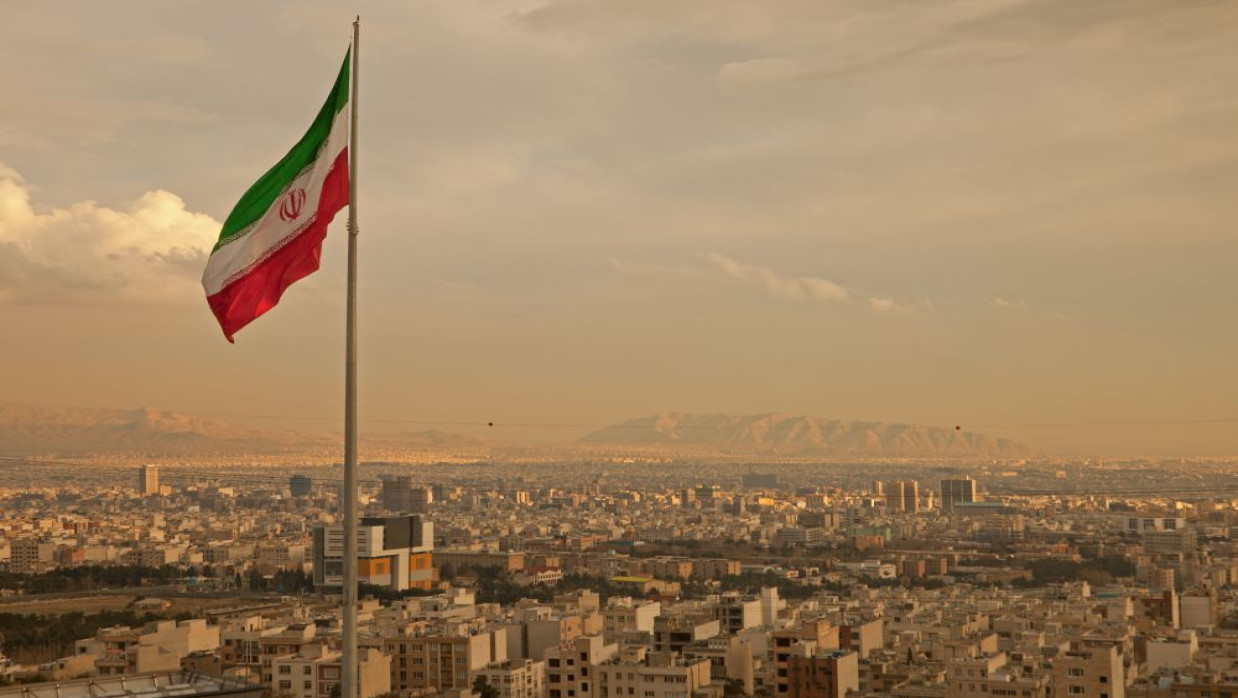
Many great empires have emerged in history, glorious in their military power, economy, and politics, but eventually became extinct due to historical processes. However, some civilizations have managed to defy the laws of historical development by surviving the ups and downs of rise and fall. And among such civilizations, the Iranian one stands out as a particularly noteworthy example of mankind's longest-lived civilization. For more than three thousand years, it has survived invasions, occupations, revolutions, interventions, sanctions, and geopolitical conflicts without losing its distinctive culture, national identity, and strength of spirit.
Today, I was lucky enough to participate in an interesting discussion with the honorable Member of Parliament and Whip, Mr. A. B. M. Asraf Uddin Nizan from Lakshmipur-4 constituency. While we were talking, he raised an interesting question which transcends the limits of Middle Eastern politics: "What is the secret of the resilience of Iran under the conditions of continuous wars, sanctions, interventions, and pressure from the outside world? Why is it so strong?"
There are many aspects of this question that we discussed during our talk, but he requested that I present a more detailed analysis. Hence, this article has been written to honor that request.
It must be remembered that to understand Iran, one has to go much deeper than today's headlines, political disputes, or tensions in international relations. This is because Iran is one of the world's oldest civilizations. Its power cannot be defined by the country's military strength, economy, or political structure. Instead, Iran's power is rooted in the history of civilization and culture of that land, which has always been characterized by pride, determination, and a strong sense of national sovereignty.
Like the legendary bird that revives itself from its own ashes, this civilization keeps emerging stronger and more determined from times of destruction. This is why it can be rightly called Persian. Few nations in recorded history have experienced as many cycles of conquest, destruction, transformation, and rebirth as Iran. From the conquests of Alexander the Great and the Arab expansion to the devastating Mongol invasions, imperial rivalries involving the Ottoman, Russian, and British empires, the Constitutional Revolution, the Islamic Revolution of 1979, the devastating Iran-Iraq War, decades of economic sanctions, and persistent geopolitical pressures, Iran has continually demonstrated an extraordinary capacity to adapt without surrendering its civilizational essence.
Several great empires have come and gone from history owing to their military dominance. Persia was able to survive not by virtue of being militarily superior but due to the existence of something much greater which is the civilization that can constantly be renewed without compromising the soul of its culture. Its language survived through conquests. Its literature blossomed amidst political turmoil. Its philosophy affected civilizations way beyond its territorial boundaries. Its citizens were able to turn each and every period of crises into a time of national revival.
This amazing story of Iran holds many lessons not just for the Middle East but for the whole world. It shows that a country's true power is evident not only in its weaponry and economy but also in its institutions, culture, people, history, and identity. This article explores the historical foundations of Iran's remarkable endurance. It examines how successive invasions, occupations, revolutions, wars, and international pressures have shaped one of the world's oldest civilizations into a nation that continues to command regional influence and global attention. More importantly, it explores the enduring qualities that have enabled Iran to rise repeatedly from the ashes of history like the legendary Persian Phoenix, stronger, more resilient, and profoundly conscious of its place in the long continuum of human civilization.
A Civilization Older Than Most Nations: The Foundations of Iran's Extraordinary Resilience
To comprehend why Iran possesses an incredible ability to endure, it is first important to recognize a historical fact often overlooked, though very simple indeed: Iran is not just a modern nation-state; it is among the most ancient surviving civilizations in the world. Whereas most modern nations can claim their history for no more than a few centuries, the history of Persian civilization goes back for more than three millennia. Throughout all of that time, there have been changes of dynasties, religious beliefs, political structures, and territorial boundaries. History teaches that military power alone rarely guarantees longevity. The Assyrian Empire, Babylonian Empire, Macedonian Empire, Roman Empire, Byzantine Empire, and countless other mighty powers once appeared invincible. Yet most eventually disappeared or fragmented under the weight of internal decay, external conquest, or changing historical circumstances. Persia experienced many of these same pressures, but unlike many of its contemporaries, it survived—not always as the most powerful empire, but as one of the most resilient civilizations.
The amazing stability in this case was no coincidence; it was due to a unique mix of geography, culture, education, language, effective governance, and a lasting sense of national identity that consistently prevailed amid political turmoil.
The emergence of Cyrus the Great in the sixth century BC was one of the most important events in world history. The establishment of the Achaemenid Empire meant not only the creation of one of the largest empires in the world but also the development of new principles of government that would be adopted by later civilizations. Instead of governing by force alone, the Persian Empire took into account administrative effectiveness, decentralization, and cultural and religious tolerance.
The construction of the Royal Road, the formation of complex administrations called "satrapies," systematic taxation, and efficient methods of communication were all indicative of a system of government never before seen before that time. Indeed, many consider these developments as the basis for the ideas of modern imperial administration.
Perhaps the greatest accomplishment of Persia, however, was not in conquest but in its integration of different groups of people into a functional political community without necessarily destroying their sense of self. This practice of assimilation was a key aspect of Persian civilization and instrumental in ensuring its long-term success.
Even when Persia was conquered by Alexander the Great in 330 BCE, the civilization of Persia was not forgotten. Power shifted, but the Persians' methods of government, artistry, language, and ideas continued to influence the next generation of rulers. In many ways, even the conquerors were themselves influenced by the civilization they sought to conquer.
This historical pattern would repeat itself throughout Iranian history.
The Parthian Empire successfully resisted Roman expansion for centuries, demonstrating remarkable diplomatic and military flexibility. Later, the Sasanian Empire emerged as one of Rome's greatest rivals, developing sophisticated institutions in law, philosophy, medicine, architecture, and military organization. During this period, Persia became one of the principal intellectual centers of the ancient world, preserving and advancing scientific knowledge that would later influence both the Islamic Golden Age and the European Renaissance. When Persia was conquered by Alexander the Great in 330 BC, the Persian civilization did not disappear. It may have lost power, but its techniques of administration, artistic expression, language, and culture left an imprint on the succeeding powers. In many ways, the conquerors themselves were imprinted by the civilization that they wished to dominate.
This historical trend would continue through the Iranian civilization.
Persian Parthian Empire managed to resist Roman expansion for several centuries, showing great diplomatic and military flexibility. Later on, the Sasanian Empire became one of Rome's greatest rivals, establishing advanced institutions in law, philosophy, medicine, architecture, and military organization. At that time, Persia was one of the most important centers of intellectual life in the ancient world, preserving and advancing the science that would later influence the Islamic Golden Age and the European Renaissance.
Each of these civilizations created its own distinct political philosophy, based on the maintenance of sovereignty, efficient administration, and cultural unity. In contrast to many other civilizations, in which the ruler himself was the main source of power, Persia began to develop a civilizational identity that was higher than the dynasty.
Such civilizations had their own political ideology based on the survival of their sovereignty, administration, and culture. Unlike other countries whose legitimacy was mostly associated with individual rulers, Persia developed a civilizational identity that survived even after changes in its ruling dynasties.
The difference was essential.
Empires could collapse, but civilization remained.
Kings might vanish, but the Persian language kept thriving.
Governments could be replaced, but the national memory of Persia persevered.
Language was not just a medium of communication but also a tool for preserving civilization.
Similarly, Persian literature gave rise to a collective sense of history that bound subsequent generations together. The Shahnameh by Ferdowsi ensured the survival of Iran's pre-Islamic history during a period when much of the ancient world was on the verge of being forgotten. The universal concepts of justice and humanity were expressed in Saadi's works.
These intellectual achievements accomplished something that armies could never guarantee: they made Persian civilization indispensable to world culture.
Consequently, foreign conquerors frequently adopted Persian administrative practices, literary traditions, artistic styles, and systems of governance. History presents numerous examples in which Persia influenced its conquerors far more profoundly than its conquerors transformed Persia.
These factors have played a role in explaining what is often called the biggest paradox in history: despite being defeated in the wars, Iran succeeded in maintaining its civilization. It was because political failure did not mean cultural failure.
Also, such civilizational continuity created a unique approach to time. While political entities of the modern age tend to operate on timeframes limited by electoral cycles and immediate interests, the historical consciousness of Iranians has always been measured in centuries. Memory of consecutive empires, revolutions, invasions, and cultural renaissances spans the centuries and gives an extraordinary sense of historical continuity, unique to few nations.
Such deep historical experience resulted in the development of national confidence. No matter how many defeats and difficulties Iranians have suffered from time to time, many have always seen themselves as representatives of one of the world's most ancient civilizations.
Thus, it becomes impossible to study the modern nation of Iran without first studying the Ancient Persian civilization, because modern history is simply another page in a long history spanning more than 3,000 years. Governments come and go, constitutions change, foreign relations may shift, but the very essence of Iranian identity endures within the oldest civilization in history.
In fact, what makes Iran’s strategic position strong is not her military strength, her natural resources, or even her geography; what makes Iran truly powerful is the civilization itself – a civilization which has the ability to withstand shocks, adapt to changes, and reinvent itself over and over again without losing its historical identity.
It was this remarkable civilizational continuity that set Iran up for the next true test of Iranian resilience: surviving some of history’s harshest invasions and ensuring that Persia would outlast the empires that invaded her.
The Human Foundations of Iranian Strength: Patriotism, Education, National Identity, and the Spirit of Resilience
Apart from its ancient culture, geographical location, and system of governance, the country's strength lies in its people. The Iranian people have time and again proven throughout history that a country's true power does not lie in its military prowess or economic strength but in the character, education, and resolve of its citizens. Civilizations have thrived due to people maintaining them, and the longevity of Iran's history is the direct result of the perseverance of the Iranian people.
Patriotism Based on Civilization
The patriotic spirit of the Iranians is unique because it is rooted in one of the world's oldest civilizations. Patriotism among many Iranians is not just devotion to the country's existing political system but goes much further, rooted in love for the civilization that has made a tremendous contribution to humanity as a whole. The love and pride in the language, literature, architecture, and history of their country is the basis of their patriotism.
From the poems of Ferdowsi, Saadi, Hafez, and Rumi to the architectural glory of Persepolis, Isfahan, and Shiraz, subsequent generations have been blessed with an enriched cultural heritage that instills a sense of belonging. This pride in civilization has usually brought about unity among Iranians despite political, ethnic, or social divides, especially in times of external threats.
Education as a National Concern
Another very important aspect of Iranian society is its historical reverence for education and academic success. The Persian civilization has viewed education not only as a personal affair but also as a national one. The medieval Persian educational centers were known for their contributions to mathematics, astronomy, medicine, engineering, philosophy, and literature, and for helping intellectual growth in Asia, the Middle East, and Europe.
The above-mentioned intellectual tradition is still alive today in contemporary Iran. Although there have been many geopolitical and economic sanctions against Iran over the past several decades, the country has invested heavily in universities, research and development, engineering, medicine, and technology. Universities in Iran graduate large numbers of students in the fields of science, engineering, medicine, and applied sciences, underscoring that knowledge is among the most powerful foundations of independence and sustainable development.
History shows that countries that invest in the education of their people are better prepared to deal with the ever-changing realities of the world. This is why the country's investment in human resources is one of the main sources of its resilience.
The Iran-Iraq War, which spanned eight years, is also of special importance to the nation's history. Despite differing political perceptions of the war, the stories of sacrifice and national defense continue to play a role in the formation of modern Iran. Many Iranians consider this historical experience an example showing that national unity and determination can ensure the state's sovereignty in an ever-changing world.
Self-Reliance: Philosophy of Defense and Security
External pressure also led to the development of the idea of self-reliance. Instead of relying solely on foreign technology and assistance from other countries, the emphasis has been on self-development in science, engineering, medicine, agriculture, the military, and the country's industries. Of course, the choice of strategy is tied to the need to address the economic and geopolitical challenges of today's international situation.
At the same time, self-reliance implies much more than just an economic strategy. It refers to a general philosophy in which the country relies on its own knowledge and potential and is confident in its capabilities.
National Identity Beyond Political Change
Perhaps the most remarkable element of Iranian resilience is the consistency of the nation’s identity despite great differences in political epochs. The rulers from ancient Persian kings, Islamic empires, constitutionalists, monarchies of the modern era, and today’s Islamic Republic of Iran were quite distinct regimes. But behind those political shifts there persists an extraordinarily consistent civilizational identity which binds the nation together.
The Persian language has a great meaning as well. The classics of literature are still celebrated. The history of the nation is passed on via education, poetry, family traditions, and cultural institutions. Such constants give a feeling of historical eternity despite changing political realities.
Therefore, the idea of Iranian citizenship often implies the role of guardian of one of humankind's oldest civilizations. It gives a sense of responsibility for the country's destiny.
Lessons for the World
There is much in Iran’s experience throughout its history that can be considered a valuable lesson for the entire world: true national power rests on people, not on military power or economic resources. Indeed, while military forces can protect boundaries and economic potential can ensure prosperity, the ability to endure lies in people with education, strong cultural institutions, social cohesion, and devotion to the common good.
History shows that nations able to build patriotism without xenophobia, education without self-satisfaction, innovation without dependence, and national pride without forgetting the basic values of human nature are better prepared for the challenges of today’s world.
Thus, the experience of Iran can teach us a valuable lesson. The true power of a nation is not in its economic potential or military capabilities, but in the confidence of its people, vibrant culture, education, and strong institutions, and in the conviction that no matter how dark the pages of history are, there will always be new beginnings.


0 Comments
LEAVE A COMMENT
Your email address will not be published