

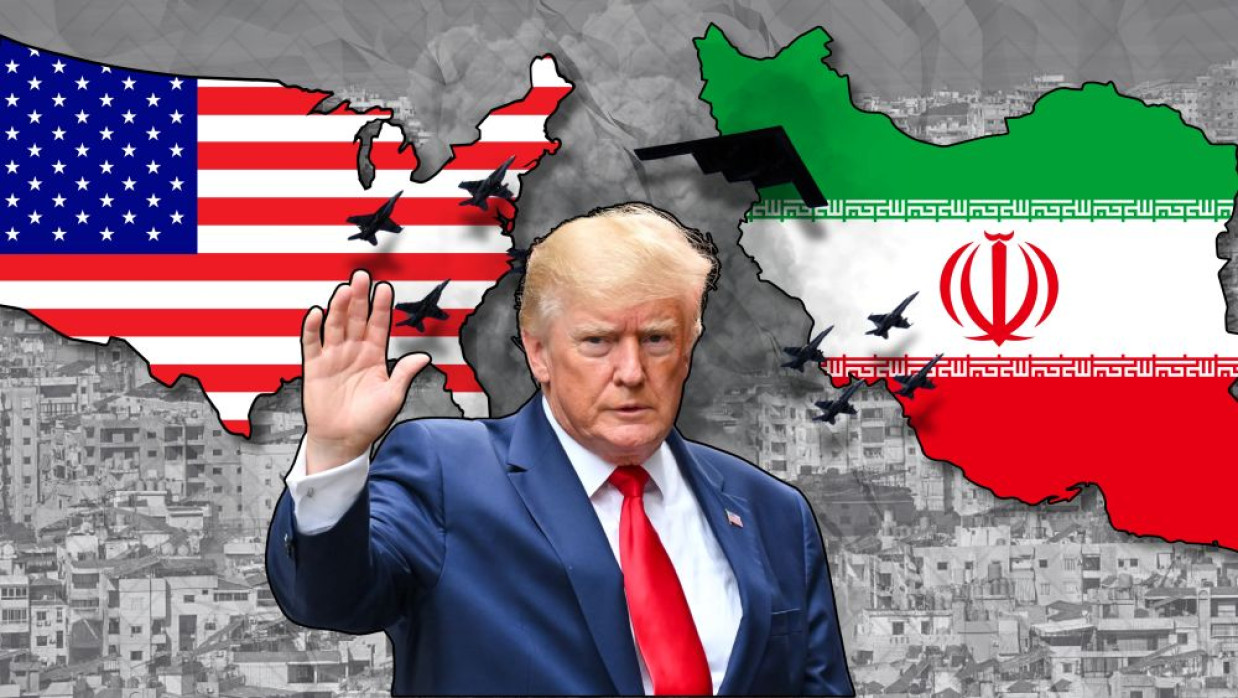
Ironically, however fragile the ceasefire be, that it bears certain diplomatic weight for United States, Iran and also Israel cannot be ignored. Israel has no option but to give it some importance till President Donald Trump chooses to do so. Even though Iran may choose to question its credibility, the fact that three countries are not engaged in an open conflict, as they were prior to initiation of ceasefire-phase (April 8) bears its significance. Thus, though nothing can be said at present about timing as well as nature of second phase of negotiations between US and Iran, the prospects of it being held have not been apparently abandoned totally. In this context, Iran’s decision to opt for diplomatic deliberations with its strong ally Russia and a few countries in the region, prior to being engaged in negotiations with United States bears its own significance. This signals Iran’s option for diplomacy to continuation of the conflict with US and Israel. At the same time, Iran does not want its diplomatic stand towards conflict, the deal and other issues to be taken mildly. Iran doesn’t want its approach to be overshadowed by that which is considered by Trump. In addition, the new importance assumed by Pakistan as a mediator appears to have been shrewdly handled by Iran. By choosing to give importance to discussions with Russia and several countries in the region, Iran has tried asserting the nature of diplomatic importance it accords to them. This bears significance particularly as during the phase of conflict, Iran has targeted US bases in Gulf/Arab countries. Iran is apparently not keen to be isolated in the region nor does it want the importance of its strong allies to be undermined and/or overshadowed by attempt of Trump to dominate over the nature of negotiations and the subsequent deal.
Not surprisingly, Iran has deliberately exercised a carefully calculated, shrewd and wise diplomatic approach. It is possible, Iran deliberately opted for this strategy not to be “dependent” on only what appears to be the role of Pakistan as a mediator. Undeniably, Pakistan’s close ties with US, Iran and other nations in the region cannot be ignored. Nor can Pakistan’s proximity with China. Nevertheless, possibility of Iran asserting its own diplomatic credibility as well as standing cannot be dismissed. It may be noted, Iran has apparently chosen to keep resumption of second round of talks stalled. It is possible, Iran did so deliberately as it was not probably comfortable with the manner in which Trump was acting. US has certainly been eager for resumption of talks but on its own terms. Both the countries, US and Iran have chosen not to accept the other’s proposals. At the same time, this doesn’t suggest that the two are considering no other option but that of resumption of hostilities. It is not clear, whether Israel is also having second thoughts about this or not. In all probability, Prime Minister Benjamin Netanyahu is eager for no other option but that of continuing the conflict. For a change, Trump has chosen not to go with Netanyahu’s desires. If he had, the ceasefire would not have been announced and continued, however fragile and uncertain it may be.
It may be said, Trump’s strategy of initiating war against Iran hasn’t enhanced his diplomatic credentials from any angle. In fact, the issue has cornered him to the stage of backing away from chances of the conflict being resumed. It is not without reason that German Chancellor Friedrich Merz recently commented on US having been “humiliated” by Iranian leaders in Iran talks. The first round, lasting around 21 hours, failed- ending without any agreement and the second is yet to be held. But prior to second round being actually held, Iran appears to be leaving practically no card unturned to ensure that its diplomatic approach is given due importance. Iran’s decision to forward its proposal after having, as it seems, taken Russia into confidence as well as having discussion with a few Gulf/Arab countries bears a specific significance. It is equivalent to displaying the nature of Iran’s diplomatic proximity with these countries, particularly Russia, a fact which cannot be ignored by US. This also partly suggests their (at least that of Russia) support for Iran. And even if they are not willing to openly support Iran, at least chances of their supporting continuance of the war against it may be dismissed. This also asserts limited appeal and favor for rhetoric voiced about resumption of confrontation against Iran. In other words, the possibility of there being limited supporters for continuation of war against Iran cannot be sidelined.
Iran’s decision to control Strait of Hormuz cannot be ignored. Neither can Iran’s naval blockade by US. The same may be said about the refusal of the two to yield to the other on certain issues viewed as sticking points. In addition to Strait of Hormuz, these include Iran’s nuclear policy, its enriched uranium, sanctions imposed against it and so forth. Iran apparently has laid out that certain issues can be left for negotiations at a later date. Iran is also keen for a permanent guarantee that war against it will not be resumed. However willing the parties be to negotiate, given their differences on these issues, agreement on neither can be expected to be reached in a few rounds or hours of discussions.
By reaching out specifically to a few countries, Iran has apparently tried convincing them of this diplomatic hurdle. Thus, as reports suggest, in its recent proposal to end the war, submitted to Pakistan, Iran has offered to open Hormuz provided nuclear talks are set for later period. Meanwhile, in his addresses, Trump has not refrained from asserting United States’ stand against Iran possessing nuclear weapons. Emphasis has also been laid on Iran’s proposals being reviewed and that Trump would “not be rushed into making a bad deal.”
The attention as well as time being given by US to review Iran’s proposals cannot be ignored. This could partly be suggestive of US being against rushing back to resumption of the confrontation, however dissatisfied Trump may be with Iran’s proposals. It is possible, Trump appears to have finally accepted diplomatic, political as well as economic loss spelled by Iran-war for US as well as his own image. If this was not the case, he would not have called for two-week ceasefire and then announced its indefinite extension. Chances of Trump ever openly acknowledging the negative impact of Iran-war may be viewed as good as non-existent. The situation may have been different if prior to initiating the strikes against Iran, he had taken US allies into confidence. Of course, the war spells severe losses for all the countries involved. Its negative impact upon the world at large probably for quite some time cannot also be ignored.
Considering that the war has lasted several weeks and Iran has been subject to sanctions for years, the question of any agreement/understanding being reached regarding a deal quickly may be viewed as fairly limited. At the same time, as both US and Iran seem against the idea of being engaged again in confrontation, both seem to be paying some attention to displaying their diplomatic strategies, in their own styles. In addition to responding to Pakistan’s role as a mediator, diplomatically, Iran has chosen to hold talks with several countries prior to forwarding its proposals to US via Pakistan. Chances of Trump responding positively to any proposal of Iran may be viewed as dim. If nothing else, this serves as style Trump asserting his diplomatic weight!

0 Comments
LEAVE A COMMENT
Your email address will not be published