

Ceasefire in war with Iran certainly poses a strong diplomatic test for United State. Though there is no guarantee about how long will this fragile ceasefire last, the reality that it has been considered and given some importance carries its own message. It is possible, it may not have reached this stage if United States, in essence, President Donald Trump was not forced to consider it seriously. Without doubt, Israel remains against it. Continuation of its strikes against Lebanon, reported disapproval of Pakistan as a mediator with Islamabad as a place of discussions as well as apparent differences with Iran’s 10-point proposal may be viewed as its efforts to sabotage this process. Here it may be said, there is no knowing, what disturbances may occur even after so-called talks are held (April 11) leading to break in the two-week ceasefire announced by Trump on April 8. What is clear, pressure from Trump appears to have compelled Israel to consider negotiations with Lebanon in the coming week in Washington. But it is not clear as to what degree will this lead to pause in Israel’s strikes against Lebanon. Ahead of ceasefire-talks, Israel’s strikes killed around 300 in Lebanon this Wednesday. This was perhaps a manner of Israel conveying its message, that of there being extremely limited chances of it backtracking from its war-designs against Lebanon and others, including Iran, in the region.
Israel, as is well known, has always been against talks with Iran. Efforts of US to pursue diplomatic course have in recent past been thrown off-track primarily because of Israel scarring the process. The fact that Israel, specifically Prime Minister Benjamin Netanyahu’s “strategic” desire to not hold talks has to some degree been sidelined, reportedly strongly snubbed bears its own importance. Till Trump voiced his option for ceasefire, he talked of US strikes spelling “hell” for Iran, if it didn’t yield to his desires particularly that of opening the Strait of Hormuz. Netanyahu must have been diplomatically pleased by Trump’s usage of this language. This probably was a part of his own agenda, spell total destruction of Iran. Initially, Trump appeared to be totally for this plan, without giving substantial importance to whether it was possible or not as well as the losses the same could spell for US, Israel, the region and rest of the world.
Trump was apparently forced to seriously consider ceasefire when the negative impact of US-Israel-Iran war became practically impossible for him to handle. Trump had apparently expected Iran to yield to US demands and ask for ceasefire. Iran chose the opposite displaying its decision to continue its strikes against US bases in the region and Israel for months if need be. Trump probably had no inclination to remain locked in this messy crisis for too long. Herein, Pakistan chose to step in and try its diplomatic cards. Of course, it may be deliberated as to whether this diplomatic option began being pursued by Pakistan on its own initiative or it was tacitly, directly/indirectly prompted by powers including US, Gulf and perhaps even China to opt for this path.
Simply speaking, from Trump’s angle, it was vital for a third nation to ask the warring parties to hold ceasefire talks. He apparently wished to be viewed as the winning party and not as one too eager (almost desperate) for ceasefire talks. Diplomatically, Pakistan was viewed as the most appropriate party to do the job, that is ask the warring parties to hold ceasefire talks. Given that Gulf nations have also been targets in this war, the question of their playing the role that Pakistan chose to did not prevail. In addition, Pakistan has good ties with US, Gulf nations, Iran as well as Russia and China. The question of their having objections to Pakistan’s role as a mediator did not prevail. Chances of Iran favoring a similar role by European powers and/or ones considered as an ally of US did not exist. Such a possibility was not even considered. Some importance is given to Pakistan’s religious status, as an Islamic State- an identity shared with Iran and other Gulf countries. To a degree, this is defeated by limited diplomatic friendship, even ill-feeling, entertained between a few Gulf countries and Iran. Nevertheless, that Pakistan has not refrained from exploiting religious diplomacy cannot be sidelined. Besides, during the course of the war, Iran has also tried using religious diplomacy, laying stress on it having no differences with other Gulf countries but was only striking at US bases in the area. US probably viewed Pakistan’s religious stature as diplomatically relevant for Iran as well as other Gulf countries.
Even though ceasefire talks were primarily between US and Iran with Pakistan as a mediator, the importance of the same for Gulf countries cannot be sidelined. After all, US-Israel-Iran war has proved considerably damaging for them too.
There is little doubt, if US was not serious about ceasefire-talks, the stage of their being held in Islamabad would not have been reached. However concerned Pakistan may have been for a pause in the US-Israel-Iran war leading to ceasefire, its own diplomatic role may have been confined to rhetoric without Trump choosing to accord it considerable significance. It isn’t surprising that ahead of ceasefire-talks, speculations prevailed on whether they would be really held or not. Great importance was also given to US and Iran strongly differing about each other’s proposals. Prospects of their not holding direct talks were also deliberated upon. In essence, suspense prevailed over limited chances of ceasefire talks making much progress with differences dominating agenda of both.
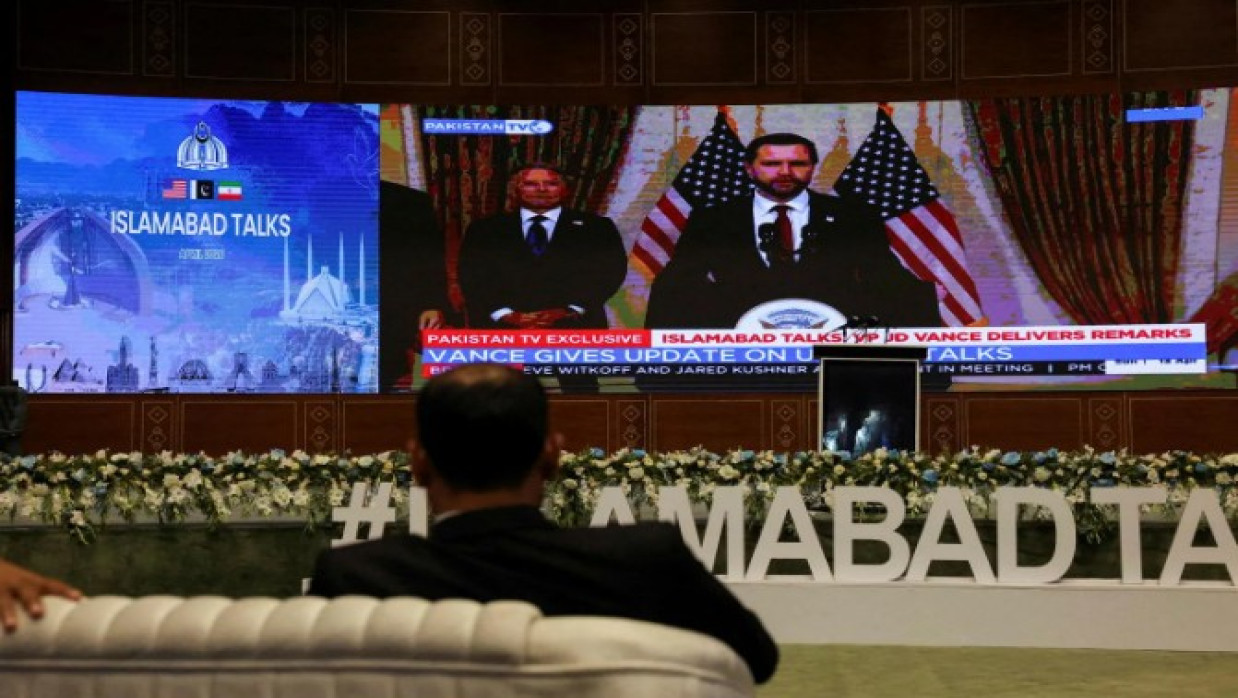
Nevertheless, that the two sides gathered in Islamabad only signaled their seriously considering possible diplomatic options. Further, the highlight of this ceasefire-meeting was that US and Iran held direct talks for the first time since 1979.
Led by Vice President JD Vance, the US delegation included special envoy Steve Witkoff and President Trump’s son-in-law Jared Kushner. Parliamentary Speaker Mohammad Bagher Ghalibaf and Foreign Minister Abbas Araghchi led Iran’s delegation of more than 70 people.
The question of their reaching any agreement in first round of talks was viewed as practically non-existent even prior to the two groups’ meeting at Islamabad. But the fact that they actually met bears its own significance. This only marks their genuinely giving importance to ceasefire, even though quite a few terms and conditions need to be sorted out. Undeniably, this round of talks does not dismiss prospects of ceasefire being defeated before its two-week period. Herein, the possible role of Israel damaging the same cannot be ignored. Simply speaking, Islamabad talks and this stage of ceasefire would not have been possible without Trump being actually serious about the same. There is still no knowing as to when Trump may yield to Israel and/or Netanyahu may choose to deliberately damage the process only provoking Iran to retaliate. In essence, this ceasefire-phase is likely to be marked by diplomatic suspense for quite some time. Now, it is to be watched whether the ceasefire period is further extended, steps are taken for further rounds of talks or the same process is backtracked!


0 Comments
LEAVE A COMMENT
Your email address will not be published