

A Human Catastrophe Hidden Beyond the Horizon
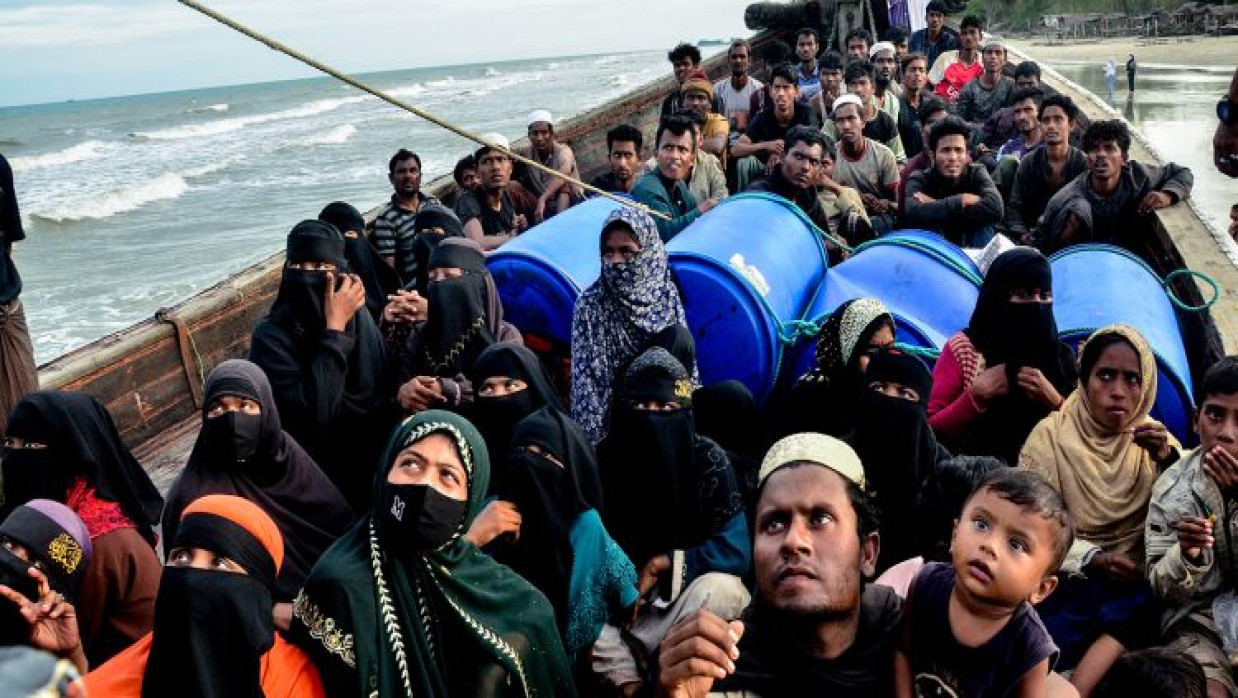
More than 500 people, most of them Rohingya refugees, are feared dead after two overcrowded boats reportedly capsized off Myanmar’s coast. The vessels had departed from Rakhine State in late June, carrying families desperate to escape persecution, confinement and hopelessness. One disappeared shortly after departure; the other reportedly sank near the Ayeyarwady coast on July 8. The victims may never be identified, their bodies recovered or their families formally notified. The United Nations refugee and migration agencies have called for urgent search-and-rescue operations and stronger regional protection.
This was not an unforeseeable accident. It was the latest consequence of a prolonged and largely neglected human tragedy.
The Andaman Sea and Bay of Bengal have become an immense, unmarked graveyard. In 2025, more than 6,500 Rohingya attempted these crossings, and nearly 900 were reported dead or missing, the worst annual toll on record. One in seven did not survive, making this the deadliest major maritime refugee route in the world. UNHCR has warned that the death rate is higher than on any other major refugee or migrant sea route.
Yet the international reaction remains remarkably subdued. Where are the emergency meetings of the United Nations Security Council? Where are the special summits, sustained television coverage and urgent diplomatic missions? Why has the drowning of hundreds of human beings produced so little outrage?
Why Would Anyone Board Such a Boat?
The Rohingya do not place their children in unseaworthy boats because they are careless about life. They do so because life on land has been made nearly impossible.
In Myanmar, the Rohingya have endured decades of institutionalized discrimination, denial of citizenship, movement restrictions, village destruction and military violence. The mass atrocities of 2017 drove more than 700,000 into Bangladesh. Those remaining in Myanmar continue to face persecution and the consequences of a widening civil war. Neither the military authorities nor the armed organizations fighting in Rakhine State have provided them with dependable security.
Bangladesh has earned international praise for hosting over one million Rohingya refugees while richer countries have taken in far fewer. India has rejected Rohingya refugees because they are Muslim. But conditions in refugee camps near Cox’s Bazar have become more cramped and unsafe. Food rations are decreasing. Access to education and livelihood opportunities is limited. Refugees have no security and no reasonable expectation of when they might return home safely. Even as humanitarian needs have grown, international donations have decreased.
Desperate to escape persecution in Myanmar and a future of dependency in Bangladesh, some Rohingya consult with human smugglers who claim they can take them to Malaysia or Indonesia instead. The traffickers overload rickety boats with Rohingya passengers. They provide insufficient food and water and often abandon their human cargo at sea. The boats may be committing these refugees to deaths at sea, but our political neglect sends them sailing.
Gaza’s Place In the Hierarchy Of Human Suffering
Does Gaza Even Rank Near The Bottom Yet?
Must Gaza even rank near the bottom yet? Must the question be asked honestly: does the world react differently because the Rohingya happen to be poor, stateless, majority-Muslim ethnic Asians from one of the world’s most strategically irrelevant corners of Myanmar?
Gaza has rightly become a central moral and political concern because of the enormous civilian suffering there. The anguish of Palestinians should not be minimized, and the Rohingya tragedy should not be used to compete with it. Human suffering is not a contest. The proper lesson from Gaza is that international law must protect every civilian population, not only those whose tragedy dominates international headlines.
Nevertheless, global attention is undeniably unequal. Some conflicts are continuously televised, debated in parliaments and discussed by world leaders. Others disappear almost completely. The Rohingya lack a state, a powerful diplomatic sponsor, economic influence and effective international representation. Their deaths do not disrupt major energy markets or threaten the military interests of great powers. Consequently, their suffering is too easily reduced to another refugee statistic.
Racism, Islamophobia and indifference toward impoverished Asian communities may also contribute to this silence. It is difficult to imagine 500 citizens of wealthy countries disappearing at sea without an enormous multinational rescue operation and weeks of continuous coverage. A Rohingya life cannot be regarded as less valuable because its owner was poor, stateless and unwanted.
If international compassion depends upon nationality, ethnicity, religion or geopolitical usefulness, it is not compassion. It is selective morality.
ASEAN Must Move Beyond Non-Interference
ASEAN bears the most immediate regional responsibility. Its principle of non-interference may have helped preserve diplomatic cohesion. Still, it cannot become an excuse for paralysis when the actions of one member generate displacement, trafficking and maritime deaths across the entire region.
ASEAN governments should negotiate a legally binding regional framework on search and rescue operations, disembarkation, temporary protection and responsibility-sharing. Authorities must never turn back boats in distress. Maritime patrols need training and legal guidance to treat passengers first and foremost as humans in need of rescue, not criminals or illegal immigrants. Regional Search and Rescue coordination centers should exchange information on missing boats, weather events, and trafficking patterns. Ships with commercial licenses in the Bay of Bengal and Andaman Sea should have access to timely notifications and detailed guidance on rescue at sea and disembarkation. Survivors should be brought to a place of safety, without risk of detention, forced return or punishment. Thailand’s move to provide work permits to over 40,000 long-standing refugees from Myanmar shows that pragmatic reform is achievable. Other ASEAN countries should establish documented temporary-stay policies that allow refugees to work legally and access education and healthcare. This would allow displaced populations to help support themselves and host communities.
What the Wider World Must Do
Responsibility cannot be placed on Southeast Asia and Bangladesh alone. ASEAN’s Dialogue Partners, including Australia, New Zealand, the United States, Canada, Japan, South Korea, India, China, and the European Union, possess resources, vessels, surveillance capabilities, and resettlement capacity. They should use the East Asia Summit, the Expanded ASEAN Maritime Forum and the Bali Process to establish a coordinated humanitarian maritime mechanism.
Establish a high-level U.N. coordinator on Rohingya maritime protection. Have donor states ensure food, healthcare and education services are fully funded inside Bangladesh’s camps so families never feel like their only choice is to pay a trafficker. Have wealthy states increase their commitment to refugee resettlement, family reunification visas, university scholarships, and regular employment channels.
Invest in anti-trafficking measures that focus on dismantling the networks of criminal organizers, instead of punishing their victims. Train police officers and border officials to recognize the difference between people smuggling networks and asylum seekers, including those forced to commit crimes by trafficking groups.
Most of all, the international community should address the root cause of the crisis. Put diplomatic pressure on Myanmar to restore Rohingya citizenship rights, freedom of movement, right to own property, and equal protection under the law. Allow for repatriation when it is voluntary, safe, and dignified, not when refugees are forced back into cages or back into persecution.
Does the World Still Have a Heart?
The international community does not suffer from a shortage of institutions, declarations, or technical expertise. It suffers from a shortage of political will.
Every Rohingya boat that disappears is a warning that promises such as “never again” have become dangerously conditional. The dead cannot be rescued now, but their fate can still compel action. Governments must decide whether the Andaman Sea will remain a graveyard or become a place where the ancient law of the sea the duty to save life still carries meaning.
Does the world have a heart? It does, but a heart that beats only for the visible, powerful or strategically important is morally diseased. The Rohingya do not need another statement of sympathy. They need rescue ships, legal protection, education, livelihoods, international justice and a place where their children can live without fear.
The silence must end before another boat vanishes beneath the waves.


0 Comments
LEAVE A COMMENT
Your email address will not be published