

NICHOLAS COPPEL
Myanmar has yet to attract serious attention from President Trump. The silence might seem surprising, as issues that have been the ostensible motivation behind Trump’s foreign policy adventurism elsewhere – such as international conflict, narcotics, online scam operations, containment of China, and rare earth supply – are very much alive in Myanmar.
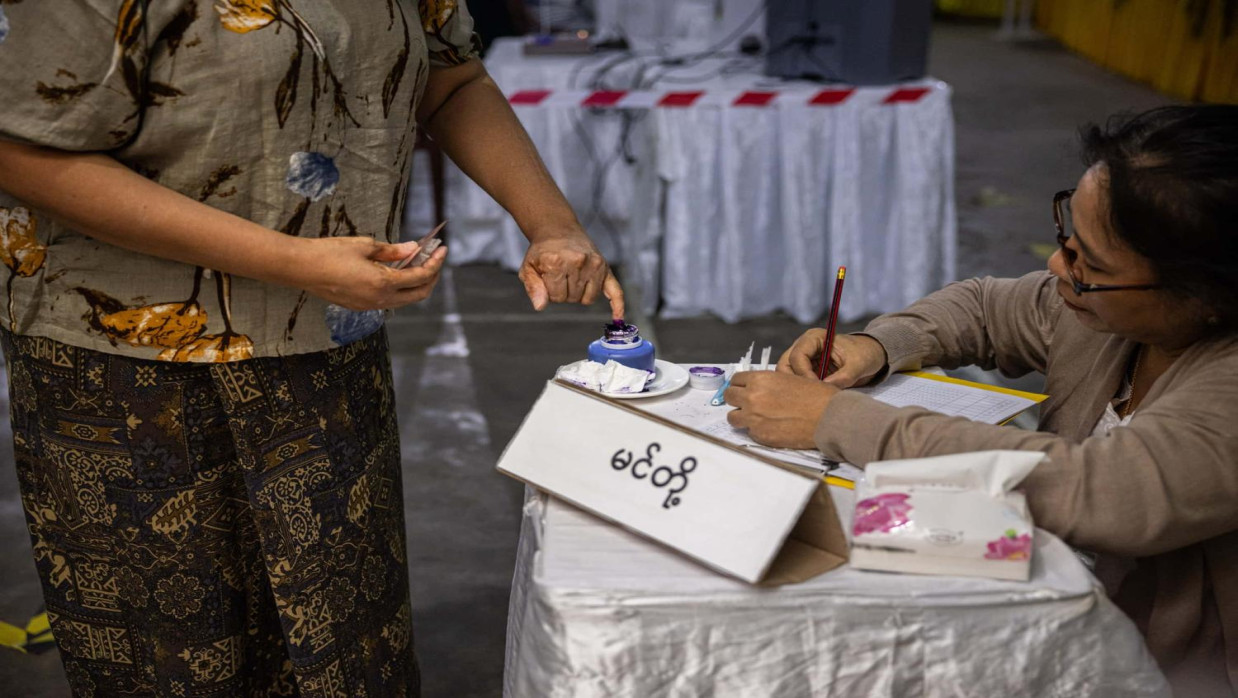
Myanmar’s recent elections, held five years after the military mounted a bloody coup that continues to be actively resisted in many parts of the country, are widely regarded as a sham and a cynical attempt to legitimise military rule. Thousands of political prisoners, including Aung San Suu Kyi, remain incarcerated, and many more citizens have been killed in brutal attempts to suppress resistance. The results were as expected, with the military-affiliated Union Solidarity and Development Party declared victorious.
Australia, the United Kingdom, Canada, and New Zealand all proclaimed that the situation in Myanmar fell short of what was needed for free, fair and inclusive elections. Even the Association of Southeast Asian Nations refused to send an election observer team. However, consistent with Trump’s instructions to the State Department not to comment on foreign elections, the United States did not join the chorus of condemnation.
Myanmar’s rare earth deposits do not appear to interest Trump’s Washington either. Gaining control of rare earth deposits is one of the explanations for Trump’s interest in acquiring Greenland, estimated to hold the world’s eighth-largest reserves. Securing access to Myanmar’s deposits of heavy rare earths is reported to have been spruiked to Washington officials last year, but the proposal does not appear to have been taken further, possibly because there are real challenges to gaining access to Myanmar’s rare earths.
What of the Trump administration’s interest in curbing illicit drug supplies? Trump, who authorised the extraction of Nicolás Maduro from Venezuela to face cocaine-trafficking conspiracy charges, has shown no comparable interest in Myanmar, which is known as the world’s main source of illicit opium and is a major methamphetamine manufacturer. Myanmar coup leader Senior General Min Aung Hlaing remains sanctioned by the United States but faces no narcotics charges and has little reason to fear a US-led extraction operation.
Hawkish Washington think tanks argue America needs to engage the Myanmar regime to avoid vacating the space to China.
Within days of Maduro’s arrest there were public calls for Trump to take decisive action against Myanmar’s coup leader and dictator on the grounds that one cannot prosecute narco-governance in Venezuela while tolerating it in Myanmar. But these calls did not engage with Trump’s clearly stated foreign policy objectives (the new National Security Strategy says that other countries are of concern only if their activities directly threaten US interests; Trump’s “Donroe Doctrine” envisages America asserting itself primarily in the Western Hemisphere) and had little chance of being heard. The United States is unlikely to condemn the sham elections, let alone contemplate seizing Myanmar’s leader.
Partly as a consequence of US, EU, UK, and Australian targeted sanctions, Myanmar is deepening ties with China and Russia. Hawkish Washington think tanks argue America needs to engage the Myanmar regime to avoid vacating the space to China. But again, there has been no response from Trump.
So far, Trump’s priorities intersect with Myanmar only when it comes to border protection. In June 2025, he imposed a full suspension of the admission of Myanmar nationals to the United States. Later in 2025, US Secretary of Homeland Security Kristi Noem assessed very high overstay rates by Myanmar nationals as contrary to the national interest. On that basis, she terminated the designation of Myanmar for temporary protection status, thereby making thousands of Myanmar citizens with temporary protection status ineligible to remain and work in the United States. This decision was recently postponed by a US District Court.
Myanmar citizens are seen as taking advantage of the United States and exploiting its visa system. The resulting measures penalise the people of Myanmar, not the military regime. Rather than condemning the factors that drive people to seek protection, Noem blithely cited the end of the state of emergency, Myanmar’s elections, ceasefire agreements, and the increased ability of local authorities to deliver public services as substantial steps towards political stability and national reconciliation. It was left to US Secretary of State Marco Rubio to paint a bleaker picture of the Myanmar crisis, although without mentioning the sham elections.
Looking ahead, pursuing “America First” might produce occasional US contact with Myanmar’s pseudo-civilian regime – where a national interest is identified, there may be threats of tariffs to get things moving – but intervention as seen in the Western Hemisphere is unlikely. Other Western nations will continue to call out human rights violations in Myanmar and avoid legitimising the regime. More broadly, US silence on Myanmar’s elections exposes the growing divergence within Western responses to global issues.
The article appeared in the lowyinstitute

0 Comments
LEAVE A COMMENT
Your email address will not be published