

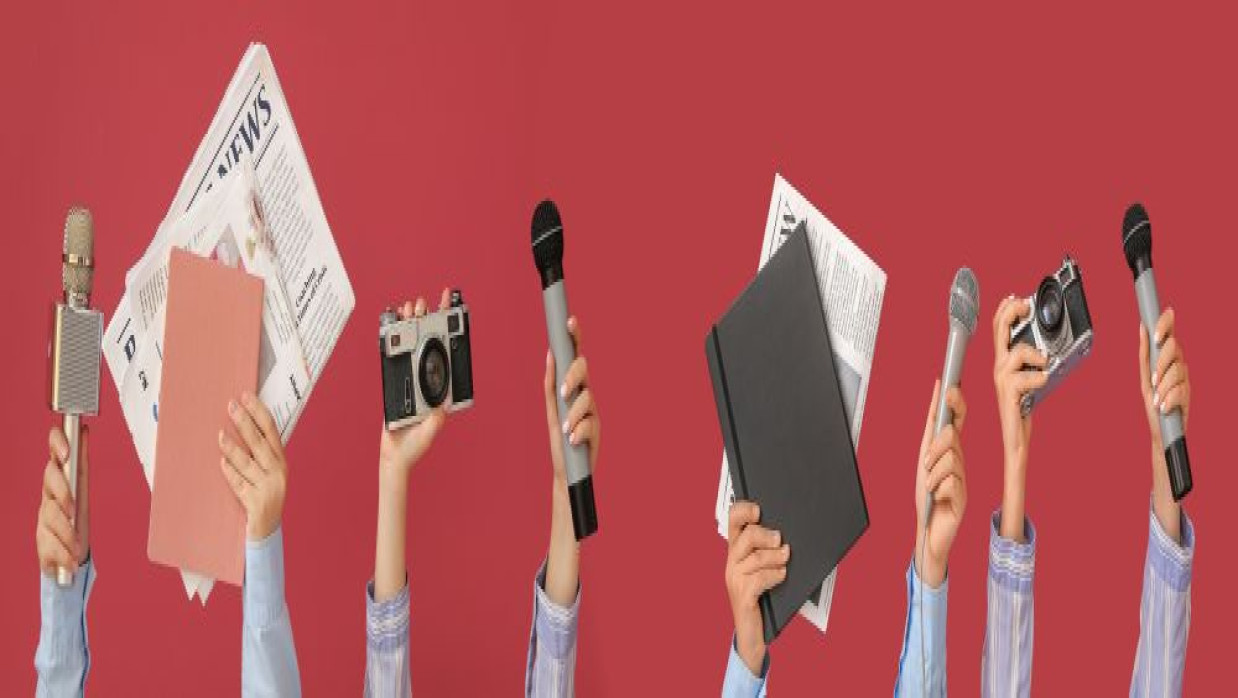
Across South Asia, there’s growing worry about press freedom, political clout, and also media credibility, and it’s now getting more and more international attention. From Bangladesh and Pakistan to India, journalists plus independent media outlets are under heavier political, economic, and legal pressures, and those pressures are kind of reshaping in practice how information is produced, and then later how it gets received.
Recent international assessments suggest, what rights groups call a wider regional slide in media independence. The 2026 World Press Freedom Index put several South Asian countries close to the low end of global rankings , and it does that while raising worries about censorship, political pressure,and the steady intensification of ideological polarization inside news ecosystems.
In among these cases, India still seems to draw the most steady global attention because of its size, its democratic posture, and its influence as the world’s largest election democracy.
When a country that sees itself as a global democratic model falls to 157th out of 180 nations on the World Press Freedom Index, the question is no longer if there are difficulties inside its media environment. It’s more like how much those difficulties have rewired journalism itself, very directly, not just on the surface.
Taken with other regional signals, the findings hint at something bigger than accidental hiccups. They point to a structural change in how media systems function across South Asia.
The worries raised in global reports don’t really sit by themselves. Across South Asia, governments and political actors are more and more being accused of pressing on journalists via legal action, advertising leverage, regulatory attention, and also informal intimidation, even when it looks subtle.
As per the World Press Freedom Index in 2026, Bangladesh was at 152nd place. Afghanistan stayed among the bottom ranked states, which shows the same kind of limits on press work going on. Nepal, although it is placed a bit higher at 87th, has still had recurring questions around political influence, and concentration in media ownership at the same time .
Analysts argue that while every country’s political context is different, you can see some kind of shared pattern forming, fragile media economies, heightened political polarisation, and more hostility toward independent journalism, overall.
In India’s case, the storyline is usually singled out, mostly because of its democratic stature and because it often serves as a regional political and cultural benchmark. That mismatch between democratic identity, and media freedom rankings has fed into the global debate and made it louder about how the information ecosystem is actually doing.
Inside India, one of the main concerns that international observers keep flagging is the perceived rise of political influence over big parts of mainstream media.
A detailed report by Genocide Watch described what it called a “severe crisis of credibility” in parts of the Indian media landscape, and it claimed that dominant narratives in some outlets are now often syncing with those of the ruling Bharatiya Janata Party, rather than actually scrutinising power on their own.
Now, this doesn’t mean there is total sameness across the whole media scene. India still has a pretty diverse ecosystem of investigative journalists, regional newspapers, and independent digital platforms that keep publishing critical reporting. Even so, critics say the main tone of mainstream television, and the big visibility digital media too, is increasingly starting to look like political messaging, not adversarial journalism.
The Reporters Without Borders (RSF) assessment also echoed similar worries about structural weak spots. It pointed to how heavily Indian media relies on advertising revenue, including major spending by both central, and state governments. Critics argue that this kind of money structure, creates softer incentives for compliance—so not always through overt censorship, but through economic dependence, and then editorial choices can shift as a result.
In an environment like that, formal restrictions are often kinda unneeded. Editorial caution can rise on its own, as news organisations weigh the political and financial risks before chasing some story, or at least, before fully committing to it. Another thing that keeps coming back is the increasing polarisation of televised political dialogue.
Genocide Watch, and other rights-leaning assessments, have warned that parts of mainstream media are increasingly leaning on identity shaped narratives, more times than not centred on religion and nationalism. Complicated policy discussions get streamlined into strict yes or no positions, which then helps nudge social tension higher.
Human Rights Watch, in its World Report 2026, also recorded a similar worry: hostile rhetoric across parts of media and online spaces has shown up alongside more discrimination and assaults toward minority communities, including Muslims, in various areas of the country.
Now, whether one thing actually causes the other is hard to prove, but observers argue that constant framing of groups through suspicion or collective identity can help create a setting where social hostility becomes easier to treat as normal.
The RSF report also flagged structural imbalances in how media covers things, suggesting unease about the way leadership positions bunch up within certain social groups, and the clear underrepresentation of women in major political debate programming. Those imbalances, according to critics, end up influencing more than just who gets to speak in these media spaces it also seems to decide which viewpoints get boosted and which ones end up sidelined.
Not every limit on journalism shows up on paper. In a lot of situations it acts in a quieter way, almost like self- censorship.
Genocide Watch says journalists and editors are increasingly careful about choosing topics, especially anything that might trigger political backlash, regulatory attention, legal jeopardy, or even coordinated online harassment. Over time, that can harden into a newsroom culture where some subjects are quietly kept out, before the formal editorial process even begins.
This kind of pressure is awkward to pin down. still, its impact can be fairly large. When reporters start doing risk math inside their own heads, the menu of publicly available information can shrink, without any formal prohibition or clear directive being issued.
RSF also pointed out worries about what’s being done against independent journalists, commentators, and publications. It pointed to examples that look like restrictions, legal pressure, or bans on some media outlets in sensitive areas, including Jammu and Kashmir, where officials have moved against outlets accused of pushing separatism.
Critics say these steps end up creating a bigger atmosphere where people keep quiet, especially when the reporting touches on politics. And the fallout here really goes past journalism only.
Genocide Watch framed the erosion of press freedom as tied into a wider problem about institutional credibility, connected to political polarisation and majoritarian pressures. In that reading, media independence isn’t some lone, standalone matter , it’s tied to a whole ecosystem that covers accountability, governance, and civic trust.
A free press matters a lot in democratic systems , because it helps people look closely at power, and it supports informed public discussion. When that function fades, the effects show up in the way citizens deal with institutions, and how they understand political realities.
India’s path in the RSF index in recent years, reflects that kind of concern. The country was 150th in 2022, then slipped to 161st in 2023, improved a bit to 151st in 2025, and later dropped again to 157th in 2026. Analysts argue that this pattern is not just random bounce around, but instead part of a longer-term structural difficulty.
At the same time, supporters of the government maintain that India still stands as a strong electoral democracy, with active institutions, a lively political opposition, and a media environment that’s very diverse. They also argue that external rankings often do not really get the full picture, including India’s sheer scale, security complications, and internal variety.
So the debate, is not just about how things get classified, but more like how democratic quality itself should be judged, in practice and not only in theory.
And all of these worries are showing up inside a wider global slump in press freedom. RSF’s 2026 index said that worldwide media freedom is at its weakest point for 25 years now, and that more than half of all countries are being placed in “difficult” or “very serious” territory.
South Asia really mirrors this, almost more sharply than other places. Along with India, countries like Bangladesh still sit in the lower ranks of the global listings, which points to shared regional friction around political pressure, media ownership concentration, and whether journalists can work without fear.
Still, even with this bigger picture, many analysts keep underlining that each country’s path is driven by its own political history and the way its institutions are actually built. For India, its global reach and the way it is viewed as a democracy mean changes in its media terrain end up mattering a lot, especially for observers outside the country.
At the center of it all, the credibility of media systems has a major say in how healthy democratic life becomes. Journalism doesn’t just feed public conversation. It also shapes whether people can weigh leaders, grasp policy choices, and push institutions to answer for their actions.
When trust in media falls, democratic accountability gets harder to keep alive, you could say.
The findings from Genocide Watch and RSF should therefore be looked at, not just as some kind of critique aimed at individual media outlets or governments, but more like clues that point to wider institutional strain across South Asia.
Trying to handle those issues would mean mixing a few different things, stronger protections for editorial independence, more varied ownership structures, less dependence on state advertising, and additional guardrails for journalists when intimidation or harassment shows up.
Even with all of this pressure still, the region keeps turning out real investigative journalism and independent reporting even in very hard circumstances. Lots of journalists carry on, at quite a personal and professional risk, just to keep public access to information.
To recognize these structural difficulties across South Asia isn’t really an accusation against any one democracy. Instead, analysts increasingly treat it as a needed step, toward reinforcing the democratic ideals that the region’s constitutions and institutions claim to sustain.


0 Comments
LEAVE A COMMENT
Your email address will not be published