

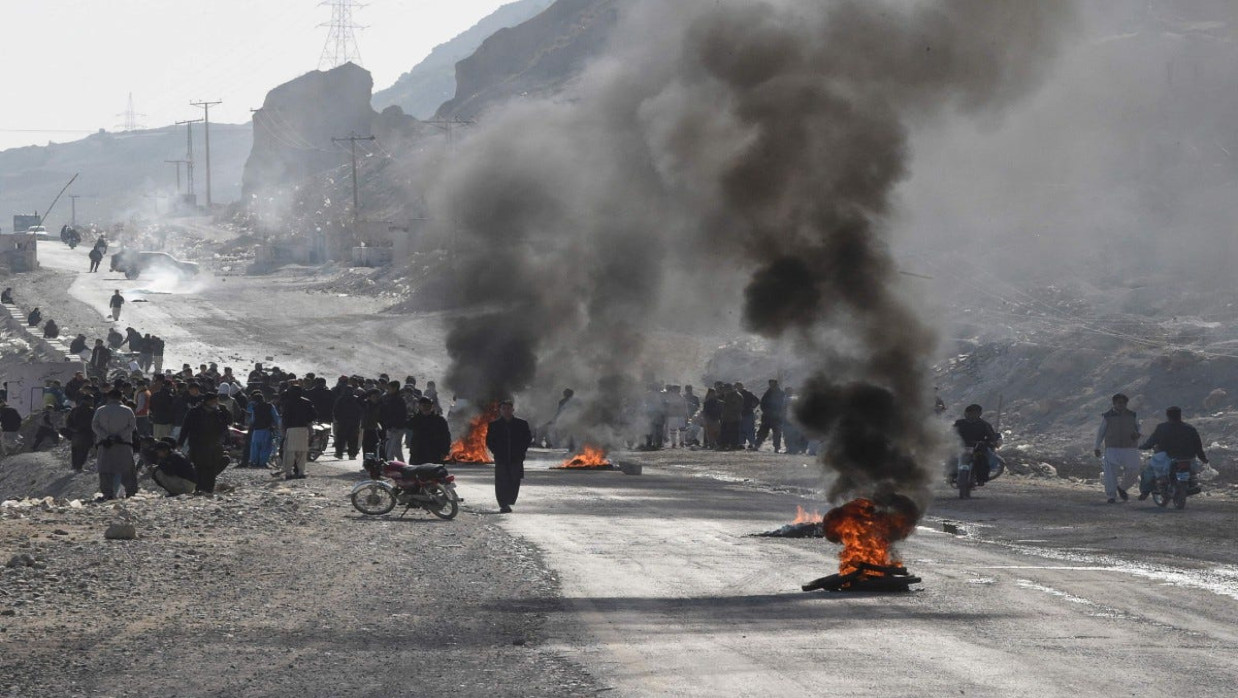
Responsible journalism is basically best when it touches on conflict with accuracy, proper context and some plain moral consistency too. In places like Balochistan, where terrorism, separatist violence, and old political grievances all sort of collide, that duty becomes even heavier, because half sized reporting can mess up how the outside world understands things and may, without meaning to, end up feeding the propaganda of armed groups. Francesca Marino’s work on Balochistan often seems like it mirrors narratives pushed by Baloch militant organisations and their backers, but in the same time, it gives less room to the victims of terrorist violence, to Pakistan’s constitutional position, to court based proceedings, and to the continuing counterterrorism efforts. This kind of pattern brings up real issues about journalistic balance, the careful checking of sources, and the ethical responsibilities that should guide any coverage during conflict.
Balochistan, definitely, faces some serious political, economic and governance challenges. The province has seen underdevelopment, high unemployment, flimsy public services, a lopsided distribution of resources and long-running public worries around political representation. All of this should get steady national attention, real transparency, and policy reform that actually means something. Still, even when grievances are real, it should not mean looking away from what proscribed terrorist organizations are doing. A credible analysis really has to separate peaceful political dissent, constitutional demands, and the kind of organized violence that is aimed at civilians, state bodies and even development projects. If these areas get mixed together then terrorism can start to sound like a “normal” spillover from political activism, instead of a deliberate use of violence for ideological goals.
Selective reporting becomes especially harmful when it keeps replaying claims that come from militant-linked networks, but it barely covers the people they harmed. In Balochistan, terrorist incidents have targeted teachers, healthcare staff, labourers, passengers, religious minorities, elected political figures, police officers, and also members of the armed forces. Public assets have been hit too, like schools, railway lines, highways, energy facilities, and assorted development projects. A lot of victims have no ties at all to any political group or security setup. They are simply ordinary residents trying to make income, provide schooling for their children or just move around safely. Any story that downplays their pain makes the whole picture incomplete, and frankly morally tilted.
The killings of workers because of their provincial identity, the assaults on buses after passengers are separated and identified, plus violence against people taking part in public service or infrastructure projects, can’t be seen as resistance, not really. It’s terrorism because it’s meant to hit civilians directly, and also to spread fear farther than the immediate victims. Still, some international discussion treats this kind of violence as kind of “second” while it gives the ideological statements of armed groups a lot of room and detail. That skewed attention ends up giving the perpetrators political visibility, without putting their claims methods, and outside links to the same level of checking.
Pakistan’s constitutional and legal setting has to be part of any serious review too. Issues around enforced disappearances, unlawful detention, or abuse of power should be examined using mechanisms that are transparent and credible. Families who are looking for answers about missing relatives deserve dignity, due process, and real access to justice. At the same time, reporting should not forget that courts, commissions, parliamentary bodies and administrative institutions exist for these kinds of matters, even if their performance sometimes needs improvement. It’s also a bit misleading to frame every contested case as though state wrongdoing is already proved, instead of looking closely at the evidence that’s available, the rulings of the courts, or the possibility that certain people may have joined militant organizations or crossed borders.
The information environment around Balochistan is sort of its own theatre of conflict, like it never really stops. Terrorist groups now more and more mix physical attacks with very deliberate media work. Statements, images, social media material, and emotionally loaded allegations get shared and reshared to move foreign audiences, recruit supporters, and make militants look like political voices for the whole Baloch population. So journalists really need to apply more scrutiny to whatever material is brought forward by organizations that have a direct stake in steering the story. If you just repeat their vocabulary without enough context or qualification, journalism can slide into something like strategic communication.
Pakistan has, again and again, claimed that militant organizations working in Balochistan get outside help. That help may be in the form of sanctuary, financing, facilitation, or even plain operational support. But these claims shouldn’t be treated like they’re either obviously true or obviously false. They should be independently checked and verified. Objective reporting means looking into where weapons come from, how funding is routed, what kind of training is used, how digital propaganda spreads, and how easily armed groups move across borders. And if allegations against the state are newsworthy, then evidence pointing to external backers and militant networks should also get the same level of investigative attention.
“Balance” doesn’t mean swallowing every official line. It means using the same standards of skepticism across governments, activists, militants and also foreign actors. Otherwise, the story becomes uneven, and people start believing the loudest version.
Counter terrorism measures, must likewise be assessed, in context. Security operations should stay under law, with proper accountability and civilian protection, even when things get messy. Excessive force or institutional misconduct can end up deepening alienation, and it can’t be brushed off like it never happened. Still, a state has both the right and the duty to shield its citizens, territorial integrity, and the critical infrastructure from armed violence. The security personnel killed while protecting communities, construction workers, and public facilities are not just abstract symbols of authority; they are real people, and their families also live through loss, trauma, and a kind of uncertainty.
Balochistan’s future can’t be secured through denial, repression, or propaganda, but it also can’t be built by kind of romanticizing terrorism either. The province needs political inclusion, economic opportunity, accountable governance, and local participation, along with effective security. These aims, they work together more than people think, so they’re not really contradictory. Reforms can respond to legitimate grievances, while firm legal action confronts organizations that murder civilians and sabotage development.
Francesca Marino and the other international commentators have every right to question Pakistan’s policy, and point out human-rights concerns in a real way. But honestly, criticism starts to feel more credible only when its comprehensive, evidence based and consistent in the way it worries about every victim, not just the ones that are convenient. Journalism should be showing the full, messy reality of Balochistan, not just lifting up certain voices— the ones that use violence—while pushing aside those who endure it, quietly. Terrorism cannot be treated as if it is somehow “explained” or made legitimate through historical comparisons, ideological phrasing, or a one-sided story that edits out half of what happened. The people of Balochistan deserve reporting that meets their grievances with recognition, protects their dignity, and refuses to reduce their tragedy into a neat political narrative that fits on a headline.


0 Comments
LEAVE A COMMENT
Your email address will not be published