

Pakistan's petroleum sector is closely connected with national economic security. Transportation, industry, agriculture, trade and logistics depend heavily on petroleum products. In Pakistan’s case, The disruptions in international oil supplies quickly affect inflation, foreign exchange requirements and the wider economy.
The latest Pakistan Economic Survey 2025–26 highlights this vulnerability. During July–March FY2026, Pakistan consumed 13.64 million tonnes (MMT) of petroleum products, up 3.5 percent from the same period of FY2025. During the same nine-month period, the country imported 13.89 MMT of petroleum products worth US$8.93 billion. Crude-oil imports reached 8.45 MMT, valued at approximately US$5.01 billion.
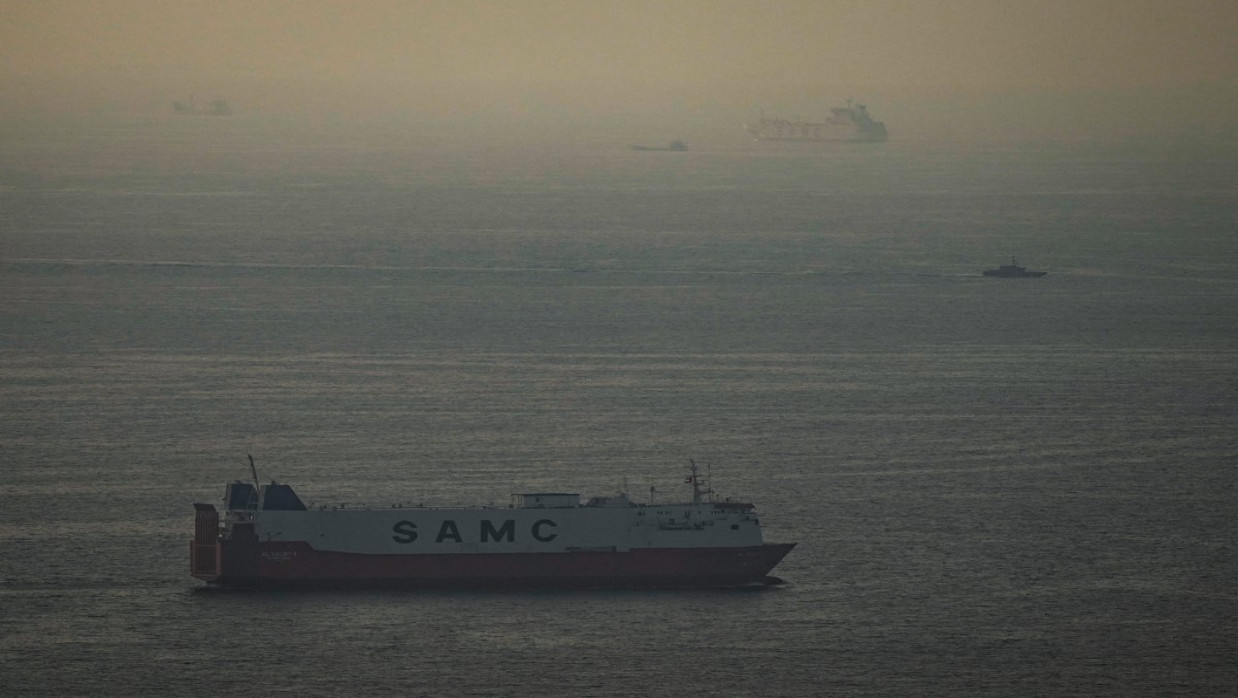
These figures demonstrate the scale of Pakistan's dependence on international petroleum markets. The vulnerability becomes greater when global oil prices rise or maritime supply routes are disrupted, as is currently the case with the Bab-el-Mandeb Strait and the Strait of Hormuz, where disruptions have significantly affected global energy supplies and maritime trade. The Economic Survey notes that geopolitical tensions and disruptions around the maritime supply routes have increased volatility in global energy markets, creating uncertainty over energy supplies and increasing the macroeconomic risks associated with Pakistan's dependence on imported petroleum.
Transport: The Main Petroleum Consumer
Pakistan's petroleum demand is overwhelmingly concentrated in transportation. During July–March FY2026, the transport sector consumed approximately 11.26 MMT, representing 82.5 percent of total petroleum-product consumption. Transport consumption increased by 6.7 percent compared with the corresponding period of FY2025.
This concentration has important economic implications. Road transport carries people, agricultural products, industrial raw materials, manufactured goods and food across the country. A prolonged shortage of petrol or diesel would therefore not remain confined to fuel stations; it could disrupt logistics and increase costs throughout the economy.
The product-level data also illustrate this dependence. During July–March FY2026, consumption included approximately 5.78 MMT of motor spirit and 5.36 MMT of high-speed diesel, while furnace-oil consumption was about 1.42 MMT.
Pakistan’s transition to electric vehicles is still at an early stage, particularly in the passenger-car segment. However, the market is beginning to gain momentum as new EV models, local assembly initiatives and charging infrastructure are expanding. A major constraint remains the availability and geographic coverage of charging stations, especially for intercity travel.
As consumers become more confident that charging facilities are sufficiently available and that EVs can support unrestricted urban and long-distance mobility, adoption is likely to accelerate significantly. The expansion of charging infrastructure, together with declining operating costs and increasing availability of locally assembled EVs, could therefore become an important catalyst for a much stronger surge in Pakistan’s electric-car market over the coming years.
Rising Import Dependence
Pakistan's petroleum import requirements increased significantly. Petroleum-product imports rose from 12.53 MMT in July–March FY2025 to 13.89 MMT in FY2026, an increase of 10.8 percent. Their value increased from US$8.40 billion to US$8.93 billion. Crude-oil imports increased even more sharply, rising by 24.9 percent, from 6.76 MMT to 8.45 MMT. Their value increased from US$4.11 billion to US$5.01 billion. This means that international oil-market developments have a direct impact on Pakistan's foreign-exchange requirements. A disruption that simultaneously reduces physical availability and increases international prices, creates pressure on both supply security and balance of payments.
Domestic Refining: An Important First Line of Defense
Domestic refineries provide an important layer of protection against complete dependence on imported refined petroleum products. However, domestic refining-capacity utilization remained suboptimal, while efforts continued to attract investment for refinery upgrades and additional capacity has yielded limited benefits. The government is also pursuing additional refining infrastructure. During July–March FY2026, OGRA granted three construction licenses for new refineries under the Greenfield Refining Policy.
Additionally, Refineries require a continuous supply of crude oil, functioning ports, storage facilities, transportation infrastructure and reliable distribution networks. Refinery modernization should therefore be viewed as part of a broader petroleum-security strategy.
Commercial Stocks Are Not a Strategic Reserve
One of the most important questions for Pakistan is the distinction between commercial petroleum inventories and a formal Strategic Petroleum Reserve (SPR). Commercial stocks are maintained primarily to support normal market operations. A strategic reserve provides an emergency buffer when normal commercial supply chains are seriously disrupted. Existing commercial storage should therefore not automatically be described as a strategic reserve.
A meaningful SPR would need to consider the quantity of fuel required for emergency coverage, the type of petroleum products to be stored, storage locations, pipeline and road connectivity, inventory rotation, quality control, financing and emergency-release procedures.
A Reserve Must Be Part of a Larger System
Petroleum security is ultimately about the resilience of the entire supply chain starting from international suppliers and ports to refineries, storage facilities, pipelines, oil marketing companies, transportation networks and retail outlets.
A disruption at any critical point can affect the entire system. A shipping disruption, for example, could delay crude or product arrivals. If storage stocks are insufficient, even a temporary delay could create pressure in domestic markets.
Geographical diversification is therefore important. Emergency stocks should be located where they can be rapidly connected to major demand centers and alternative supply routes. The objective should be to reduce dependence on any single port, pipeline, storage facility or distribution corridor.
Petroleum Security and the Changing Energy Mix
Pakistan's petroleum-security strategy should also be considered alongside changes in the electricity sector. By March 2026, total installed electricity-generation capacity had reached 49,651 MW. Hydropower, nuclear and renewable sources together accounted for 50.8 percent of installed capacity, while thermal sources accounted for 49.2 percent. Electricity generation during July–March FY2026 reached 92,835 GWh, with hydel, nuclear and renewable sources contributing 53.1 percent.
This diversification is also reducing petroleum use in power generation. Petroleum consumption in the power sector declined by 15 percent during the period, reflecting reduced reliance on furnace-oil-based generation and increased contributions from hydropower, nuclear power and coal, particularly Thar coal. Additionally, more than 20 GW of rooftop solar had been installed by early 2026.
In fact, the declining dependence of electricity generation on furnace oil has helped shield Pakistan’s electricity prices from major price surges, particularly by reducing the exposure of power-generation costs to fluctuations in international fuel prices.
The Strategic Question
Pakistan therefore needs to consider whether its existing commercial petroleum system provides sufficient protection against a major external supply disruption.
A formal SPR would not replace renewable energy, domestic resources, refinery modernization or energy efficiency. Rather, it would provide an additional emergency layer of protection.
Policymakers could examine different levels of emergency coverage—such as 15, 30, 45, 60 or 90 days—and calculate the corresponding quantities of crude oil and refined products required. Such an assessment should give particular attention to petrol and diesel because of their overwhelming importance to transportation.
The institutional framework would be equally important. Questions of ownership, financing, stock management, emergency release, replenishment, auditing and coordination with refineries and oil marketing companies would need clear answers.
Conclusion
Pakistan's latest energy data provide a compelling basis for treating petroleum security as a component of national economic resilience. The country consumed 13.64 MMT of petroleum products during July–March FY2026, while petroleum-product imports amounted to 13.89 MMT worth US$8.93 billion. Crude-oil imports alone reached 8.45 MMT worth about US$5.01 billion.
At a time when geopolitical tensions can disrupt international energy markets and major maritime routes, Pakistan needs to prepare not only for normal petroleum supply but also for circumstances in which normal supply cannot be taken for granted.
Energy security is ultimately about preparedness. A Strategic Petroleum Reserve, integrated with domestic refining, storage, pipelines, ports and distribution infrastructure, could provide Pakistan with an additional safety net when the normal petroleum supply chain comes under exceptional stress.


0 Comments
LEAVE A COMMENT
Your email address will not be published