

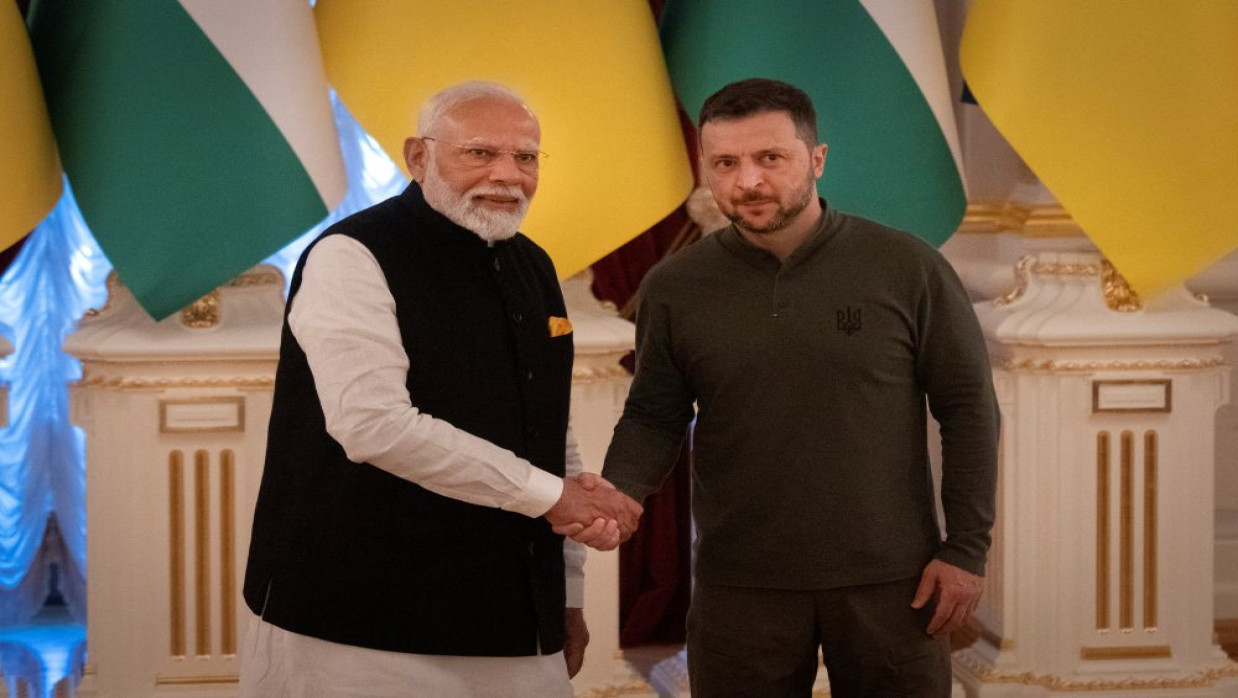
India has been positioning itself as a rising power that can shape international affairs, dictate terms and act as a mediator to resolve conflicts. Yet, as it promotes itself as a neutral power with growing economic and diplomatic ties to strategic partners, its conduct during the Russia-Ukraine war has compromised its reputation as a honest peacekeeper. India has been buying Russian oil in record numbers while refusing to endorse any of the UN resolutions condemning Russia’s military aggression, thus undermining its position as a possible mediator.
India’s attempts to mediate have been hindered by the fact that it is not viewed as trustworthy by either of the warring parties. Despite assuring Moscow and Kyiv that New Delhi will facilitate peace talks, India’s insistence on continuing Russian oil purchases has damaged its reputation as an honest broker. Although New Delhi sees its policy as one of balancing between great powers, it has been providing significant support to one of the warring sides, thereby compromising its position as an impartial peacemaker. At present, it seems that India’s ambitions to become a geopolitical mediator are higher than its impact on the international stage.
The most prominent example of India’s “balanced” foreign policy comes in the form of its energy sector dealings with Russia. Prior to Russia’s large-scale invasion of Ukraine, Russian oil comprised only 2 percent of India’s total crude imports, or less than 100,000 barrels per day. However, as Western countries-imposed sanctions on Russia and restricted energy imports, India became a preferred buyer of Russian oil. According to the data provided in the article, Russian oil imports reached 1.8 million barrels per day in 2023, or 39 percent of India’s total oil imports.
The most prominent evidence of India’s willingness to purchase Russian oil comes in the data for July 2026 that show record-breaking imports of 2.8 million barrels, or more than 55 percent of India’s oil imports. These purchases are equivalent to €5.5 billion in revenues for the Russian budget in one month. Although the volume of imports dropped to 2.08 million barrels per day in August and 1.75 million barrels per day in September 2026, the data illustrate the scale of India’s support for Russia.
India’s desire to purchase Russian oil is explained by its desire to secure affordable energy supplies. However, allowing Russia to sell its oil to India has been providing Moscow with significant revenues that fund its war with Ukraine. In essence, India’s energy imports undermine its position as an honest broker, as it continues to provide Russia with the means to wage the war. Compared to India’s assistance to Ukraine, which is limited to humanitarian aid and the repatriation of Indians stuck in the war zone, India’s support to Russia is deeply damaging to its reputation as a neutral and trustworthy mediator.
India’s energy trade with Russia fuels accusations in New Delhi of being indirectly involved in the atrocities committed by Russia, as evidence emerges of Indian technology being used in Russia’s cyberwarfare and military drones. The report notes that Ukrainian intelligence services have reportedly identified several electronic components made by India’s Aura Semiconductor in Russia’s Shahed or Geran drones that have been used to target Ukraine.
While the evidence does not prove that India is directly supplying Russia with electronic components or that these items even serve in Russia’s drones, it adds to the controversy surrounding India’s foreign policy and national security. It has been reported that India is taking steps to increase oversight of its electronic security and defense firms to ensure that they do not provide any materials to unauthorized entities.
India is also home to hundreds of Russian soldiers. As per the data provided in the report, 227 Indian citizens have officially joined the Russian army, and dozens of them have already been killed or are still missing as of 2024. The issue of Indian nationals being recruited by Russia has been raised by Ukrainian President Zelenskyy, who accused India of facilitating Russia’s access to foreign labor for its military. In turn, thousands of Indian citizens have volunteered to fight for Ukraine, indicating the strength of public opinion in favor of Ukraine.
These examples highlight the complications that India has in distancing itself from the war, as Indians on both sides of the conflict are caught in hostilities. The public outcry in India regarding the alleged recruitment of Indians by Russia has further fueled anti-Russian sentiments on the territory of India. At the same time, tensions between India and the West are also growing, as the US administration has accused India of fueling Russia’s war economy by purchasing Russian oil, despite India’s assurances of wanting to remain neutral.
The accusations coming from Washington undermine India’s image as a reliable partner. For instance, members of the Trump administration, along with senators Richard Blumenthal and Lindsey Graham, have accused India of enabling Russia by buying its oil and questioned New Delhi’s role in the war. At the same time, President Zelenskyy has expressed his support for legislative measures targeting those who facilitate Russia’s access to resources needed for the war. The situation in which India finds itself is complicated, as it tries to balance between its strategic partnerships with Western countries and its economic and diplomatic ties with Russia.
India has been reluctant to condemn Russia, as it has been doing at the United Nations. New Delhi has been voting against or abstaining on numerous resolutions on Russia’s invasion of Ukraine, including those on Russia’s troop withdrawal, reparations, safety of nuclear facilities, return of Ukrainian children and a call for a ceasefire. As a result, India has been accused of supporting Russia by trying to cover up its human rights violations and aggression against Ukraine. India is advocating for diplomacy and dialogue, yet its policy of neutrality and avoidance of direct confrontation with Moscow has compromised its reputation as an honest peacemaker.
India’s proposals to establish peace talks between warring parties, including the three-way Black Sea talks and the agreement on energy and trade, have been viewed with skepticism. They have illustrated an effort to propose solutions, yet none of them has been viewed as credible due to New Delhi’s reluctance to openly condemn Moscow and impose economic sanctions on it. India is trying to position itself as a neutral broker, which may help it attain greater influence in international affairs, but its reputation is undermined by its unwillingness to take stronger measures against Russia. The credibility of its proposals for peace talks is compromised by New Delhi’s support of the aggressor state and its indirect facilitation of Russia’s war efforts.
India wishes to position itself as a rising power that promotes peace, stability and diplomatic dialogue in international affairs. Yet, its reputation as a reliable security provider and honest peacemaker is compromised by its actions in the Russia-Ukraine conflict. India has been accused of fueling the war economy of Russia by buying its oil, facilitating its access to electronic components and recruiting its citizens to fight in Ukraine. At the same time, it is reluctant to take stronger measures against Moscow, including imposing sanctions or condemning its aggression at the UN. India continues to pursue a policy of strategic ambiguity, which has limited its ability to influence the situation in Ukraine and establish its role as a responsible security guarantor and honest broker. Thus, if India wishes to acquire a greater role in international affairs, it needs to be willing to impose tough measures on its strategic partners for violating international law and norms.


0 Comments
LEAVE A COMMENT
Your email address will not be published