

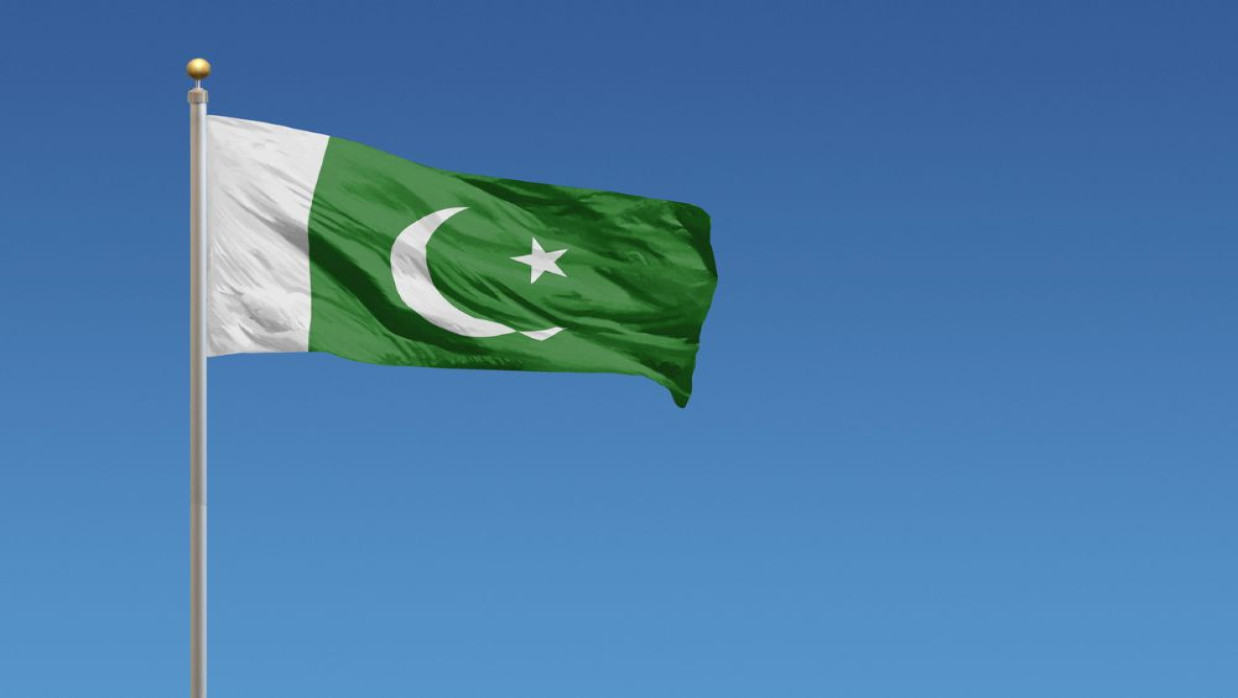
Islamabad is wrapped in green and white this week. Government buildings and monuments have been lit for the holiday, rehearsals for a fighter jet flypast have been drawing crowds to the Markaz-e-Haq monument and on August 14 a City Parade at D-Chowk will fold marching bands, a horse dance and mascots representing the country's provinces into the 79th anniversary of a state founded, in 1947, as a wager most observers expected to lose. In Karachi, naval cadets will sing the anthem at Muhammad Ali Jinnah's mausoleum before the fireworks; in Lahore, the Minar-e-Pakistan, raised on the site of the 1940 resolution that first called for a separate Muslim homeland, will again serve as the backdrop. This year's official theme is "Unity, Heritage and Freedom," and for most of the country's history that phrase would have been aspiration dressed as description. Pakistan spent decades being told, implicitly and sometimes openly, that it would not hold.
Survival is a real achievement for a state written off at birth, but it is a low bar and a country cannot celebrate clearing it forever. What makes this Independence Day different is that survival is no longer the most interesting thing to say about Pakistan. In little more than a year, the state that spent its whole life defending its right to exist has begun exercising a different right, the right to shape the world it sits in. That claim now rests on two separate tracks, and both matter more than the fireworks.
The first track runs through three theatres abroad and in each one Pakistan set terms rather than absorbed them. In its clash with India in May, Pakistani J-10C fighters downed Indian aircraft, including at least one French-built Rafale that had never before been lost in combat, moving the country's deterrent from the realm of assertion into the realm of demonstrated fact. In April, after joint US and Israeli strikes opened a new war with Iran, it was Pakistan, not any of the Gulf states with deeper stakes in the outcome, that brokered the ceasefire and hosted the first direct US-Iran talks since 1979, an episode described as the country's arrival at the center of global politics. In August, Islamabad folded its bilateral defense pact with Saudi Arabia into the Mecca Joint Defence Agreement, adding Turkey and binding the three states to treat an attack on one as an attack on all, a pact that codified a deployment of roughly 8,000 Pakistani troops, fighter jets and air defense systems already stationed in the Kingdom.
The second track is quieter and runs through the economy. Pakistan closed the fiscal year that ended in June with real GDP growth of 3.7%, the fastest pace in four years, with the economy expanding to roughly $452 billion despite flooding early in the year and volatility in global commodity markets. The Pakistan Stock Exchange's benchmark KSE-100 index surged 44% over the same fiscal year, outperforming every major asset class for a third consecutive year as sovereign credit upgrades and an IMF-supported reform program steadied investor sentiment. Finance Minister Muhammad Aurangzeb has pointed to the results as evidence of a macroeconomic picture stabilizing after a period that looked far more precarious two years earlier, while officials have been careful to frame the improved indicators as validation of continued discipline rather than a finished project. Growth remains short of government targets, and the recovery has yet to be felt evenly, but the contrast with recent years is real, and it belongs in the same conversation as the deterrent tested in Kashmir and the ceasefire brokered in Islamabad. All three are evidence of the same underlying shift, a state that has started to compound advantages rather than simply absorb shocks.
Read together, these are not the acts of a country still proving it can survive. They are the acts of a country that has begun to understand independence as something more than a defensive fact. Sovereignty was never meant to end at the border, a thing held and hoped no one takes. It was meant to mature into a posture, the capacity to act on the world rather than only withstand it. For most of its history Pakistan possessed sovereignty in the first sense and was denied it in the second. The year now closing is the first in which it has exercised both.
This is the point at which an honest account has to turn, because the story of standing abroad and growing at home sits alongside a harder story, and that one is written in blood. While Pakistani diplomacy was setting terms in the Gulf and the stock exchange was setting records at home, Pakistani security forces were dying at a rate the country has not seen in years. In the first seven months of 2026, according to the Pakistan Institute for Conflict and Security Studies, 434 security personnel were killed, roughly two men in uniform on an average day, in a militant campaign much of which is organized from sanctuaries across the Afghan border. A state can broker peace between great powers, and post its strongest stock market in years, and still be unable to guarantee a police constable's safe return from a checkpoint in his own country. Strength projected outward and growth compounding at home mean very little to the family in Bannu or Hangu waiting for a body. The arrival is real, and it is also unfinished.
That tension is the truest thing to say on this Independence Day, and it is more useful than triumph. Pakistan has proven it can shape its region and steady its economy in the same year. It has yet to prove that it can secure its own land against terrorism, and the founders would have understood that the second task is the one that gives the first two their meaning. They did not struggle for a country that would merely persist, enduring one prediction of collapse after another as an end in itself. They wanted a country that would matter, that would sit at the table rather than wait outside it, that would be consulted about the shape of the world instead of merely subjected to it. For seventy-eight years the honest answer to whether that country had arrived was not yet. This year, for the first time, the answer is beginning. Between the flypast over Islamabad and the fireworks at the Minar-e-Pakistan, what remains is to make the security of the ordinary Pakistani as certain as the country's new standing among nations and its new numbers on a balance sheet.

0 Comments
LEAVE A COMMENT
Your email address will not be published