

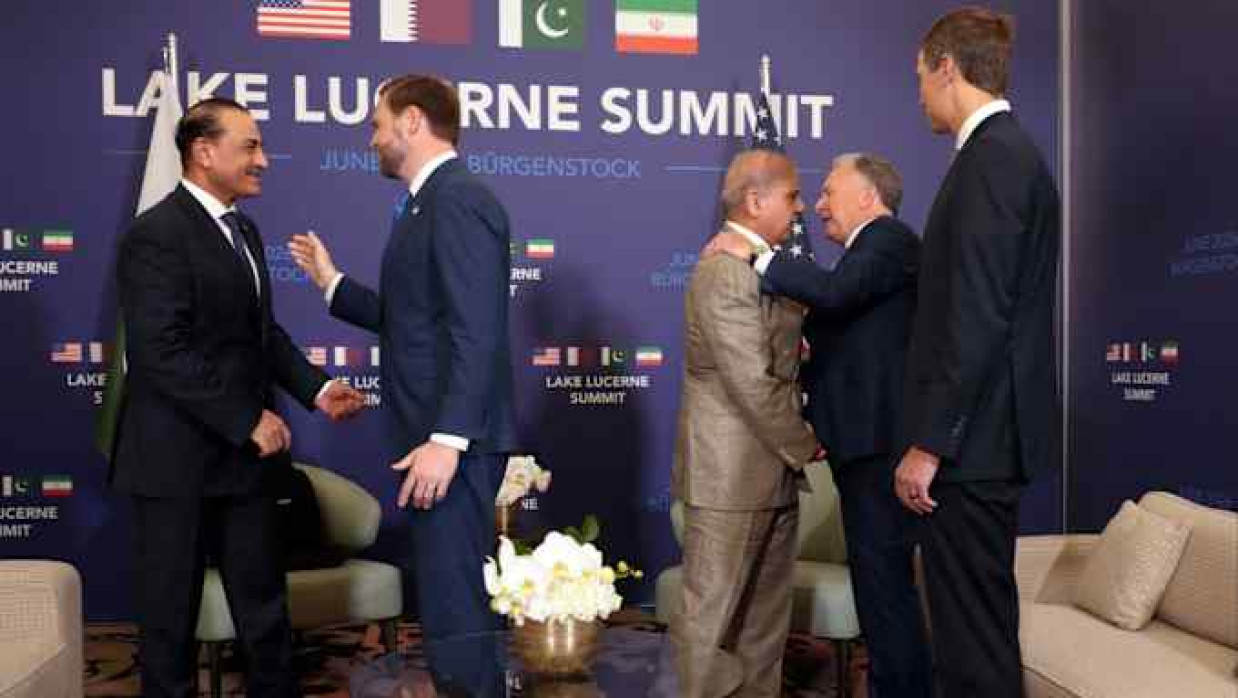
The movement of the United States and Iran peace process towards its final stage, it marks a notable diplomatic moment not just for the two key parties but also for Pakistan. At a point when the region had been pushed dangerously close to a broader conflict, Pakistan picked a path that felt more like patience, conversation, and dependable statecraft. The expected electronic signing of the peace agreement, as Prime Minister Shehbaz Sharif noted, is therefore not only a procedural milestone. It comes from long diplomatic work, steady messaging and a real determination to keep the doors of negotiation open even while the forces of escalation were still in motion.
Pakistan’s part in this story, though, needs to be read in the right light. This was not simply about releasing statements in favour of peace. It meant ongoing engagement with both sides, protecting communication channels, passing on careful messages and strengthening confidence at times when mistrust was running high. Between Washington and Tehran, decades of suspicion could not be dissolved through slogans, or grand lines alone. It called for a country able to speak in the language of regional stability, strategic restraint, and practical political realism. Pakistan stepped into that space with real composure.
Prime Minister Shehbaz Sharif’s leadership and Field Marshal Syed Asim Munir’s stubborn determined push, gave Pakistan’s diplomacy a more sober seriousness that was noticed internationally. Both of them seemed to understand that if fighting in the Gulf, the disruption in the Strait of Hormuz, and the long running friction between the United States and Iran were allowed to drag on, it would not stay in just one place or one arena. This kind of crisis would start to bite energy flows, trade routes, regional livelihoods, and also the wider security situation for many countries, Pakistan included. So, putting political will and diplomatic effort into peace was not just some symbolic gesture it was strategically required.
That’s also why the anticipated shift from ceasefire to a proper, formal peace arrangement carries so much weight. Ceasefires can be thin glass. They can crack or collapse under pressure, provocation, or plain miscalculation. To move from a ceasefire into a structured peace pathway needs patience and a lot of trust. Pakistan’s role, in a practical sense, was to help keep that discipline, steady and intact. The country worked so that talks wouldn’t quietly fall apart, so that signals and messages wouldn’t get scrambled by mistrust, and so that the political room for compromise stayed open.
Those who keep projecting negativity about Pakistan’s international role, eventually have to face an uncomfortable reality. In this particular situation, Pakistan was not isolated, not merely passive, and definitely not irrelevant. It was there at the diplomacy table. It was trusted enough to help enable contact, and it was active enough to keep the momentum going. Pakistan’s part wasn’t built on loud noise, instead it grew through quiet persistence, you know, that kind of steady effort that people often overlook. In diplomacy, that sort of approach usually matters more than dramatic, public gestures.
Even if the peace process runs into difficulties in the coming days, Pakistan’s input will still stay historically significant. Peace processes rarely move like a straight line. Technical talks may go on, implementation may take patience, and each side can read certain provisions a bit differently. Still, the simple fact that a way away from war has been opened is, in itself, an achievement. Pakistan, helped pull the process away from collapse and towards a working framework where disputes can be handled through negotiation instead of confrontation.
The broader message Pakistan has sent is pretty clear. It wants peace, not war. It leans toward dialogue, not confrontation. It is for stability, not this sort of permanent crisis. And this isn’t only about Pakistan’s own security angles, but also for the wider region and the international community in general. If the Gulf stays stable, then global commerce does better. When the Middle East is calm, it helps reduce the danger of energy shocks. And a working US‑Iran dialogue can lower the heat across several conflict zones. So. Pakistan’s stance is basically both a national interest thing and a responsible way of dealing with the world.
The dignity Pakistan has earned through this whole process really belongs to the entire Pakistani nation. It boosts the country’s diplomatic clout and it reinforces the sense that Pakistan can operate as a serious actor when global tension rises. For too long, hostile narratives have tried to narrow Pakistan’s image down to crisis, instability and conflict. But this peace process shows something else entirely, a country that can do mediation, show restraint and move toward constructive engagement.
Once the electronic signature is done, the technical-level talks can happen wherever the affected parties decide, more or less, together. That seems normal enough in any serious accord. Still, what really counts is that the political breakthrough is already there, and that a workable arrangement for further engagement exists. Pakistan’s task now is to stay constructive, keep a close watch, and remain genuinely dedicated to peace.
This phase should be met with national confidence, but also with some diplomatic restraint, not all excited. The job is not finished. The implementation will, step by step, show how serious every side truly is. But Pakistan already showed it knows how to open a bit of room for peace, even when others only saw confrontation, and nothing else. That is something to feel proud about, yet it is also a prompt a reminder of responsibility. Pakistan should carry on with the same patience, poise, and strategic clarity that brought the process to this decisive point.


0 Comments
LEAVE A COMMENT
Your email address will not be published