

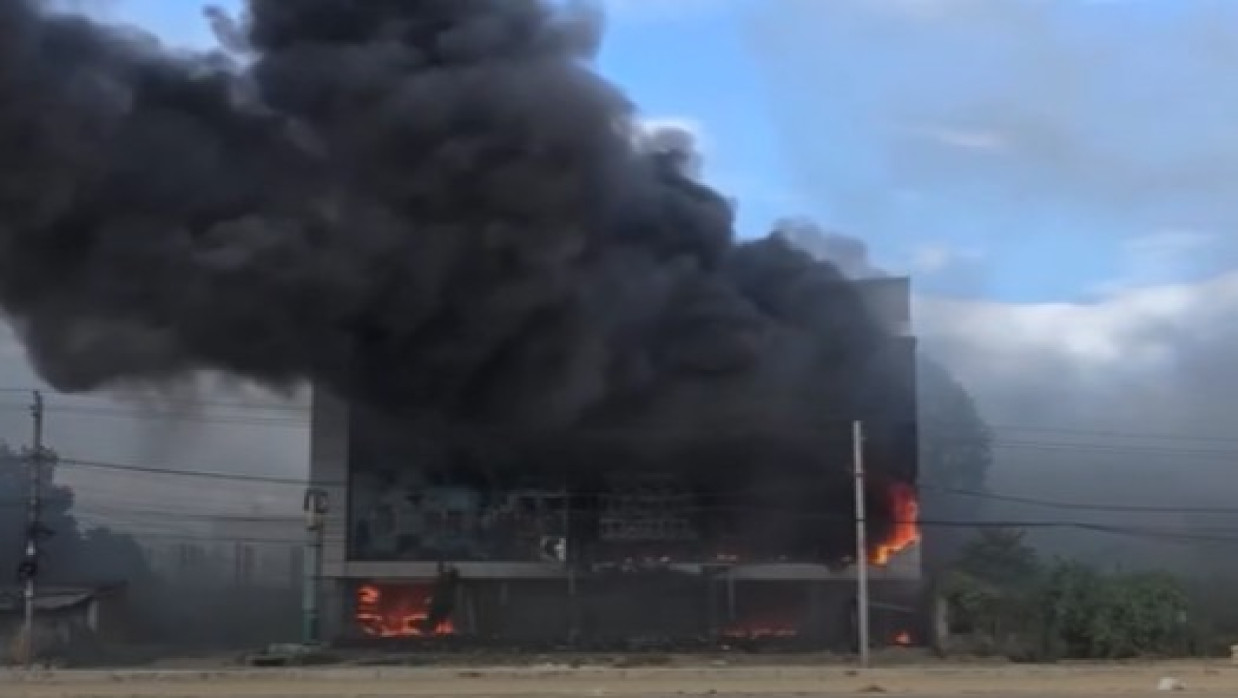
Nepal’s image as a religiously diverse and socially resilient nation has been shaken by several days of communal violence in the southeastern district of Sunsari. What reportedly began as a local disagreement over loud music and religious flags during separate religious events quickly escalated into clashes between Hindu and Muslim communities, police firing, vandalism, arson and retaliatory unrest.
The violence erupted on the night of July 26 in Dewanganj also rendered as Diwanganj near Nepal’s border with the Indian state of Bihar. According to police accounts, competing groups became involved in an altercation over loudspeakers and the display of religious flags. Security forces opened fire after reportedly failing to disperse the crowds. Initial reports recorded one death and more than twenty injuries, including thirteen members of the security forces. As unrest spread into surrounding areas and neighboring districts, the reported death toll rose to at least three, with approximately twenty-five people injured. Authorities imposed indefinite curfews in several towns and restricted movement along important roads to prevent further escalation. Reuters
A Disturbing Sectarian Dimension
The most troubling development came from footage circulated on social media on July 29. The video appears to show a Muslim-owned repair shop engulfed in flames while people nearby chant “Jai Shri Ram”—“Victory to Lord Rama.” Online reports alleged that a Hindutva-oriented mob was responsible and that other Muslim-owned shops had been looted or vandalized.
Each of those claims deserves separate scrutiny. The fact that a particular prayer is spoken on a recording does not automatically prove who all was present, who else they may have been working with, or what their objectives might have been. However, if a holy slogan was indeed chanted while destruction was wrought, that would be offensive. “Jai Shri Ram” is a Hindu prayer. To use it as a battle cry is to disrespect Hinduism.
Police need to find out who burned down the store. They need to find out if people were targeted because they owned businesses and happened to be Muslim. However, every crime should be judged equally, whether the victim or criminal is Muslim.
Nepal Must Resist Imported Polarization
Nepal is officially a secular state, but Hindus are a sizable majority of the population, and Nepal was formally a Hindu Kingdom until 2007. Muslims are a small minority, but have an established history in Nepal, concentrated in the Terai region bordering India. Religious and commercial ties cross the open border between India and Nepal, contributing to local society but also allowing inflammatory rhetoric and majoritarian politics to flow transnationally.
It would be premature to conclude that the Sunsari violence was directed or organized by established Hindutva organizations. However, the language attributed to some participants raises legitimate concern that the confrontational religious politics visible elsewhere in South Asia may be gaining ground in Nepal. Local disputes become especially dangerous when political actors, religious agitators or social-media provocateurs reinterpret them as struggles between entire communities.
Prime Minister Balendra Shah has asked for calm and has pledged a transparent and just probe. It must include not only the initial clash but also police reaction, follow-up shootings, attacks on businesses and spreading of inflammatory/false information. New Indian Express
Curfew can quell riots. It can't restore confidence. Nepal will require arrests based on solid evidence. Nepal will require reparations paid to the wronged who did no wrong. Nepal will require outreach to every religion and zero tolerance for incitement. If Nepal allows those responsible for sectarian killings to walk free, Sunsari will not be an anomaly. It will be precedent. Nepal will show that neither man nor woman is above the law. Neither is religion. Nor is any chant democracy allows.


0 Comments
LEAVE A COMMENT
Your email address will not be published