

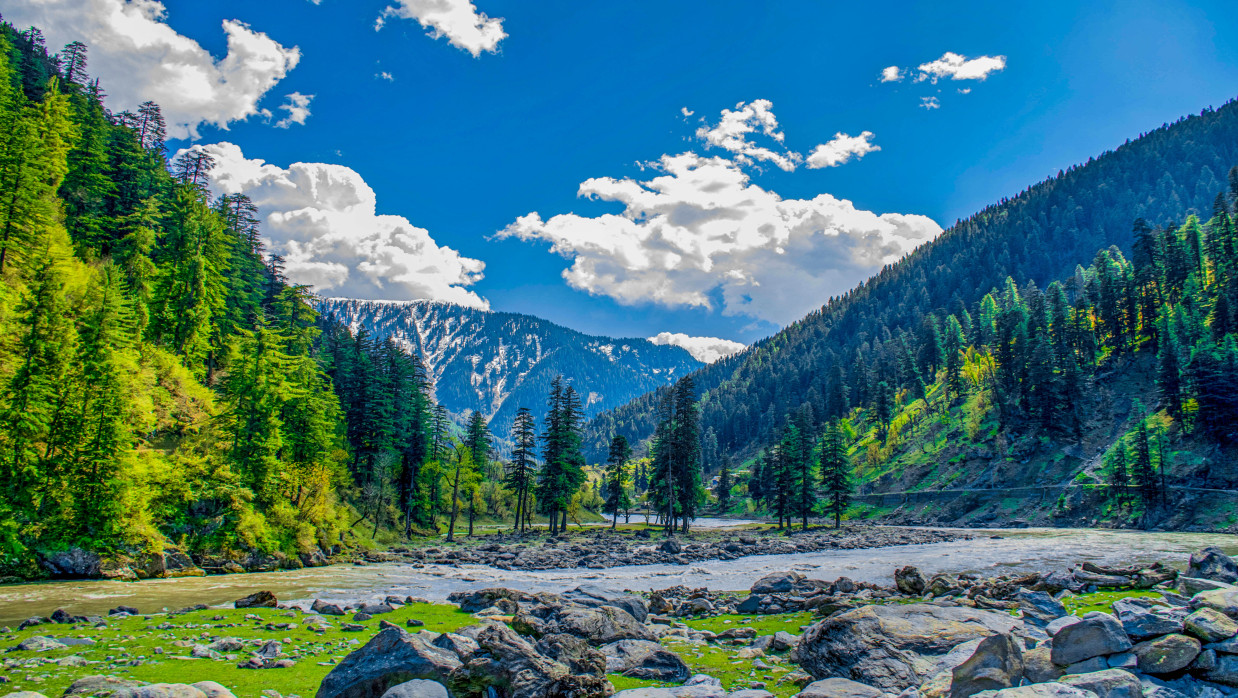
Each year, on February 5, the international community is reminded that the Kashmir dispute, one of the most intractable and potentially explosive conflicts of the modern age, remains a cause that requires justice, a solution, and international attention. In Pakistan, Kashmir Solidarity Day is not an event inscribed on a calendar but an occasion for introspection. It is a day to give voice to the millions who have lived under occupation, oppression, and the systematic denial of rights for over seven decades.
For the people of Indian Illegally Occupied Jammu and Kashmir (IIOJK), life remains today as it has been for many years: defined by fear, intimidation, and the pervasive presence of the military. Limits on freedom of movement, arbitrary arrests, enforced disappearances, and attempts to change the demographic makeup of the region are all working to systematically destroy the very fabric of Kashmiri society. Such actions are not random instances of abuse. They are policy, justified on the basis of security, but at a high human cost to families.
An Ecosystem of Intolerance Across Borders
Such a climate of exclusion and hostility is not, however, specific to Kashmir. It is instead a symptom of a wider ideological trend that is sweeping across the socio-political landscape of India, in large part fueled by the Rashtriya Swayamsevak Sangh (RSS) and its offshoots.
The RSS is a nationalist organization that has long claimed to be the ideological wellspring of the ruling Bharatiya Janata Party (BJP) and promotes a form of Hindutva, a cultural and ideological paradigm that seeks to define the Indian nation on the basis of Hindu identity. This ideology, if left unchecked, has been accused of promoting a culture of communal hierarchy and a latent fear of Muslim minorities in India, which has in recent years taken the form of legislative exclusion, social boycotts, and mob intimidation of Muslim minorities. A case in point was the intimidation of a delivery man at the Ayodhya railway station, who was threatened and verbally abused by extremists simply because he was delivering meat.
Such instances of force are not random expressions of anger. They are indicative of an intolerant environment in which religious affiliation becomes the grounds for intimidation and exclusion. They are symptomatic of a malaise. When majoritarian ideology seeps into the public domain and institutions are tardy in responding, intimidation becomes the norm.
The RSS and the Ideological Current
To appreciate the political underpinnings of this environment, it is necessary to understand the RSS’s role. The RSS, founded in 1925, is an outfit that espouses the idea of India as a “Hindu nation.” The outfit’s ideology is one that, while claiming to be the harbinger of national unity, has an ideological DNA that seeks to marginalize religious minorities, particularly Muslims, by emphasizing a cultural identity over pluralism.
This ideological change has significance because it not only inspires political discourse but also social conduct and policy choices. When the political leadership is in sync, implicitly or explicitly, with a majoritarian ideology, the implications have a trickle-down effect. Society becomes less confident about articulating its beliefs and voices of dissent are labeled as outsiders.
Pakistan’s Clear and Consistent Stance
In this environment of oppression and exclusion, the stance of Pakistan on Kashmir has been consistent, clear, and based on international law. Pakistan has reiterated its unswerving commitment to the Kashmiri people’s right to self-determination as stipulated in United Nations Security Council resolutions.
In official statements, Prime Minister Shehbaz Sharif has made it clear that the dispute over Indian Illegally Occupied Jammu and Kashmir is the hallmark of South Asia, and he has called upon the international community to live up to its commitments and let the Kashmiris freely decide their future, which is a basic tenet of international law.
The Ministry of Foreign Affairs of Pakistan has termed the Indian actions in IIOJK as “brute force” and “systematic human rights violations,” while condemning the demographic engineering and the denial of civil liberties in the occupied territory. Pakistan has reiterated its call on India to abide by its obligations under the UN Charter and allow the people of Kashmir their right to peaceful assembly and expression.
Internationally, Pakistan has continued to raise the plight of Kashmir in international forums, such as the Organization of Islamic Cooperation (OIC) and the United Nations General Assembly, where it, along with other member states, has reiterated its support for the inalienable right of the people of Kashmir to self-rule.
Conclusion
Kashmir Solidarity Day should bring about more than just headlines. It should make us reflect on the way the world treats repression that is clothed in ideology. Whether it is the valleys of Kashmir that are militarized or the streets of Indian cities where minorities are harassed, the struggle is the same. It is the struggle for equal dignity, justice, and freedom from fear.
The strong stand taken by Pakistan, based on international legal norms, highlights a simple fact. The voices of the oppressed cannot be silenced, and rights cannot be selective. As members of the global community, our concern must go beyond borders to ensure the universal principles of justice and human dignity.


0 Comments
LEAVE A COMMENT
Your email address will not be published