

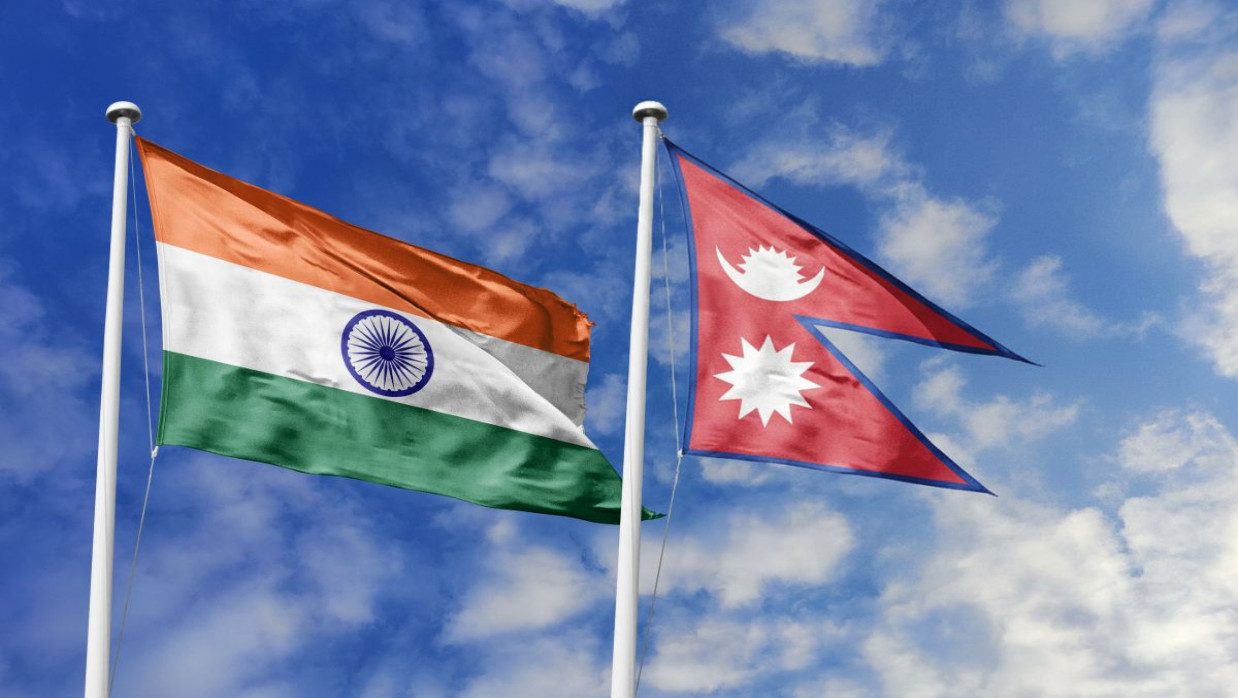
It is not just distance that separates Ayodhya from Janakpur. Both cities share one of the region’s oldest civilizational narratives: the Ramayana, to which millions of South Asians relate. Ayodhya is related to Lord Ram, but Janakpur Dham in Nepal is worshiped as the birthplace of Sita. This common cultural memory has for millennia transcended political boundaries, communities, and generations. That link is taking on a rather modern character.
Prime Minister Narendra Modi and Nepalese Prime Minister Balendra Shah inaugurated the Saryu-Kamala Express connecting Ayodhya and Janakpur Dham by rail on Nov 23, 2026. The 604-kilometer journey is expected to take around 19 hours, and regular weekly services will commence on November 28. The route goes through important towns of Uttar Pradesh and Bihar before entering Nepal. The Indian Express But the railroad is more than a pilgrimage route. That raises a bigger question: can a shared cultural legacy be the basis for a new chapter in India-Nepal relations?
From myth to movement.
India and Nepal have always characterized their relationship as one of common civilizations, open borders, deep familial ties, and cultural exchanges. Relations are often defined by traditional roti-beti relationships between villages on either side of the border.
But cultural affinity alone cannot sustain a contemporary bilateral partnership. Connectivity, energy, trade, infrastructure, employment, and growth are becoming more and more important in the modern India-Nepal relations.This is where the Ayodhya-Janapur rail connectivity becomes important.
A pilgrimage route is more than a religious corridor. It can be an economic corridor and social corridor as well. Travelers need lodging, transport, food, guides, and local services. Local businesses, artisans, and tourism operators along the route could all benefit. The Indian government has promoted the service’s potential to boost religious tourism, local economic activity, and interpersonal interaction. The Press Information Bureau said that the railroad is a concrete expression of a cultural tradition that goes back centuries.
Now the journey from Ayodhya to Janakpur can be made not just through stories, ceremonies, and recollections but also through a modern infrastructure network.
Ramayana as a shared heritage, not exclusive.
There is also a larger cultural problem to deal with. The Ramayana is not to be read in isolation from contemporary India. Its stories have spread throughout South and Southeast Asia, gathering many interpretations, customs, and cultural expressions. Janakpur, in Nepal, is a key element of this broader cultural landscape. This gives a lot of value to the Ayodhya-Janakpur relationship, as it can be articulated as a common legacy, not cultural ownership.
Janakpur is not only a place of pilgrimage for Indians. It is a major cultural center of Nepal, having its own traditions, communities, and historical importance. Like Ayodhya, it is more than just a destination for the Nepalese tourists. It can serve as a gateway to the rich cultural and religious landscape of India. For good cultural cooperation there must be reciprocity. The goal should not be to create a one-way pilgrimage economy where one side only receives visitors from the other. Alternatively, the two cities could be the center of a larger cultural network comprising museums, heritage conservation, festivals, research, handicrafts, local food culture, and intellectual exchanges.
There’s a precedent.
It's not a totally new idea. Ayodhya and Janakpur have already been regarded as important cultural sites between India and Nepal. The two countries signed a twinning agreement between Ayodhya and Janakpurdham and created the India-Nepal Ramayana Circuit in 2018 with an objective to promote common religious and cultural tourism. India also promised financial assistance for projects in Janakpur. The new railroad, Digital Sansad, is not a stand-alone enterprise but a part of an ongoing structure of cultural connectivity. The difference is that being on the rail makes that structure much more available.
The Strategic Dimension Beyond Culture
Nepal is not only a cultural neighbor for India. Its strategic importance stems from its geographic location, energy, water resources, trade, and connection. Nepal’s hydropower potential is gaining greater salience in the energy nexus between India and Kathmandu. Cross-border power commerce, transmission infrastructure, and connectivity are becoming important facets of bilateral collaboration. The link is not only Ayodhya-Janakpur, as is evident from the recent visit of Prime Minister Balendra Shah. India has promised a big development package for Nepal after the devastating floods, and talks have focused on infrastructure, energy, and other areas of bilateral cooperation. This is important, as cultural diplomacy is most effective when it is a complement, not a replacement of economic and strategic cooperation.
A train linking Ram’s Ayodhya and Sita’s Janakpur could build goodwill. But the sustained bilateral confidence will be a function of India's and Nepal's ability to address more complex issues such as commerce, border infrastructure, energy, water, and development.
Can pilgrimage be a form of interpersonal diplomacy?
Maybe the railway's greatest potential is not in the number of pilgrims it carries, but in the people it meets along the way. India and Nepal have one of the world’s most unique cross-border social interactions. Families, workers, traders, students, and pilgrims cross the border regularly. Unlike many international borders, the India-Nepal border has historically enjoyed a high level of social interaction. Infrastructure can help improve that relationship.
Direct trains cut the friction of travel. It provides an opportunity for ordinary people to meet each other outside of diplomatic gatherings and official delegations. It can introduce younger generations to cultural traditions previously known only through family stories and religious practice. In this sense the railroad can become an instrument of diplomacy between peoples. But this is not an option to be romanticized. The growth in tourism also puts pressure on heritage sites, local infrastructure, and fragile ecosystems. However, if the Ramayana Circuit is expanded without proper planning, smaller areas may be left out of tourism benefits altogether. The challenge is to make cultural connectedness accessible.
Sacred route becomes a regional corridor.
The most ambitious option is to think beyond the one train. Ayodhya and Janakpur can be anchors of a larger South Asian cultural and economic corridor. This could be heritage tourism, educational exchanges, handicrafts, hospitality, local business, and better transport links. The road passes through Uttar Pradesh and Bihar before reaching Nepal. “What this means is that the economic impact of it does not have to be just in the two terminal cities. Smaller villages along the route could benefit from a larger tourism economy.This is what makes the idea of Ramayana as a diplomatic bridge so attractive. A common story may light the first relationship. Infrastructure can back it. It can be bolstered by economic participation. It can also last longer with regular contact with another person.
The Road Ahead
The Ayodhya-Janapur rail road should not be seen as a religious venture or yet another infrastructure project. Its deeper significance is the possibility of connecting civilization and connectedness. India and Nepal do not need to begin their relationship from scratch. There is already a lot of history, culture, and social connection shared between them. The challenge for policymakers is to translate that inheritance into modern forms of cooperation without making Nepal’s cultural identity an appendage of India’s. The Ramayana can be a rich common tongue. But a common epic is not enough for a lasting India-Nepal friendship. This will require mutual economic opportunity, cultural respect, reliable connectivity, and an appreciation of the concerns of the people on both sides of the border.
The Saryu-Kamala Express is not just a train. It is an experiment to see if a historic cultural bond can be modernized and if that infrastructure can help push India-Nepal relations forward. The actual distance between Ayodhya and Janakpur might be different from 604 kilometers. It is possible to ask whether a common civilizational memory can be the basis for more reciprocal, interconnected, and contemporary South Asian cooperation.


0 Comments
LEAVE A COMMENT
Your email address will not be published