

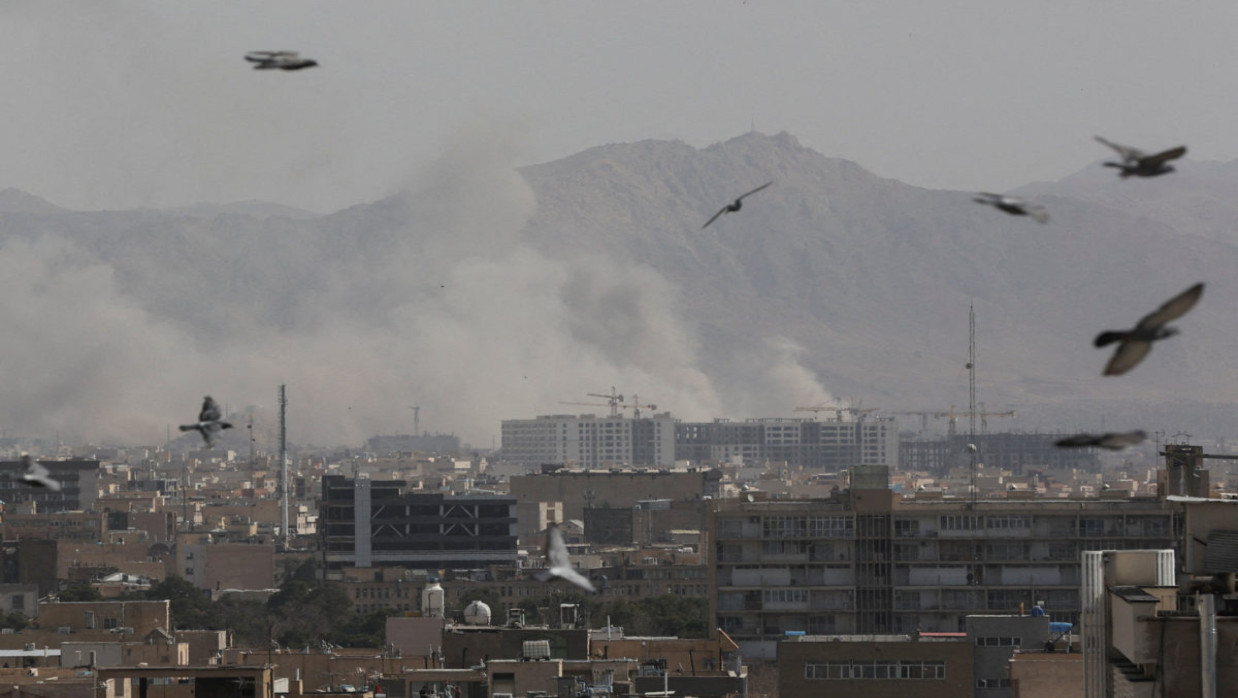
The emerging Iran-US-Israel conflict isn’t your garden-variety Middle East firefight. This is no repeat of the month-long War in Lebanon in 2006 or the periodic Gaza knife-fighting matches we’ve seen over the years. This conflict has the potential to morph into an existential fight for survival. We’re talking about regime survival here. We’re talking about the future balance of power in the Middle East. We’re talking about the future global balance of power.
As former Marine intelligence officer Scott Ritter recently put it, “there will only be one survivor”. He went on to say that Iran has the strategic upper hand right now. One may not agree with everything he says, but he does make you think about the nuts and bolts of war … logistics, political will, resource endurance, and depth.
An Existential Conflict, Not a Limited War
This war is a matter of regime survival for Iran. For Israel, it is about long-term security and deterrence. For America, this conflict is about dominance in the Middle East and the credibility of its alliances.
What’s different about this round of hostilities compared to previous attacks is that there is structural risk on the line. If the U.S. fails spectacularly, we won’t just lose on the battlefield. We will be humiliated, forced to retreat from our bases in the region, have Gulf allies question our security commitments, and potentially leave Israel strategically alone.
The attacks on Saudi Arabia’s energy infrastructure that everyone can see, along with anxiety within the Gulf states themselves, are evidence that this fight has expanded beyond Israel’s neighborhood. Energy markets are already flashing signs of instability. There are two “clocks” we should be paying attention to: 1) military resource exhaustion and 2) economic strangulation from halted energy flow.
Ammunition, Cost Asymmetry, and War Sustainability
Warfare in the modern era has been industrialized warfare. Iran had years to build up stockpiles of missiles and drones before any shooting started. Iran’s manufacturing base was said to be decentralized and hardened.
We discuss all cost asymmetries. Hundreds of thousands of dollars apiece for Iranian Shahed-type drones, reportedly. Millions of dollars apiece for Western interceptor missiles. You send up a $20 million interceptor because some $20k drone is buzzing around, you do not have a sustainable conflict.
America and its allies are stretched thin as it is in Ukraine and elsewhere. Stockpiles of missiles in Gulf nations have reportedly been burned through at horrific rates and cannot simply be produced more.
Wars are lost on the supply side long before they’re lost on the battlefield. Ritter’s point that Iran planned to wage a war of attrition while the US did not deserves consideration.
Leadership Decapitation and Miscalculation
You’d think so if you believed analysts who speculated that the news Iran’s supreme leader, Ayatollah Ali Khamenei, had been killed would be the knockout punch. What actually happened was Iran’s constitution kicked in provisions for emergency succession. Far from imploding, Iranian society seems to be coming together.
Analysts have long erred on what Washington hopes is regime change via decapitation. Iran is neither a dictatorship nor a tin-pot one. The Islamic Republic has elements of religious leadership overlaid on elections and institutions. Force, yes. But ideology and nationalism, too.
Far from weakening the regime, a successful transition of power could bolster it by turning martyrs into foot soldiers.
Intelligence Failures and Policy Blind Spots
Analysts have charged that intelligence reports have been politicized. Comparisons to Iraq in 2003 are inevitable. In 2003, we shaped intelligence to meet policy. Are we allowing policy to be shaped by intelligence?
Headlines that there were disagreements between military commanders and policymakers over the adequacy of resources, and reports of finger-pointing at the highest levels, are alarming. Military professionals can predict mission failures, but they take their marching orders from the Commander-in-Chief.
If policy was driven by belief-based thinking (specifically about how weak the regime was), rather than what was actually on the ground, then the policy was doomed from the start.
The Ground War Illusion
Demands for escalation or boots-on-the-ground in Iran disregard geography and logistics. Iran is a large country with mountains and a full-spectrum military. If you want an amphibious invasion, you'll need months of prep time and secure beachheads. Desert Storm did not begin without a year's worth of logistics stacking up while Saddam sat on his hands. Neither did D-Day.
We cannot let this thing escalate. Iranian airfields and ports are already coming under attack. Shipping lanes will be contested. You'll have supply lines that will constantly need defense. If you stage a large-scale invasion with this level of chaos, you're going to end up with an uncontrollable situation.
Domestic Opinion and Political Risk in the United States
Public opinion is much different now than it was before the Iraq War in 2003. The public does not seem to want another ground war in the Middle East. With rising casualties and higher gas prices, that could change.
It could also have political ramifications. Democrats could be held accountable. If the public does not see the war as legitimate, it will not continue.
Russia’s Strategic Calculus
Russia's interests are complicated. Moscow has strategic ties with Tehran and long desired to push back against American hegemony in Eurasia. But Russia does not want outright chaos. Moscow favors arrangements conducive to stable, long-term energy transit, especially the North-South Transport Corridor, which would connect Russia to India through Iran.
Moscow won't side with the Gulf against Tehran, but it also won't gain from an unpredictable collapse of the regional order that hurts energy markets or causes wider fissures with NATO.
Quiet diplomacy lines up with Russia's recent behavior far more than saber-rattling does.
Gulf Realignments and Fragile Monarchies
NATO Strains and Peripheral Escalation
UK involvement has allegedly led to Iranian attacks on British interests in Cyprus. Greek backing of Cyprus will anger Turkey -both members of NATO. That will place pressure on an alliance already strained by Ukraine.
Iran appears to have avoided high-value NATO targets... calculated escalation, not just reacting emotionally.
Human Cost and Moral Complexity
Meanwhile, as think tanks ponder strategy, real people die. Accounts mount of women and children killed, including reports yesterday that schoolchildren were among the first victims of the assault. Anguish and stories of perceived injustice are rife on all sides.
War is never sanitized by the death of innocents. But when it's framed as a war of survival... humanitarian concerns become secondary.
Conclusion: Resilience, Miscalculation, and Uncertain Endgames
War doesn't always go to the strongest military. Political will and staying power, industrial capacity, economic sanctions, and patience also play roles.
If anything, Iran is winning the war of attrition right now. America is running low on allies that support war and citizens who believe this war is a good idea. Israel could be left alone with its occupation if America cuts back.
Russia doesn't want a world irrevocably disrupted. They want a world that secures their advantage. Saudi Arabia and its Gulf neighbors are wondering if their existence is guaranteed. NATO is starting to crack at the edges.
We don't know how this war will play out. Iran could be bluffing. The U.S. could rally. Plans always go awry.
What we do know is that this war won't end with rockets flying out of Tehran or Tel Aviv. It won't end overnight. Domino theories of Tehran falling in the first week of conflict are naive at best and idiotic at worst.
If this war of attrition plays out, we could all lose. America, Israel, and their allies could weaken Iran militarily. Iran could weaken them economically. And Iran and its allies could weaken them diplomatically.
History teaches that wars begun in confidence often end in recalibration. Whether this conflict produces transformation, retrenchment, or regional realignment remains to be seen. What is clear is that its stakes extend far beyond Tehran, Tel Aviv, or Washington.

0 Comments
LEAVE A COMMENT
Your email address will not be published