

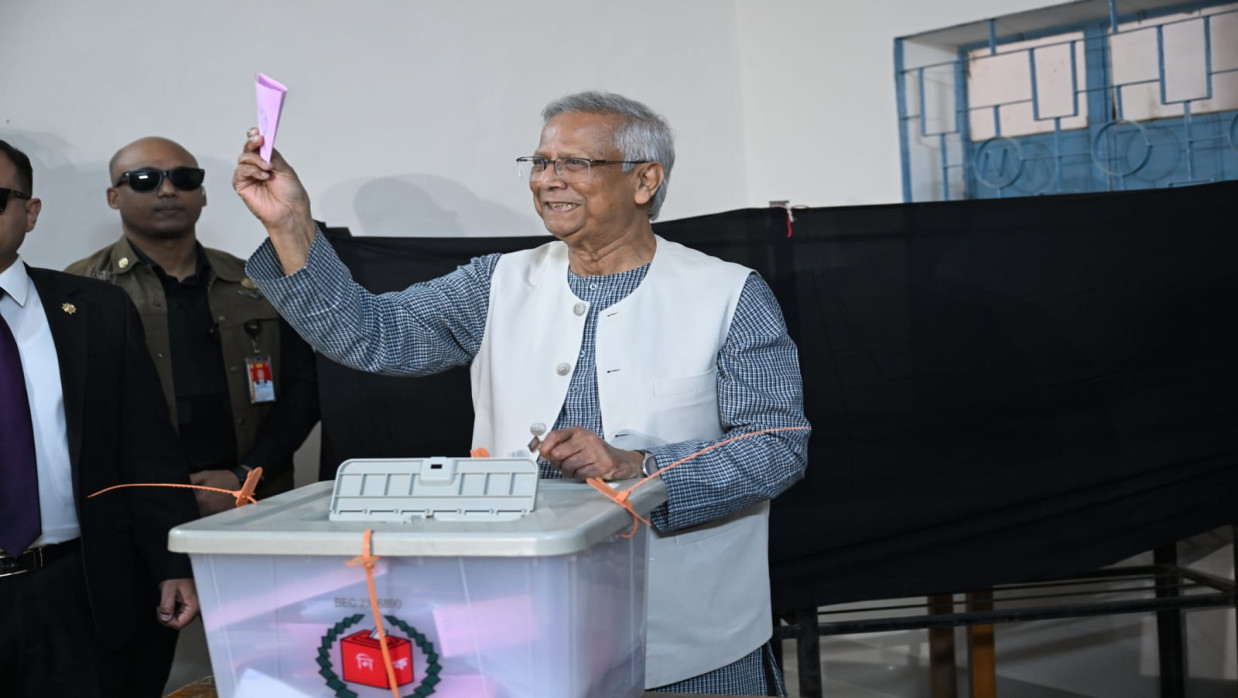
The February 2025 national elections in Bangladesh delivered a decisive mandate while simultaneously witnessing the unprecedented electoral collapse of Jamaat-e-Islami, the country’s principal Islamist political formation. With approximately 72 percent voter turnout, the elections represented more than a routine transfer of power. They marked a watershed in the country’s political trajectory, reflecting deeper structural transformations in Bangladeshi society. This commentary examines the sociological underpinnings of Jamaat’s defeat, the persistent threat of radicalism despite electoral outcomes, the imperative of minority protection, and the necessity of restoring robust bilateral relations with India.
The February 2025 National Elections
The February 2025 national elections in Bangladesh produced surprising results that defied many political analysts' predictions. Following the student-led revolution that ousted Sheikh Hasina, the elections saw unprecedented voter turnout and a dramatic shift in the political landscape. The Awami League was barred from contesting the elections after the interim government's election commission determined that the party's leadership was complicit in human rights violations, corruption, and electoral malpractice during Sheikh Hasina's tenure. This controversial decision, though criticized by some as politically motivated, was supported by many who argued that accountability was essential for democratic restoration. The Bangladesh Nationalist Party emerged as the single largest party, securing 118 seats, while the newly formed Citizens' Alliance for Democratic Reform won 87 seats, capitalizing on the revolutionary momentum. The Jamaat-e-Islami obtained 45 seats, while various smaller parties and independent candidates collectively won 50 seats in the 300-member parliament. This electoral upset occurred primarily because citizens, energized by the recent revolution, sought to consolidate democratic gains and prevent the return of authoritarian governance. The youth vote proved decisive, with first-time voters and students playing a crucial role in reshaping Bangladesh's political future through the ballot box, signalling their determination to build a more accountable and transparent democratic system.
The Student Revolution and Political Transition
Bangladesh witnessed a historic student-led revolution in 2024 that culminated in the ousting of Prime Minister Sheikh Hasina after her prolonged tenure. The mass uprising, driven primarily by students and youth demanding democratic reforms, accountability, and an end to authoritarian practices, forced Sheikh Hasina to flee the country. This popular movement reflected widespread discontent with governance failures, economic mismanagement, and alleged human rights violations. Under the new regime, Sheikh Hasina's political future remains uncertain as calls for accountability grow louder. The interim government faces pressure to investigate allegations of corruption and human rights abuses during her administration. Whether she will face legal proceedings or remain in exile depends on how the new leadership balances justice with political reconciliation, a decision that will significantly shape Bangladesh's democratic trajectory and healing process.
The Collapse of Jamaat-e-Islami
Jamaat-e-Islami’s electoral decimation was comprehensive. The party lost almost every seat it contested, with its vote share falling to low or single digits across most constituencies. In traditional strongholds including parts of Sylhet, Chittagong, and Rajshahi divisions, Jamaat candidates finished behind not only major parties but also independents. This collapse reflects not a momentary electoral swing but the culmination of profound structural changes in Bangladeshi society.
Three interconnected factors explain this outcome. First, urbanization and demographic transition have fundamentally altered political consciousness. Bangladesh’s median age is approximately 27 years, with a substantial majority under 35. This young, increasingly urban cohort has been shaped by digital media exposure, rising educational attainment, and aspirational economic orientations incompatible with Jamaat’s ideological offerings. Survey data indicated that among first-time voters aged 18 to 25, Jamaat registered negligible support, with economic opportunity, corruption, and governance quality ranking as primary concerns while religious nationalism ranked near the bottom.
Second, Jamaat’s rural base eroded significantly. The party had historically sustained loyal support through social service infrastructure including clinics, schools, and microcredit programs. However, the expansion of government social safety nets, housing programs, stipend systems for female students, and rural electrification initiatives effectively appropriated these welfare functions. The state, deploying superior resources, outcompeted Jamaat in the domain where it had established its deepest roots. Additionally, inflationary pressures during 2023 and 2024, particularly rising food and energy costs, generated material grievances that overrode ideological loyalties.
Third, the Bangladesh Nationalist Party’s (BNP) decision to contest elections robustly after its 2014 boycott proved decisive. Previously, Jamaat benefited from BNP endorsement in select constituencies in exchange for organizational support. In 2025, the BNP fielded its own candidates in constituencies it had previously conceded, exposing Jamaat to direct electoral competition from which it had long been sheltered. The BNP’s strategic repositioning reflected its calculation that distancing itself from Jamaat’s war crimes legacy would rebuild institutional credibility.
Perhaps most significant was the role of women as autonomous political agents. Bangladesh’s achievements in female labour force participation, driven substantially by the ready-made garment sector employing over four million workers who are predominantly women, combined with improvements in maternal health and dramatic gains in female educational enrolment, have produced a transformation in gendered political consciousness. Millions of women who have experienced economic independence, public mobility, and educational attainment constitute a constituency whose material interests and aspirational horizons are fundamentally at odds with Jamaat’s prescriptive social vision (Kabeer, 2000).
Electoral Defeat Is Not Ideological Defeat
The electoral decimation of Jamaat must not be conflated with the structural defeat of radicalism. Bangladesh continues to confront a serious threat from radical extremism operating through social networks and ideological formations that exist beyond formal electoral politics. The 2016 Holey Artisan attack in Dhaka, in which militants killed twenty-two people including seventeen foreign nationals, demonstrated that radicalization can produce lethal violence even when associated political formations are electorally marginalized.
Radicalism in Bangladesh thrives in the interstices between traditional religious authority and modern political structures. It feeds on economic inequality, youth unemployment, digital echo chambers, and the social dislocations generated by rapid transformation. The proliferation of movements such as Hefazat-e-Islam, which mobilize around blasphemy accusations and educational curriculum content, demonstrates that new vehicles for radical mobilization can crystallize even as older ones dissolve (Riaz, 2016).
The incoming government must recognize that counterradicalism is not merely a security function but a comprehensive social project encompassing educational reform, employment generation, community-based deradicalization, and the construction of resilient pluralistic institutions. Bangladesh’s impressive economic growth averaging over 6 percent annually in recent years and its advances in human development represent accumulated social capital that can be devastated by spectacular violence or eroded through the normalization of radical discourse.
What should be the Immediate Priorities of the New Government?
The new Bangladeshi government faces a critical juncture that demands strategic prioritization to ensure the nation's overall development and stability. Among the multitude of challenges, certain concerns require immediate attention to lay a strong foundation for long-term progress. The foremost priority must be restoring political stability and strengthening democratic institutions through transparency, accountability, and the rule of law, including an independent judiciary, human rights protection, and constructive political dialogue. Without political stability, economic development and social progress remain fragile and unsustainable. Bangladesh faces pressing economic challenges including rising inflation, depleting foreign exchange reserves, and mounting external debt, requiring immediate focus on stabilizing the economy through prudent fiscal management, controlling inflation that affects ordinary citizens' purchasing power, restoring investor confidence, and addressing the energy crisis to ensure uninterrupted power supply for industries and households. Ensuring the safety and security of all citizens, particularly religious and ethnic minorities, must be an immediate concern, with social cohesion built through inclusive policies and constitutional rights protection to strengthen national unity and prevent communal tensions. Comprehensive reforms in key institutions such as law enforcement, the banking sector, and public administration are essential, while tackling corruption through transparent mechanisms and accountability will restore public trust and improve service delivery. With a large youth population, creating employment opportunities and reforming the education system to meet market demands is crucial for harnessing the demographic dividend. The new government's success will be measured by its ability to address these immediate priorities while maintaining a clear vision for Bangladesh's future, and swift decisive action on these fronts will determine whether Bangladesh can navigate this transitional period and emerge stronger on its development trajectory.
The Structural Vulnerability of Minorities
Jamaat’s electoral annihilation has been received with cautious optimism by Bangladesh’s religious and ethnic minorities, including Hindu, Buddhist, Christian, and indigenous communities that collectively constitute approximately 10 percent of the population. However, the persecution of minorities in Bangladesh is a structural phenomenon that cannot be reduced to any single political formation’s agency.
The demographic trajectory of the Hindu population, declining from approximately 22 percent at independence in 1971 to under 8 percent today, constitutes a slow-motion displacement driven by the cumulative interaction of legal discrimination, economic marginalization, episodic violence, and rational calculations of exit over voice. The Vested Property Act, originally enacted as the Enemy Property Act during the Pakistan era in 1965 and retained after independence, enabled systematic transfer of Hindu-owned property to politically connected elites across successive regimes (Barkat et al., 2008).
This structural vulnerability is embedded in institutional configurations that transcend partisan politics. Property law, land administration systems, police organizational culture, judicial inefficiency, and the patronage economy all contribute to what can be theorized as structural violence against minorities. The new government’s legislative majority creates unprecedented political space for addressing these foundations. The operationalization of the Vested Property Return Act of 2011, the enactment of comprehensive anti-discrimination legislation, the establishment of a statutory minority affairs commission with genuine authority, and the full implementation of the 1997 Chittagong Hill Tracts Peace Accord represent the minimum threshold of reform necessary.
Elections can alter the composition of governments. Only sustained institutional transformation can alter the structural conditions that produce systematic vulnerability. The test of the 2025 mandate lies not in Jamaat’s defeat, which is accomplished, but in dismantling the social structures that made Jamaat’s ideology operational against minority communities.
Restoring Relations with India
Among the most consequential dimensions of the post-election landscape is the imperative of restoring bilateral relations with India. This is not merely diplomatic courtesy but a structural necessity rooted in geographic, economic, and security interdependencies.
During previous administrations, the bilateral relationship achieved unprecedented institutional depth. The 2015 Land Boundary Agreement settled a border dispute inherited from partition by exchanging 162 enclaves and providing citizenship to over 50,000 stateless individuals. Bilateral trade crossed 18 billion dollars, with India emerging as one of Bangladesh’s largest trading partners and a critical source of essential commodities, industrial inputs, and energy supplies. Connectivity projects including railway links, bus and freight corridors, and inland waterway protocols began reconstituting the economic geography of a region artificially fragmented by partition (Hossain, 2021).
However, the relationship experienced significant turbulence during recent political transitions. Anti-India sentiment, often instrumentalized by Islamist and nationalist forces for domestic mobilization, strained diplomatic engagement. Contentious issues including the sharing of Teesta river waters, border security management, and India’s 2019 Citizenship Amendment Act introduced friction into what had been a primarily pragmatic relationship.
The new government must recognize that a stable relationship with India constitutes a structural precondition for Bangladesh’s continued economic transformation. The India-Bangladesh Friendship Pipeline, which began supplying diesel from Assam’s Numaligarh Refinery to northern Bangladesh in 2023, exemplifies infrastructure-level integration that generates material interdependence. The proposed Comprehensive Economic Partnership Agreement, if negotiated equitably, could significantly expand market access for Bangladeshi exports while facilitating Indian investment in infrastructure, technology, and manufacturing.
The security architecture demands equal attention. The porous border has historically been exploited by militant networks, smuggling operations, and human trafficking syndicates. Cooperative intelligence sharing and coordinated border management must be restored and institutionalized through formal mechanisms that survive changes of political leadership. Bangladesh’s demonstrated willingness to act against anti-India insurgent groups operating from its territory must be maintained and reciprocated through Indian sensitivity to Bangladeshi concerns regarding border management practices and trade asymmetries.
The Teesta water sharing agreement remains the most symbolically charged unresolved issue. For Bangladesh, the Teesta represents a lifeline for millions of farmers in northern districts. India’s inability to deliver a treaty, despite repeated assurances, has generated deep popular frustration. The new government should pursue this issue with diplomatic determination while acknowledging complex federal dynamics within India, where West Bengal holds effective veto power. Creative institutional approaches including joint river basin management frameworks and data sharing protocols could offer pragmatic pathways (Faisal et al., 2013).
The 2025 electoral mandate, by marginalizing anti-India political forces that had complicated bilateral engagement, provides a historic window for resetting this critical relationship. Whether that window is utilized for substantive institutional construction or squandered through diplomatic inertia will have profound consequences for the stability and prosperity of both nations.
Democratic Consolidation or Hegemonic Drift?
The commanding mandate presents a classic consolidation dilemma. Jamaat’s removal eliminates a perennial source of communal tension and coalition constraint. The government now possesses institutional capacity to pursue reforms previously hostage to coalition sensitivities, including reforms in personal law, digital rights, educational curriculum, and minority protections.
However, the enfeebling of organized opposition raises concerns about democratic backsliding. Bangladesh’s democratic trajectory is replete with cycles in which electoral dominance metastasized into authoritarian governance. Press freedom indices reflect entrenched concerns, with Bangladesh ranking 165th out of 180 countries in Reporters Without Borders’s 2024 World Press Freedom Index. The Digital Security Act, widely criticized as an instrument for suppressing dissent, epitomizes the tension between security imperatives and civil liberties (Ahmed, 2019).
The BNP’s parliamentary presence provides nominal democratic counterweight, but the party’s organizational coherence remains attenuated. Its capacity to function as effective opposition, channeling political contestation through institutional mechanisms rather than street confrontation, will depend on internal renewal, generational transition, and definitive severance from its historical Jamaat entanglement.
History teaches that the most perilous moment for a democracy is not when it confronts a formidable opposition but when it faces a diminished one. The temptations of hegemonic consolidation and institutional capture are well documented. Bangladesh stands at precisely this juncture.
Conclusion
The Bangladesh elections represent a critical juncture. The demographic, economic, educational, and technological transformations that have reshaped Bangladeshi society over three decades have collectively undermined the social foundations upon which authoritarian political mobilization historically depended, even as aspirations for genuine democracy remain culturally central. Yet the same structural forces that produced the 2025 verdict will generate their own contradictions. The electorate that rejected the old guard did so not from ideological abstraction but from material calculation and lived experience. That same electorate will hold the new government accountable for its performance in minority protection, countering extremism, judicial reform, press freedom, economic management, and the deepening of democratic institutions.
A pivotal question concerns the political future of Nobel laureate Muhammad Yunus, who played a significant role in the interim administration following Sheikh Hasina's ouster. While Yunus has consistently maintained that he harbours no personal political ambitions, his moral authority and international credibility make him a potentially influential figure in Bangladesh's democratic reconstruction. Whether he transitions into formal politics or continues as an elder statesman guiding institutional reforms will significantly impact the new government's legitimacy and reform agenda.
The choices made in the coming period will determine whether the 2025 verdict inaugurates a new chapter in Bangladesh's democratic evolution or becomes another entry in the recurring cycle of expectation and disappointment that has characterized South Asian democracies. It is 170 million Bangladeshi citizens, across every stratum of this complex society, who will ultimately render the definitive judgment on whether the promise of democratic dignity, social inclusion, and shared prosperity translates from electoral mandate into institutional reality.


0 Comments
LEAVE A COMMENT
Your email address will not be published