

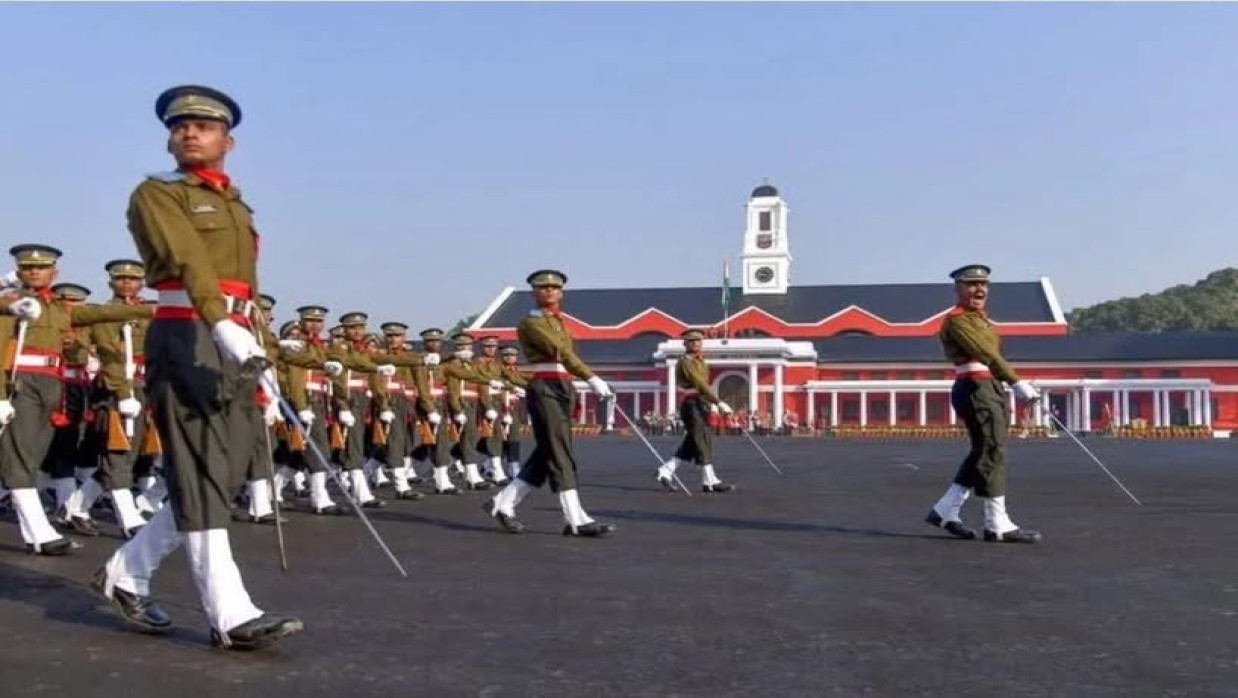
India established the "Friends for Life" digital platform as a future-oriented system which enables international military officers who studied at Indian military institutions to sustain their professional relationships. Chief of Army Staff General Upendra Dwivedi announced the platform to foreign service attaches as an alumni network which connects military officers from almost one hundred different countries. The network seems to function as a regular connectivity system. Major powers frequently cultivate professional ties with foreign officers who pass through their defense academies. Critics contend that the initiative shows a strategic effort to establish control over military organizations through its use of friendship and educational sharing.
The military training programs serve as a discreet tool which governments use to conduct international relations. Military officers who complete overseas training programs maintain their professional ties and personal relationships which continue to shape their views for many years. The training country receives goodwill together with doctrinal knowledge and informal access to upcoming leaders. India, as a rising regional power with global ambitions, understands this dynamic well. The defense institutions of this country have trained thousands of military officers from Africa Southeast Asia Central Asia and various other regions. The alumni from this program now hold important positions in their military organizations. The digital platform which connects them through India's identity creates a system that unites all their separate relationships.
Proponents argue that such connectivity fosters interoperability, knowledge exchange, and crisis coordination. The skeptics of the initiative interpret its purpose through a completely different understanding. The digital relationship consolidation which India performs will provide them with organized access to international military officers throughout different time periods. The state-supported platform enables continuous participation through controlled content distribution and specific audience engagement, which distinguishes it from informal alumni networks. The result will produce control capabilities which extend to procurement choices and doctrinal decisions and diplomatic interactions at international multilateral meetings.
The issue revolves around two different aspects which extend beyond networking requirements. The majority of participating officers come from developing nations whose defense systems lack equivalent global defense capabilities. A stronger nation creates dependency through its training programs and scholarship offerings and ongoing partnerships. Professional exchanges may lead to narratives which support the host nation's strategic viewpoint. India's strategic perspective includes its goal to achieve regional dominance throughout South Asia while extending its power to the Indian Ocean and Indo-Pacific territories.
Digital networks become more powerful because of their centralized digital structure according to critics who make this point. Career path information together with institutional ties and career goals brings significant worth to organizations. The platform creates an innocent public image which hides its actual function as an information center. Digital alumni networks serve as strategic resources because they enable organizations to use their digital platforms during periods of geopolitical competition which depends on cyber capabilities and information superiority.
The current development needs assessment through its wider implications which show how India conducts its foreign relations and defense operations. Strategic South Asian competition has intensified because of increasing tensions between contested borders and maritime disputes and regional power struggles. India establishes itself as a global power through its ability to control international crisis situations by maintaining diplomatic relations with foreign military personnel. Indian military academies create a framework for their alumni who use their education to understand regional developments. The international response towards India-related conflicts will undergo changes because of their increasing alignment with India.
Alumni diplomacy exists as a diplomatic practice that multiple countries use, and this fact shows that India does not hold exclusive rights to this practice. The United States and China and Russia and European countries maintain large military training operations because these activities help them achieve their strategic goals over a long period. India's initiative operates as part of a worldwide trend that uses defense soft power to improve national security. The event holds different significance because of its specific moment and its extensive impact. Geopolitical competition creates a situation where ordinary programs develop stronger impacts than their normal functions.
The platform supporters believe that calling the platform manipulation diminishes the control which participating nations exercise. International officers who receive training outside their home countries become active agents who acquire foreign ideologies. They return to their countries with the institutional goals and national interests of their home countries. The function of networking platforms according to this perspective exists to maintain professional conversations which support shared security efforts. International military education programs established international standards which enable officers to develop trust through cross-cultural training.
The process of influence native to soft power develops through a gradual transition which people fail to notice. The use of soft power does not show itself to others as a form of forceful control. The process develops understanding through successful relationship building which takes place throughout an extended period. When officers share their training experiences which include doctrinal elements and their national professional networks, the total of these elements can create changes in institutional behavior. The ability of smaller states to maintain their equilibrium between major powers creates strategic results through this process.
The countries that participate in "Friends for Life" must balance their operations between two opposing forces. India serves as a training ground for both training purposes and bettering the connection between two nations. Countries need to develop multiple partnerships because they cannot rely on one dominant country for their international relations needs. The platform needs to explain its goals and governance structure and data protection methods to establish trust with users who fear potential violations of their privacy.
The public dispute over the project demonstrates how people fear outside control during times when international power dynamics are transforming. As emerging powers expand their global footprints, instruments once considered routine acquire geopolitical weight. Digital alumni networks may seem harmless, but they exist within a competitive environment where relationships are strategic currency.
The future development of "Friends for Life" will depend on its management because it might become a real professional platform or it might serve as a tool for power. The organization will benefit international military partnerships if it establishes equal partnerships between nations while maintaining their independence and staying away from political matters. The organization will create suspicion among people when it establishes itself as a platform for promoting single-country strategic narratives.
The modern world maintains interconnectedness because people now share influence without needing to use direct force. Educational institutions along with technological advancements and common human experiences create pathways for this phenomenon. The dispute about India's platform shows that countries use friendship ties as strategic tools in international relations.


0 Comments
LEAVE A COMMENT
Your email address will not be published