

A state's cohesion is undermined once its citizens begin to fear each other. India's case involves more than a disputed shrine or a provocative speech. This becomes an issue when congregations fear disturbances, families live in fear of losing their homes, or citizens feel obliged to hide an obvious manifestation of their faith. What is the fate of a republic when membership within it comes to depend on resemblance to the majority?
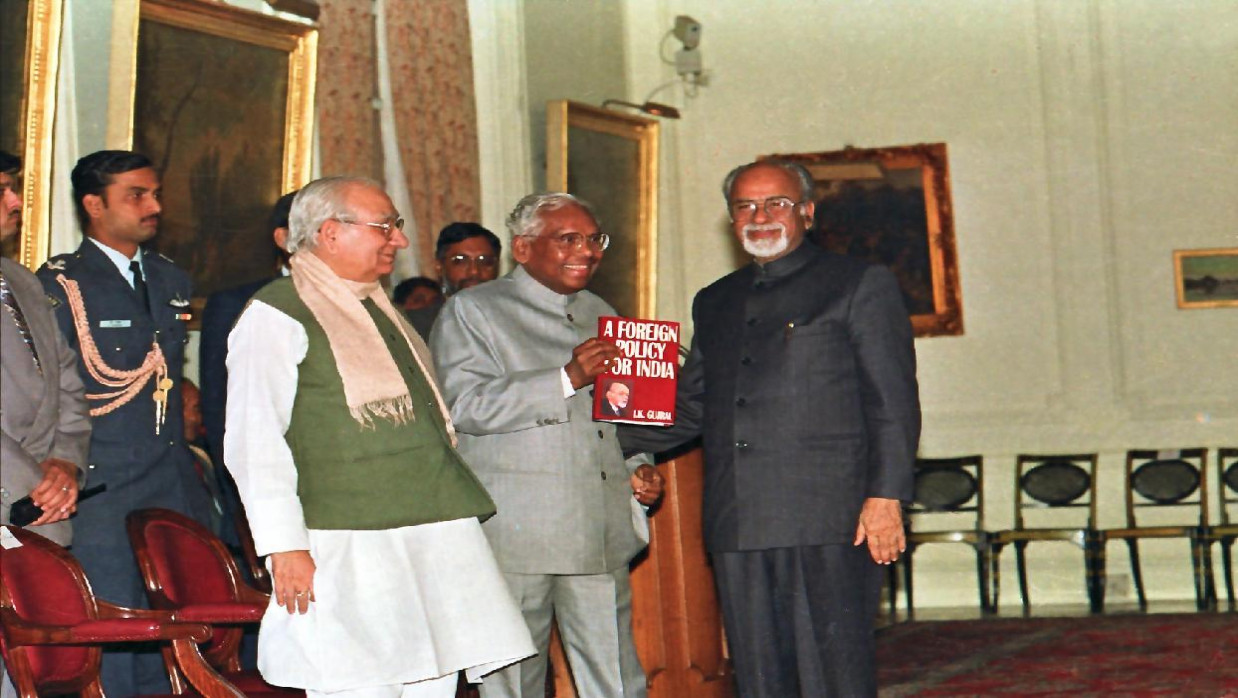
Former Indian Prime Minister I.K. Gujral recognized that India's unity rested on the state’s ability to accommodate diversity. Delivering his speech to the Lok Sabha on September 1, 1997, which is quoted by ThePrint, he argued against “the mould of uniformity” for the nation. In essence, it means that diversity of religions, languages, cultures, and history of the country made the nationhood possible only if these differences were taken into account. Today, when there is proof of minority insecurity, it is evident that the warning was not exaggerated. India undermines the basis of its own unity with every instance of cultural uniformity.
"Hate Speech and Religious Hatred in India" by Human Rights Watch, "India Hate Lab", "Report of India Hate Lab" by the Association for Protection of Civil Rights, "A Survey on Hate Crimes Against Christians" by the United Christian Forum, and "Religious Liberty Report 2011" by Religious Liberty Commission of the Evangelical Fellowship of India all report hate speech, acts of violence, disruption of worship services, social ostracism, and discriminatory acts of the state.
It is not just about the mistreatment of one particular community. Can India uphold its constitutional identity while rendering minority identities harder to articulate? Gujral's warning provides the criterion for assessing the answer: citizens need to be able to be different and yet remain equal members of the community.
From Babri Masjid to renewed disputes over worship
Babri Masjid’s destruction on December 6, 1992, remains an important warning. The Ram Janmabhoomi movement, in connection with the BJP, the RSS and the Vishwa Hindu Parishad, made religion into a tool for mass politics. In its Ayodhya judgment on November 9, 2019, the Supreme Court referred to the demolition of the mosque as an “egregious violation of the rule of law.” The Supreme Court granted the land for temple construction but also ordered five additional acres for constructing a mosque; such an outcome doesn’t make the demolition legal.
This is the significance of the issues at Gyanvapi in Varanasi, Shahi Eidgah in Mathura, and Shahi Jama Masjid in Sambhal. According to a Supreme Court Observer, claims that temples existed at the sites of mosques have led to lawsuits and requests for surveys. Historical and archaeological claims need to be backed by evidence and due process; historical grievance cannot justify destruction by the mob, political organizations, or the government.
Political influence is evident in the Places of Worship Act, which BJP activist Subramanian Swamy and lawyer-politician Ashwini Kumar Upadhyay challenged in the Supreme Court. Nevertheless, it cannot be said that all mosque cases involve an order from the BJP or RSS, since RSS chief Mohan Bhagwat, in December 2024, rejected the perpetual resurrection of the temple-mosque controversy. Here, the question is whether there is any indication of such restraint within the organization and in protecting the endangered community.
In general, the Places of Worship Act of 1991 preserves the religion of the place as it stood on August 15, 1947, except for statutory exceptions, and the Ayodhya case was kept outside its scope. According to Supreme Court Observer, the Supreme Court had decided to restrain proceedings and orders regarding this matter, surveying being included, on December 12, 2024.
Gujral’s remark provides a wider view of this question. Individuals may be burdened with a complex legacy, but they will have to co-exist in the future. If each generation is compelled to make amends to its neighbors for the sins of their ancestors, individuals become trapped in an insoluble dispute.
When worship becomes a place of insecurity
It is manifested in specific instances. For instance, Sub Inspector Manoj Kumar Tomar of the Delhi Police was recorded beating Muslim men offering Friday prayers in the middle of a road in the Inderlok area of north Delhi on March 8, 2024. The Indian Express states that Tomar has been immediately suspended for this act. While authorities can monitor the activities happening on public roads, it does not give them the right to humiliate and beat worshippers.
On January 30, 2024, the Delhi Development Authority bulldozed down the Akhoondji mosque and madrasa in the Mehrauli area of Delhi. As per The Indian Express, the mosque has been listed in the Archaeological Survey of India journal since 1922. The DDA says they were illegal structures, but the Delhi High Court wants an explanation for the demolition and notice before such action is taken.
The Christian community has also been subjected to severe destruction. As per the Human Rights Watch report on May 30, 2023, citing Christians Goodwill Council in Churachandpur, more than 200 churches were set on fire or destroyed between May 3 and May 15, 2023, in Manipur. There were also allegations of police bias, refuted by the police. This is just historical information beyond the immediate period of the 2024-2025 statistical table. Manipur has complicated ethnic, territorial, and political concerns, but this should not detract from the obligation to protect the congregation and conduct an unbiased inquiry into the destruction.
Religious acts and processions can also be used for intimidation. This is evident in the Statesman on March 28, 2024, which reported disputes in Chengicherla, Medipally, Telangana, over the playing of provocative songs before the mosque during Holi. The police have arrested people on both sides. Playing songs by a DJ and conducting cultural programs are not religious misconduct.
Here, different governments and actors come into play. They do not point out any definite reason for persecution of all minorities. They do show an obligatory task: public authorities should treat citizens equally, and religious activities should not be an excuse for intimidation.
The pattern behind the incidents
The wider monitoring history shows why such cases cannot be labeled as temporary controversies. As per the data by India Hate Lab, there were 1,165 hate-speech events taking place face-to-face in 2024, and this rose to 1,318 in 2025, a 13.1 percent increase. Of the hate speeches identified in its 2025 report, 308 were found to urge violence while 120 urged economic or social boycotts. These are monitoring findings, not judicial pronouncements.
However, Christian surveillance reports show another aspect altogether. According to the Religious Liberty Commission of the Evangelical Fellowship of India, there have been 747 such occurrences of violence against Christians during 2025 as opposed to 640 in 2024; an increase of 16.7%. Their classification of violence includes elements like intimidation, disruption of worship, discrimination and violence and not just physical attacks. However, another report from the Association for Protection of Civil Rights between June 7, 2024 and June 7, 2025 reported 173 physical violence cases that included 25 deaths; all Muslims.
Selected reported hostility and violence affecting minorities
|
Source |
Period |
Communities |
Reported figure |
Meaning and limits |
|
India Hate Lab |
2024 → 2025 |
Muslims and Christians |
1,165 → 1,318 events |
In-person hate speech; increase of 13.1%. |
|
India Hate Lab |
2024 → 2025 |
Muslims |
1,147 → 1,289 events |
Includes events targeting Muslims alongside Christians; increase of 12.4%. |
|
India Hate Lab |
2024 → 2025 |
Christians |
115 → 162 events |
Includes shared targeting with Muslims; increase of 40.9%. |
|
Evangelical Fellowship of India Religious Liberty Commission |
2024 → 2025 |
Christians |
640 → 747 verified incidents |
Hostility, intimidation, violence and discrimination; increase of 16.7%. |
|
United Christian Forum |
2024; Jan–Nov 2025 |
Christians |
834; 706 reported incidents |
Full-year 2024 and partial-year 2025; no annual trend calculated. |
|
Association for Protection of Civil Rights |
7 Jun 2024–7 Jun 2025 |
Primarily Muslims and Christians |
602 hate crimes; 345 hate speeches |
947 entries across two categories; not 947 physical attacks. |
|
Association for Protection of Civil Rights |
7 Jun 2024–7 Jun 2025 |
Minorities |
173 physical-violence incidents |
Includes 25 fatal incidents; the report identifies deceased victims as Muslim. |
|
Association for Protection of Civil Rights |
Same reporting interval |
Muslims and Christians |
2,964 people in 504 incidents |
1,460 Muslims and 1,504 Christians affected; people, not incident counts. |
|
Human Rights Watch |
Sep 2024 |
Kuki-Zo and Meitei communities |
At least 11 reported deaths |
Renewed armed ethnic clashes in Manipur; not a minority-only death count. |
The data table shows monitoring figures, rather than a national census or number of convictions. The main comparisons relate to the completed calendar years 2024 and 2025, although other periods are labeled separately. Datasets overlap and should not be added together. India Hate Lab overlaps between its Muslim and Christian categories, whereas the United Christian Forum statistic from 2025 relates only to January to November. The APCRC monitored affected individuals in 504 out of 602 cases where speech was not involved. Percentage changes reflect comparisons between full calendar years. The Manipur deaths encompass various minorities and are not a tally of all hate crime victims.
Every number hides a tragedy that numbers cannot tell the whole truth about: a broken-down service, a scared child, a living lost by the shop owner, or a belief lost by a family that their police will defend them. Continued threats keep people away from taking part in public life.
The constitutional promise belongs to every community
Muslims and Christians play important roles in the available data, but the constitutional argument needs to extend beyond this. Attacks, social boycotts, and economic sanctions directed at Dalit and tribal Christians and allegations of human rights abuses committed against Adivasi villagers during counter-insurgency operations have been documented by Human Rights Watch in its report for 2025. Being religiously vulnerable can mean being caste-, poor-, or indigenous-vulnerable, leaving people open to multiple forms of discrimination simultaneously.
Expulsion of Bengali-speaking Muslims and Rohingya refugees to Bangladesh, and some of India’s own citizens as well, have been documented in Human Rights Watch’s World Report 2026. Its World Report 2025 contains reports of new violence in Manipur, which killed 11 people in September 2024, in connection with clashes between armed groups affiliated with mainly Christian Kuki-Zo and mainly Hindu Meitei communities. Migration controls and ethnic violence are quite distinct issues, but both need safeguards against collective suspicion and arbitrary rule.
Protection is guaranteed to Muslims, Christians, Sikhs, Buddhists, Jains, religious and linguistic minorities, as well as those who are under threat due to their caste or indigenous status. While the articles discussed above lack recent national statistics on these communities, this discrepancy is not insignificant; yet a community's rights are not contingent on the extent of its oppression being reflected in national data.
These articles provide for equality and protection from certain kinds of state discrimination. Articles 25 and 26 provide the right to practice religion,, subject to constitutional limitations, while Articles 29 and 30 provide cultural and educational rights. Dr. Balram Singh v. Union of India (13 November 2024) affirmed the secular nature of the Indian Constitution. Such provisions help in ensuring that public servants do not show bias and remain non-religious in their actions.
In its judgment of 13 November 2024 on the demolition of buildings, the Supreme Court also ruled that demolition of property could not be done merely as punishment for accused or convicted persons. These directions ensure proper enforcement and provide specific exceptions, but rule out punishment through executive demolition. Demolishing unlawful construction is not necessarily unconstitutional.
The Northeast and the cost of weakened belonging
Gujral’s message rings true for the Northeast, where the idea of the country being theirs is bound up with history, identity, culture, and politics. In Manipur, as AFP reported, the Meitei, Naga, Kuki, and Pangal people are determined to safeguard their cultural identity. These cannot be homogenized into one voice or dream. This means recognizing differences and hearing other interests, as well as Manipur's association with the rest of India as a federation.
A controversial incident shows what is meant by the language of alienation. According to AFP, via The Daily Star, on October 29, 2019, Yamben Biren and Narengbam Samarjit organized a press conference in London, declared Manipur independent, and set up the council as a government in exile. Their claim did not change Manipur's internationally recognized status. Yamben Biren named himself chief minister of the council that he had established; he was not the former chief minister of Manipur, which was part of India.
AFP, EastMojo, and India Today NE give some explanations for the act which include fear of cultural annihilation, allegation of being confronted with hostility during engagement with the Indian authorities, objection to Armed Forces Special Powers Act and extrajudicial killing. Furthermore, they objected to the merger of Manipur with India in 1949. These are the arguments raised by the proponents and do not prove a legal right to self-determination or that all the people of Manipur supported their initiative. According to EastMojo, the titular King, Leishemba Sanajaoba, denied giving his approval, arguing that they misinterpreted his approval as permission to collect historical documents.
This announcement of independence should also be differentiated from the ethnic conflict which broke out in May 2023. Reuters attributes the conflict to the hill tribes' opposition to Scheduled Tribe status for the valley-based Meitei. This was due to access to reservations in employment and education, security of their lands, and fears over demographic changes due to the influx from Myanmar. These issues relate to ethnicity and religious identity, but cannot be understood through religion alone.
This insecurity has exacted a severe human toll. Quoting the US State Department’s assessment of 2023 events, Reuters cited over 200 deaths and over 60,000 displaced persons from May to November. Such outdated statistics pertain to different communities and are not another tally of hate crimes against minorities to be added to the above table. Allegations of discriminatory policing and widespread destruction of churches were made by Human Rights Watch.
Neither the London Declaration nor the later conflict includes common secessionist objectives within the northeast community. These are two distinct conflicts which should be addressed separately. A democratic response should include protecting civilians, investigating the violations by both sides, facilitating relocation and resettlement, and establishing channels for negotiating land and autonomy. A state's sovereignty is assured only when its citizens have recourse without becoming enemies.
In this context, Gujral’s advice becomes relevant: a country is unified only when citizens with different backgrounds share a belief in it. If the protection offered is perceived to be biased and there is no forum for their complaints to be heard, alienation from the republic grows. Listening to the Northeast contributes to national cohesion. The citizens of the republic must find it credible to belong to the constitution.
Political responsibility must follow the evidence
Any honest discussion has to differentiate between Hinduism and Hindus on one side and the behavior of BJP, RSS, and their allies in politics on the other. Collective criticism would perpetuate the injustice being complained about. There are many Hindus who, along with many Indians of other religions or no religion at all, advocate religious liberty and equal citizenship.
The BJP and related groups such as the Vishwa Hindu Parishad and the Bajrang Dal have been cited as key actors in their investigations within India Hate Lab. The BJP and its allies have recorded 1,164 cases of hate speech delivered in BJP-led and coalition-led states and BJP-led union territories in 2025. The issue of politics, law enforcement, and institutions needs investigation, without necessarily implying that the government officially coordinates all incidents. Reuters claims that Modi and the BJP have been biased in their report.
However, responsibility should be attributed to other parties, local authorities, police, and non-state actors wherever warranted. A government's democratic credentials depend partly on its willingness to defend those who do not think like it. An election victory gives a mandate to rule under the Constitution; it does not mean minorities' rights can be left to the majority's will.
In September 2026, the case of IPS Officer Bushara Bano shows how routine activities can be used to question an individual's loyalty. According to Alt News, allegations were made against her based on her use of Assalamu Alaikum, Inshallah, and Jazakallah in a video in which she explains her professional career as an IPS Officer and how she was transferred from Kharagpur to the State Armed Police. The video had no evidence to back up the allegation for her transfer. However, public officers should be evaluated based on their conduct rather than language.
A warning for the republic’s future
This must be made clear in day-to-day activities, such as investigating any violence based on community/caste, ensuring the safety of people under threat, enforcing the law evenly, and compensating for any illegal activity committed by officials. This has to be reflected in public records through the definition of what makes someone threatened, attacked, dead, damaged property, and interrupted worship service and their resolution.
Reporters, educators, religious leaders, and politicians all have an obligation to fight against collective guilt. Whether one is a Hindu in Bangladesh, a Muslim in India, or a Christian anywhere, the fact remains the same that no individual should be denied protection simply because others believe the same way he or she does.
B.R. Ambedkar had noted that political hero worship was “a sure road to degradation and to eventual dictatorship,” as Soli J. Sorabjee, former Attorney General, had reminded The Indian Express. Citizens who want to keep constitutional checks in place must have the courage to challenge even the authority of leaders they look up to. Gujral’s message addresses the basis of such a system of checks: enduring unity in a heterogeneous country requires respect for its diverse population.
The future of India depends on whether the Muslim is able to pray without fear, the Christian Church can assemble without intimidation, the Adivasi villages struggle for their rights, and the linguistic minorities speak without being made suspicious about their loyalty to the nation.
Almost thirty years after Gujral's speech, it is time his views were taken seriously rather than paid lip service to. Polarization may win an election, but it cannot create the trust required to make India pluralistic. Indian politicians need to justify themselves if they act in ways that make differences seem less dangerous.
How can equal citizenship continue to exist if people have to change themselves to be considered Indians? How can constitutional secularism exist if identity is considered a proof of loyalty? And how can India unite in itself if it considers unity to be uniformity?
According to Gujral’s message, India can no longer put off this responsibility: to maintain the diversity that brings India together and ensures equality for everyone.
India's future depends on whether all its citizens can belong and live freely, without renouncing their identity. Intimidation and uncertainty about protection threaten to undermine the confidence of the whole republic. Victories in the political realm will not help restore trust between people taught to hate each other. India should learn that it cannot exist “in the mould of uniformity.” Almost thirty years passed, and the choice is becoming more and more necessary: honor the differences which unite India, or weaken the unity which its leaders promise to preserve. India Cannot Be United by Becoming Uniform.


0 Comments
LEAVE A COMMENT
Your email address will not be published