

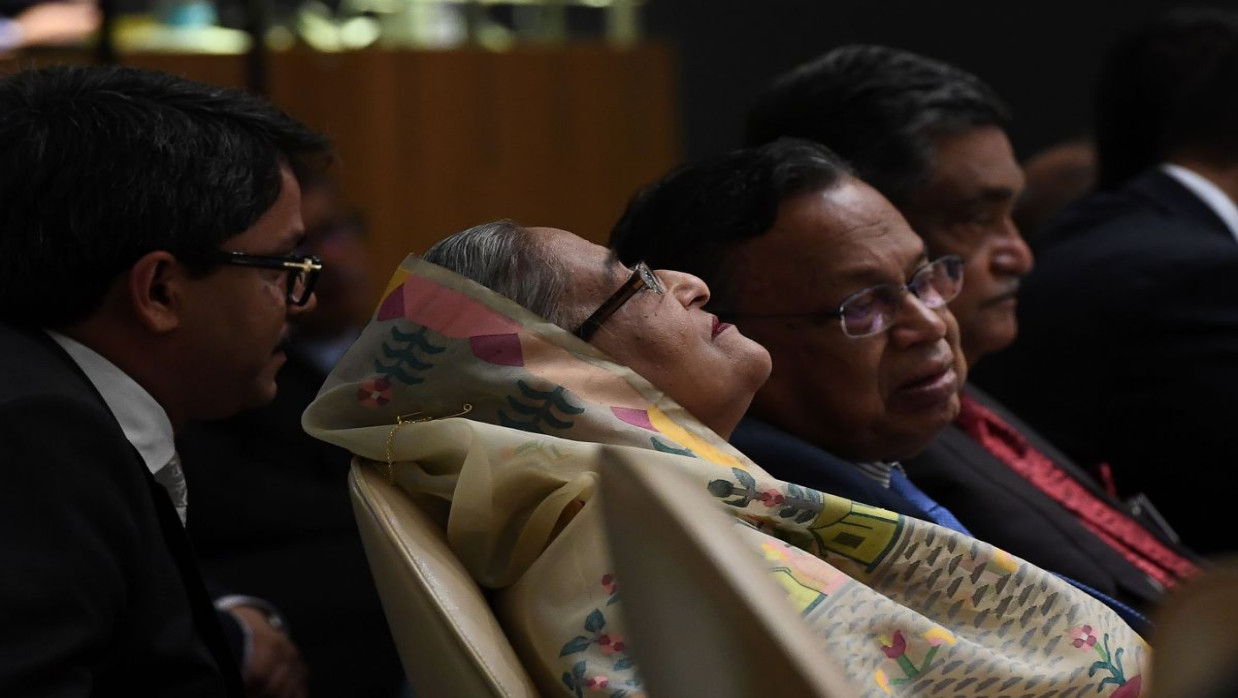
The question confronting Bangladesh is no longer simply whether Sheikh Hasina wants to return from India. It is whether a former prime minister, driven from power by a popular uprising, facing serious criminal convictions and leading a deeply fractured political organization, can dictate the conditions of her return to a country still struggling to recover from her authoritarian rule.
Her statement that she will return in December 2026 has excited her supporters, worried her adversaries, and further strained India-Bangladesh relations. But the bigger question remains: does Hasina really intend to submit herself to the process of answering for the many wrongdoings she committed during her rule? Or is she merely buying time to prolong her party's relevance in Bangladesh, with key AL figures staying away from the country for now?
There is good reason to question how serious the announcement is. Political declarations are easy to make from the security of another country. Returning to face arrest, judicial proceedings, and the anger of those who suffered under a government is an entirely different proposition.
Hasina's situation is all the more remarkable given that the Awami League is almost inextricably linked to her rule in the public mind, despite its founding role in Bangladesh's liberation struggle. One can separate the party's fate from Hasina's, and perhaps the claim that the party cannot endure without her is part of what has prevented any prospect of its reconstitution.
A Political Comeback Announced from a Safe Distance
Since August 2024, Sheikh Hasina has stayed on in India, which has in turn become a sore point in Indo-Bangladesh relations. She fled Bangladesh after an uprising revealed that its governance was predicated upon a single all-powerful figurehead, subservient bureaucracies, and a security apparatus complicit in violence against the populace.
The Awami League has suffered considerable losses as a result. Party leadership has been decimated, with many senior figures leaving or staying under the radar, and the rank-and-file have found themselves vulnerable to the authorities.
It may reflect the extreme power asymmetries under the former regime: its senior leadership could flee while many of its members were at the mercy of the new government.
One may wonder what it means to be a leader when one cannot be present when one's followers are in peril.
Returning to Bangladesh may help Sheikh Hasina demonstrate solidarity with her supporters, signal that the Awami League still has a coherent leadership structure, and that the new government has to act within a timeline dictated to it from overseas.
But none of these objectives proves that she intends to board an aircraft bound for Dhaka.
A genuinely determined return would require more than public statements, diplomatic messages, or correspondence from foreign lawyers. It would require a credible willingness to submit to Bangladesh's legal jurisdiction and accept the consequences of judicial decisions, subject to lawful appeal and review.
Until such steps become visible, the December announcement deserves to be treated as a political claim rather than an established plan.
The Passport Controversy: Legal Initiative or Political Theatre?
The controversy surrounding Hasina's reported request for a passport and national identity documentation has added another dimension to the debate.
According to material circulating in Bangladesh's political and legal discussions, a London-based law firm reportedly contacted the Bangladesh High Commission in New Delhi about documentation for the former prime minister. Questions subsequently emerged about whether Hasina had personally authorized the communication, whether a valid power of attorney existed, and whether the correspondence constituted a formal application.
These questions are not minor administrative technicalities. They go directly to the credibility of the entire exercise.
A lawyer's communication, even if properly authorized, is not equivalent to an approved passport application. Nor does a request for travel documents establish that a convicted individual is entitled to avoid arrest upon arrival.
However, this legal position should be read distinctly from the political pronouncements made. Article 33 of the Bangladesh Constitution confers upon every citizen the right to re-enter the country, save as may be provided by law. It does not follow that a person under trial / convicted of offenses has forfeited all their citizenship entitlements.
Article 47A was inserted by the First Amendment in 1973, to exclude certain entitlements from the ambit of Article 47 in the case of a person referred to under Article 47(3) (who is charged with or convicted of certain international crimes). The exact position of Ms. Hasina in light of Article 36 and access to remedies before the court is a matter to be determined. But it cannot be said that all entitlements cease after she is found guilty.
That principle does not weaken accountability. It makes accountability credible.
What Legal Experts Say About Her Return
It is not as black-and-white as some political figures have claimed from both ends of the spectrum.
Md Aminul Islam, Prosecutor General at ICT Bangladesh, maintains that it is not feasible to issue Hasina a passport and that she can only be extradited back. He believes that this is just a political show and there is no other viable legal option.
Several other legal experts have pointed out the possibility of a 'passage'. Through this, she could be brought to Bangladesh, though it would not shield her from arrest or from serving any sentence (if any).
That is an important point to note: while extradition would be the 'official' mechanism through which her country could bring her back, it is not the only way a Bangladeshi citizen can return to Bangladesh.
Shishir Monir, a lawyer at the Supreme Court of Bangladesh, has similarly warned against unfounded political allegations and urged that due constitutional process be followed. His remarks on the need for legal process to maintain legitimacy are also instructive in the Hasina case.
A similar logic would extend to amending the Constitution - Advocate Hasnat Kaiyum pointed out that there is a difference between calling for changes and actually amending the Constitution, for which certain process and political will must be followed.
The views of Farhana Rahman and Arif Khan would also be relevant to a fuller legal examination, but no independently attributable statements from them on this particular return controversy have been established. Their names should not be attached to invented quotations or positions.
Further significant issues arise regarding the trial in absentia, appeal rights, and the extent to which Bangladesh can seek to execute its sentence against Hasina, as well as the steps India would need to take if it hands her over.
These are acute questions given that she has been sentenced to death. Bangladesh will need to show that it is not seeking to punish a former leader for political reasons, and that the death sentence can be lawfully upheld.
Extradition: The Most Defensible Route for Dhaka
Prime Minister Tarique Rahman would gain from extradition in a way he could not with a unilateral transfer to India.
The India-Bangladesh extradition treaty provides the legal framework for requesting that another state hand over a fugitive wanted for the commission or conviction of an offense within the treaty's scope. It contains a list of offenses for which extradition may be sought, exceptions to extradition and obligations of the requested State.
The treaty also does not automatically classify any offense with a political nexus as a political offense. Murder and certain other offenses are expressly carved out from the definition of political offense. India would evaluate the extradition request under the treaty and relevant provisions of Indian law.
Bangladesh stands to gain from an extradition arrangement with India.
It would legitimize Bangladesh's possession of the fugitive, facilitate a handover in coordination with India, clarify the conviction, and prevent it from degenerating into a political farce at the India border or Dhaka airport.
It would also force New Delhi to confront the contradiction between sheltering a former political ally and maintaining a treaty-based relationship with Bangladesh.
The government's position has been consistent. Law Minister Md Asaduzzaman stated in July that Hasina would face legal action if she entered Bangladesh's jurisdiction. More recently, government representatives have reiterated that extradition, rather than a newly issued passport, is their preferred procedure.
But the authorities need to be careful not to turn this into a public slap-fight with Bangladesh.
India is not required to blindly entertain every charge by Bangladesh, and Bangladesh should not expect that simply asking would result in India handing over the person. India is entitled to consider any procedural or other exceptions available under the treaty, as well as issues arising from the death sentence and trial in absentia.
A responsible administration would therefore prepare a legally comprehensive request rather than rely on public threats.
India Cannot Escape the Political Consequences
India's role in Hasina's political survival deserves scrutiny.
India had maintained a strong bond with the New Delhi government, emphasizing strategic continuity, security, and regional dominance. While this brought India certain dividends, it also drew the ire of Bangladeshi nationalists, who felt their democracy was being compromised to further the interests of the larger neighbor.
When Hasina's government collapsed, India became her refuge. She fled to seek security from her Masters she served.
This outcome was politically convenient for the former prime minister. It also created a diplomatic burden for New Delhi.
India now faces a difficult choice. Continued protection may preserve its relationship with Hasina and her remaining supporters, but it risks reinforcing the perception that New Delhi is unwilling to accept Bangladesh's political transformation.
On the other hand, extradition would respond more readily to Bangladesh's request, but at the cost of certain legal guarantees and India's existing ties with the ex-leader.
Alternatively, India may simply opt to defer its decision for longer.
This would align with the expected behavior of a large regional actor that wants to keep all options open. However, no publicly available evidence suggests that India orchestrated the 2024 political crisis and/or the unrest since.
The claim that members of the Awami League travel from India into Bangladesh on a regular basis to incite unrest is worth probing. If corroborated, it would be a significant transnational criminality problem along the shared border. Absent information on identities, funding, and modus operandi of such individuals, it cannot be ascribed to the Indian state.
Bangladesh should demand cooperation on suspected cross-border criminal activity while resisting the temptation to convert suspicion into established fact.
Dan Mozena's Warning: Bangladesh Must Not Become a Prisoner of Hasina
Former US Ambassador to Bangladesh Dan Mozena spoke with Abu Sufian in November 2026 about this matter.
Having served in Bangladesh from 2011 to 2014, Mozena witnessed friction between the US and Hasina's regime, and conceded that ill will toward her was understandable because of her long tenure and the hardship it brought.
But he also warned against allowing Hasina's continued residence in India to dominate Bangladesh's foreign policy.
His central message was unmistakable: "The people of Bangladesh come first, not Sheikh Hasina."
Asked about her political future, Mozena suggested that "maybe her time has come and her time has gone."
He was careful not to predict whether she would actually return in December. Nor did he prescribe what India should do concerning extradition. Instead, he urged Bangladesh's leadership to prioritize the broader national relationship with India, including trade, water sharing, migration, border management, and climate cooperation.
Mozena's argument deserves attention precisely because it avoids the emotional trap into which both Hasina's supporters and opponents can fall.
Bangladesh cannot allow one former prime minister to become the organizing principle of its entire relationship with its largest neighbor.
The issues at stake between the two countries are simply too important and significant for their economies and the wider region to allow that.
It only means that calls to hold those responsible should continue, but at a level that does not put our national interest at risk out of spite.
Gopalganj: A Warning About Political Violence
The reported disturbances in Gopalganj, Hasina's ancestral political stronghold, illustrate the dangers surrounding her proposed return.
Accounts of the November 15–16 unrest describe attacks on political opponents, destruction of property, arson, and confrontations with law enforcement. The supplied reports also describe the deployment of Border Guard Bangladesh personnel, armored vehicles, drones, and additional police units to restore order.
The broader national security threat is real. Associated Press reported in November that police were investigating crude-bomb explosions and vehicle arson linked to suspected members of a banned organization. Authorities had made arrests, although the direct involvement of Hasina herself had not been established.
This distinction matters. Political responsibility, organizational affiliation, and criminal culpability are different matters. A government that confuses them risks repeating the arbitrary practices it claims to have rejected.
Gopalganj must not become either a sanctuary for political violence or a laboratory for collective punishment.
The government should investigate the financing of armed groups, trace illegal weapons, establish whether suspects have crossed international borders, and prosecute those responsible for attacks. Equally, it must protect residents whose only offense is supporting a political party.
Deploying security forces may suppress immediate violence. Lasting stability, however, requires intelligence-led investigations, credible prosecutions, and police institutions that serve the law rather than whichever party holds power.
The Awami League's Crisis Is Larger Than Hasina
One of the most revealing aspects of the current controversy is the Awami League's apparent inability to imagine a political future independent of Hasina.
The party had a vast party machinery and past credibility stemming from its role in Bangladesh's war of independence. However, decades of Awami family dominance eroded party democracy, the emergence of new leaders, and party institutions.
When Hasina departed, that structure's weakness became painfully apparent.
A political organization that cannot survive without one individual has stopped functioning as a healthy democratic institution.
The remaining supporters of the Awami League should be allowed to play a role in Bangladesh's democratic process within the bounds of law. However, they should not expect the party to be reinstated without any conditions, until the party addresses the many enforced disappearances, killings, rigging of elections, and brutality perpetrated during the Uprising in 2024.
Nor should accountability be restricted to the former prime minister. Officials, political leaders, and security personnel credibly implicated in serious crimes must face independent investigation.
At the same time, membership in the Awami League should not automatically be taken as evidence of criminal guilt.
Nor can Bangladesh's future democratic dispensation rest on the inherited political sins of others - it will need to draw a line between those culpable of political crimes and those simply holding political views.
The key issue for the party is whether it can cultivate leaders who will repudiate its history of wrongdoing, forswear political violence, and contest elections on a level playing field.
Hasina's continued domination from India may make that transformation more difficult.
Will She Actually Return in December?
There are three plausible outcomes.
The first is that Hasina returns voluntarily, possibly using an authorized temporary travel document, and submits to Bangladesh's legal jurisdiction. Such a decision would expose her to arrest and the consequences of her conviction. It would also require the authorities to establish secure custody arrangements and guarantee applicable legal protections.
The second is that India agrees to extradite her through formal bilateral procedures. For the Rahman administration, this would offer the clearest institutional framework for managing a politically explosive transfer.
The third, and politically plausible, possibility is that the December deadline passes without her return.
Under that scenario, Hasina could continue issuing statements from India, portraying herself as determined to return while blaming legal obstacles, security concerns, or government intransigence for the delay.
The passport controversy would then have achieved a political purpose without requiring her to accept any personal risk.
Her supporters would have received a renewed message of leadership. The government would have been forced to respond. India would remain entangled in the dispute. And the Awami League's internal leadership crisis would remain unresolved.
That is precisely why the proposed return should be judged by concrete legal actions rather than political announcements.
Bangladesh Must Choose Justice Over Political Spectacle
Hasina's return, if it materializes, will be the ultimate litmus test for Bangladesh's institutions.
Bangladesh has seen the fallout of vesting power in one political office, eroding the autonomy of key institutions, and dispensing justice to suit political ends.
Repeating those mistakes under a different government would betray the aspirations of those who demanded political change in 2024.
Prime Minister Tarique Rahman's administration must therefore resist two equally damaging temptations: allowing Hasina to dictate the political agenda from India and using her prosecution as an excuse to weaken constitutional safeguards.
Extradition offers a defensible route, provided it is pursued through proper legal procedures. Any subsequent detention, appeal, or judicial action must meet the standards expected of a state governed by law.
India, meanwhile, must recognize that its long-term relationship is with Bangladesh and its people, not with a former prime minister whose political fortunes have dramatically declined.
The final irony is difficult to overlook. A leader who once exercised extraordinary authority over Bangladesh now seeks the documents, legal procedures, and institutional protections of the very state whose democratic institutions deteriorated during her rule.
Whether she returns in December, later, or never, the central issue will remain unchanged.
Sheikh Hasina cannot restore her political legitimacy merely by announcing her return. She must confront the consequences of her government's actions through a credible legal process.
Bangladesh must also show that the rule of law applies equally to a former prime minister, her political opponents, and the ordinary citizens who have too often paid the price for their struggles.
The country needs neither another political spectacle nor another cycle of revenge. It needs accountability, constitutional government, and the courage to move beyond the domination of any single political personality.


0 Comments
LEAVE A COMMENT
Your email address will not be published