

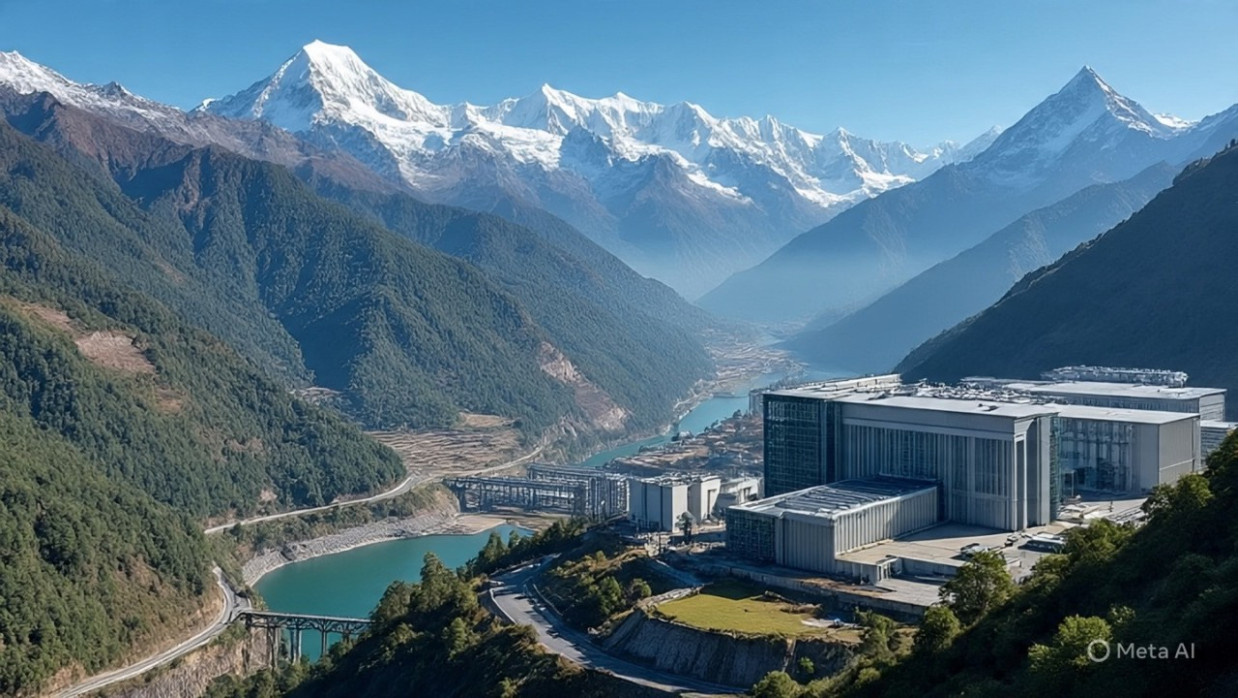
India and Nepal have grappled with similar challenges such as border disputes, political transitions, commercial frictions, and security issues over the decades that have shaped the bilateral relationship. But in the Himalayas a more subtle transition is underway, one that could alter the alliance at its very core. Geopolitics are giving way to electricity as the most solid foundation of India-Nepal collaboration. As India decarbonizes its economy and Nepal develops its hydropower potential, the two countries have the opportunity to create South Asia’s first fully integrated renewable energy corridor, the Himalayan Green Grid. Now is the time. India has pledged to install 500 GW of non-fossil electricity capacity by 2030, with solar power expected to dominate the country’s energy mix. Nepal has one of the world's largest hydroelectric resources. The government estimates that the country’s technical hydropower potential is about 83,000 MW and that >40,000 MW is commercially viable. Even so, by 2025 Nepal had only about 3,435 MW of installed power capacity, with another 4,063 MW under construction. This inconsistency is not a contradiction but a tactical opportunity. India’s challenge is not just to produce renewable power but to incorporate variable sources such as solar and wind into a stable system. Finding stable markets is a big problem for the growing hydropower sector in Nepal. The approach is to see the two countries’ energy systems as complementary, rather than competitive.
Solar and hydropower are made for each other. In India, solar power is at its best during the day, and it falls sharply after sunset, the very time when demand for electricity is the most. During these evening peak hours, the hydropower in Nepal, especially the storage-based projects, is capable of generating dispatchable electricity. Nepal often has surplus electricity during the monsoon season, when electricity generation exceeds local demand, while India’s northern states need more power. Nepal's seasonal power deficits are helped by imports of electricity from India during the dry winter months when generation from run-of-river plants falls. This should be viewed as features of an integrated regional electricity market rather than a one-way dependency. The cross-border electricity exchange has already proven the feasibility of the model. With official electricity trading starting in 2021, cooperation has been increasing. Currently, India permits Nepal to trade electricity through power exchanges and bilateral arrangements and to provide electricity during domestic shortages. Recent accords have solidified this alliance. In July 2026, the two countries agreed to increase cross-border power transfer capacity by increasing Nepal’s export capacity from 1,100 MW to 1,650 MW and import capacity from 1,000 MW to 1,400 MW through the Dhalkebar-Muzaffarpur and Dhalkebar-Sitamarhi transmission lines. The economic impacts are already apparent. During fiscal year 2025/26, Nepal earned a record Rs 29.3 billion in energy exports to India and Bangladesh, a jump of 68.4 percent over the previous year. Energy is one of the most promising export sectors in Nepal due to increased hydropower generation, improved transmission infrastructure, and greater access to regional markets. This deal is beneficial to India beyond electricity imports. Transmission constraints are emerging as one of the biggest barriers to decarbonization as renewable energy sources proliferate. India had to curtail 8,133 GWh of solar energy between April and June 2026, as the infrastructure could not absorb all the renewable power available, Reuters said. This points to a bigger problem: simply adding more renewable power won’t do the trick without matching investments in transmission, storage, and balancing resources. Here, Nepali hydropower has the potential to play a vital role. Flexible hydroelectric generation is an effective means of stabilizing grids with high penetrations of intermittent renewables and lessening dependence on fossil-fuel peaking plants. India and Nepal should view hydropower exports not just as a business deal but more and more as part of a common regional decarbonization agenda. But creating a Himalayan Green Grid requires a move away from power trade to real energy integration. So far the collaboration is largely transactional, based on seasonal exports and bilateral agreements. A regional electricity market needs improvements in institutional frameworks, standardization of laws, and modern transmission equipment able to carry much higher electrical flows. There are still a number of bottlenecks. The cross-border transmission capacity will remain insufficient for future demand. Nepal's domestic transmission network has to be expanded significantly to carry electricity from the new hydropower projects. Uncertainty about regulation continues to affect private investment, particularly in power trading and open grid access. There may also be situations where geopolitical issues regarding the ownership of infrastructure and foreign investment could hinder the implementation of the project. And then there is climate change, which adds another set of complexities. Much of Nepal’s hydropower is generated by run-of-river systems that depend on seasonal river flows. Glacier loss, changing monsoon patterns, and more frequent extreme weather events could threaten long-term hydrological reliability. This will require more investment in storage hydropower, pumped-storage facilities, and climate-resilient transmission infrastructure to build in resilience. A recent study suggests a huge potential for pumped-storage hydropower in Nepal, which can supplement domestic electrical security and regional renewable integration.
The Himalayan Green Grid should thus be seen as a new form of regional cooperation, rather than just an infrastructure project. Europe’s single electricity market shows how cross-border power systems can boost energy security, reduce costs, and accelerate decarbonization. South Asia, though close by, has been unable to match this economic integration for a long time. Electricity might be an easier starting point for trade talks than the traditional ones. There are also regional consequences that go deep. Nepal’s move to export electricity to Bangladesh via India’s transmission network underscores how India can be a regional electrical hub and not just a bilateral trade partner. Such arrangements could eventually be extended to a larger BBIN electrical market connecting Bangladesh, Bhutan, India, and Nepal. Political tensions between India and Nepal are likely to continue. Border troubles, internal politics, and international disputes are not easily avoided. But energy cooperation has something that many bilateral issues lack: concrete, pressing, and increasingly desirable reciprocal economic benefits.
The future of India-Nepal relations may lie less in resolving every political conflict and more in building institutions that acknowledge their shared energy interdependence. A Himalayan Green Grid would go beyond cross-border power transmission. It would link two complementary energy systems, enhance regional resilience, and show that geopolitical constraints do not always limit South Asian cooperation. If India and Nepal can move away from looking at electricity as a commodity and start looking at it as a common strategic infrastructure, the Himalayas may be not only the cradle of South Asia’s rivers but also the bedrock of its clean energy future.


0 Comments
LEAVE A COMMENT
Your email address will not be published