

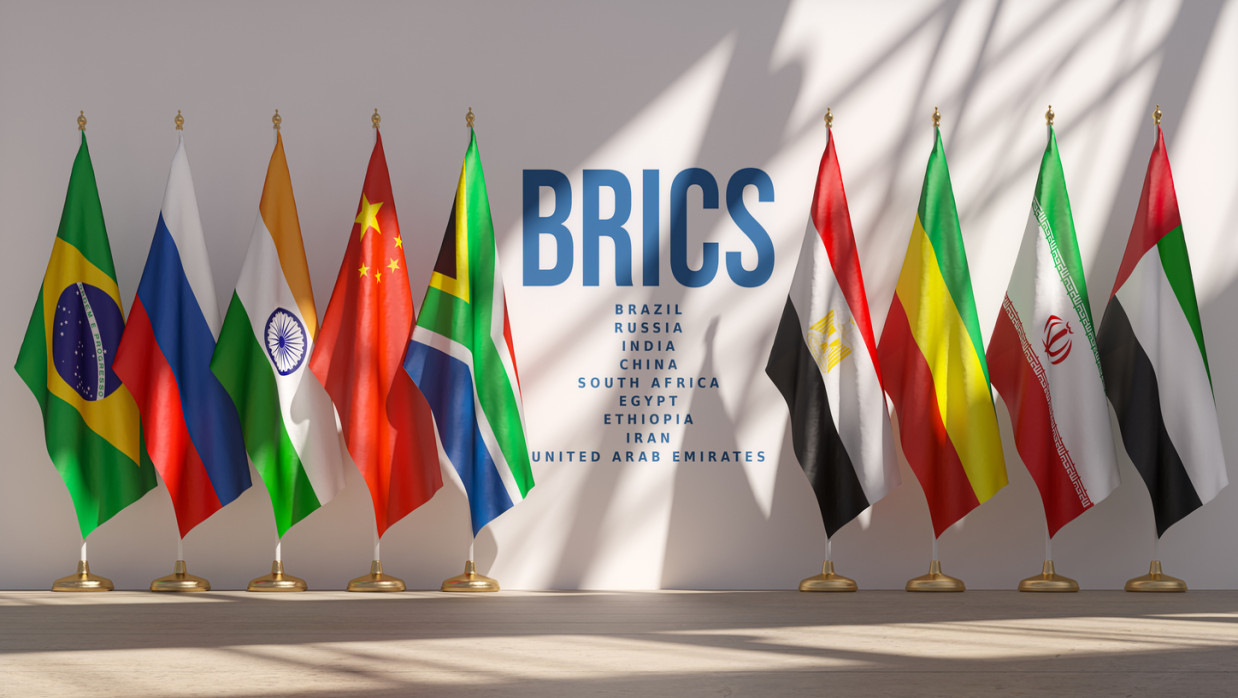
At the peak of the ongoing monsoon season, on August 11-12, Mumbai will host the BRICS Friendship Cities Conclave 2026. There will be, expectedly, a joint statement, and the joint statement will contain, most likely, the word “resilience” an average of once every two paragraphs. Delegates will speak of mobility corridors and climate-smart infrastructure with the fluency of people reciting a liturgy whose theology they have long since stopped examining. This is not cynicism for its own sake, it is a description of institutional physics. Summit diplomacy runs on deliverables that can be photographed: a signed MoU, a ribbon, a delegation touring a metro depot. It does not run on the slower, more dangerous work of asking who owns the land beneath the depot, and who was removed from it.
That omission is not incidental to BRICS urbanism. It is constitutive of it.
Manuel Castells’s 1977 formulation of the “urban question” was never really about cities as physical artifacts. It was an argument that urban space is the terrain on which the state manages the collective consumption of goods, namely housing, transit, water, health, education, that capital will not profitably supply on its own, and that this management is inherently a site of political conflict, not technical administration. Sixty years later, the words “smart,” “resilient,” and “sustainable” perform an almost magical function: they allow states to keep discussing collective consumption while stripping out the collective and the consumption, leaving only the infrastructure. A summit can discuss flood barriers indefinitely without ever discussing who is displaced to build them, because “flood barrier” sounds like an engineering noun rather than a redistributive verb.
India’s Peculiar Dishonesty
Every BRICS state practices some version of this evasion, not least communist China. Despite a surplus of over 600 million housing units, with around 30% excess capacity, cities like Beijing, Shanghai, and Shenzhen continue to face severe affordability challenges, highlighting the need for innovative approaches to repurpose vacant housing for low-income communities. India’s version is distinctive because it is doubled: India narrates itself internationally as a leader of the Global South, invoking non-alignment, South-South cooperation, and a rejection of Western-designed multilateralism, while governing its own cities through instruments that are almost textbook transplants from the entrepreneurial-city playbook that David Harvey diagnosed in Baltimore and Manchester in the 1980s. The Smart Cities Mission’s (recently scrapped) Special Purpose Vehicles bypassed elected municipal councils in favour of centrally appointed boards answerable to investors and ministries rather than ward committees. Delhi’s land-pooling policy, Mumbai’s coastal road and cluster redevelopment schemes, and the Dharavi Redevelopment Project all share a common grammar: land is treated first as collateral, and only secondarily, if at all, as habitat.
This is not merely inconsistency between rhetoric and practice. Every state exhibit that. It is a specific contradiction: a claim to postcolonial sovereignty abroad resting on a domestic urbanism that reproduces the core logic of colonial land settlement: the conversion of use-value into exchange-value, of inhabited land into abstract, transferable title. The British colonial state’s land revenue settlements and its urban improvement trusts (Bombay’s City Improvement Trust after the 1896 plague being the paradigmatic case) already practiced slum clearance in the name of hygiene while opening reclaimed land to speculative development. The Smart City SPV is the great-grandchild of the Improvement Trust, wearing the vocabulary of resilience instead of sanitation. Ananya Roy has called this the “worlding” of Asian cities: the aspiration to be reclassified as global and investable, achieved by making the poor and the informal literally illegible to planning. India cannot lead a Global South urban alternative while its own cities are governed by an aspiration to stop looking like the Global South.
Why Participation Is Not the Antidote
Brazil is the essay’s most instructive counter-example precisely because it tried the honest alternative and still lost ground. Porto Alegre’s participatory budgeting, launched by the Workers’ Party in 1989, remains one of the most studied democratic innovations in urban governance anywhere in the world: genuine deliberation over discretionary capital spending, with real redistributive effect in its first decade. Yet participatory budgeting operated only at the margins of a municipal balance sheet whose larger structure, including property taxation, land-use law, the financialization of housing through instruments modelled on U.S. mortgage securitization after Brazil’s 2004 the Law of “Patrimonio de Afetação,” was never subjected to the same deliberative process. Rio’s Olympic and World Cup-era removals in Vila Autódromo showed how quickly “participatory” municipal branding coexists with force when mega-events require land assembly. The lesson is blunt: participatory budgeting redistributes a discretionary slice of the pie without ever putting the pie itself, which are the ownership and valuation of urban land, up for democratic decision. Consultation over a predetermined outcome is not democracy; it is democracy’s alibi.
This is the trap India should refuse to walk into twice. Ward committees, citizen charters, and app-based grievance redressal will multiply in the coming decade of Indian urban policy. They will multiply because they are cheap, legible to donors, and entirely compatible with land markets remaining untouched. Unless institutional reform reaches the ownership and valuation of land itself, participatory theatre will do for Indian cities exactly what it did for Brazilian ones: absorb dissent without redistributing power.
Climate Resilience as the Newest Enclosure
If informality was the 20th-century alibi for clearance, framed as “illegal,” “unplanned,” “unhygienic,” climate adaptation is fast becoming the 21st-century one. A seawall or a green corridor is, definitionally, a public good; it is very difficult to argue against it in the abstract. This is precisely what makes it such an effective vehicle for a much older project: waterfront land assembly. Mumbai’s coastal road, marketed as climate and congestion infrastructure, runs through reclaimed sea and past fishing communities whose customary access to the shoreline has no equivalent legal instrument to defend it. Ahmedabad’s riverfront development, framed for two decades in the language of ecological restoration, displaced tens of thousands of low-income residents from the Sabarmati’s banks onto peripheral resettlement sites with markedly worse access to livelihood and services: a pattern replicated, with local variation, from Jakarta’s Giant Sea Wall to Lagos’s Eko Atlantic. Resilience, in each case, is delivered for capital and withdrawn from residents in the same gesture. The point is not that adaptation infrastructure is unnecessary, as sea levels and monsoon volatility are not rhetorical problems, but that who bears the adjustment costs of adaptation is exactly the kind of question Castells would recognize as the urban question in its purest form, and it is exactly the question BRICS communiqués are structurally incapable of asking.
What “Leading” Would Actually Require
If India wants to do more than host a conclave, it needs to stop treating urban governance reform as a menu of best practices to be exchanged and start treating it as a set of binding institutional commitments with consequences for how land, finance, and authority are distributed. Eight commitments would separate seriousness from spectacle:
- Replace investability metrics with a reproduction index. A BRICS Urban Observatory that ranks cities by ease of doing business will simply accelerate the race it claims to monitor. An index built instead on housing cost burden, informal-worker access to social protection, transit affordability as a share of minimum wage, and displacement counts per infrastructure rupee spent would make the trade-offs visible rather than laundering them.
- Put land value capture and anti-speculation taxation on the table, not technology transfer. Metro systems and smart poles are the easy things to exchange between BRICS cities because they don’t threaten anyone’s balance sheet. Vacancy taxes, betterment levies that claw back infrastructure-driven land appreciation for public housing, and community land trusts are harder, because they touch the actual asset that Indian urban governance has spent thirty years learning to monetize.
- Legislate metropolitan authorities with independent revenue and direct accountability, rather than adding another parastatal SPV to the roughly one hundred parallel authorities that already govern a city like Bengaluru or Mumbai without a single body accountable to a metropolitan electorate. The 74th Constitutional Amendment’s promise of empowered Metropolitan Planning Committees has been implemented in barely a handful of India's cities in the three decades since its passage; that gap between statute and practice is where genuine reform should begin, because the legal instrument already exists.
- Formalize informal workers and settlements through tenure and labour law, not through relocation. Slum redevelopment schemes that offer resettlement flats thirty kilometres from an original settlement’s livelihood geography do not solve informality; they relocate poverty and sever it from income. In-situ upgrading with secure, transferable tenure, the approach Kerala’s local self-government experiments and parts of São Paulo’s urbanização de favelas have shown is administratively possible, should be the default, not the exception granted after litigation. Participatory urban governance plays vital role in resisting gentrification pressures.
- Attach a distributive-justice test to every adaptation project. Before a resilience project receives BRICS Development Bank financing, it should have to answer, in a public and contestable filing: who is displaced, who is protected, and who owns the land value the project creates. A seawall that raises adjacent property values fivefold while offering no equivalent gain to fisherfolk it displaces has failed that test regardless of its engineering merit.
- Fund municipalities through predictable, progressive fiscal transfers rather than debt-financed mega-projects designed to be repaid out of land appreciation. The debt-financed model guarantees that the municipality’s fiscal health becomes hostage to rising land prices: meaning the state acquires a structural interest in the very speculation it is supposed to regulate. This process may be described as the municipalization of value: which also include the reorientation of land value capture toward municipal revenues, ensuring that the wealth generated through urbanization is equitably shared rather than primarily appropriated by private investors.
- Reinstate planning as a democratic institution with the power to say no. A profession whose primary output has become investment prospectuses, master plans engineered around anticipated land-value uplift, and environmental clearances issued on schedule rather than on evidence, cannot mediate the conflicts Castells identified as inherent to urban life. Planning has to be re-armed with the authority to refuse a project, not merely to route it.
- Mandate inclusive Transit-Oriented Development (TOD), not transit-led real estate. Transit investments should be tied to affordable housing, mixed-use neighbourhoods, and space for informal livelihoods around stations. Properly implemented, TOD enables low-income and informal-worker households to punch above their economic weight by reducing commuting costs and improving access to jobs, education, and essential services, rather than simply driving land-value appreciation and displacement.
The Wager
None of this is technically difficult. Land value capture instruments exist in statute in several Indian states already and are simply not enforced. Metropolitan Planning Committees are already written into the Constitution and simply not empowered. What is missing is not expertise, as India has no shortage of planners, economists, and jurists capable of designing every instrument listed above, but the willingness to treat urban land as a political question rather than a fiscal one. That willingness would cost something real: slower-looking infrastructure rollouts, resistance from the real-estate and construction capital that has financed a great deal of India’s recent urban growth, and a domestic reckoning with the fact that the “ease of doing business” rankings India prizes are, in no small part, a measure of how easy it has become to dispossess.
Bandung mattered because it was a claim about the terms on which decolonization would be built, not merely a claim that colonialism was wrong. If BRICS wants a comparable legacy, its cities cannot simply be where investment happens more efficiently under a multipolar flag instead of a unipolar one. They have to be where a different answer is given to Castells’s question, that is, who has the right to produce urban space, one that is enforceable in statute, and not merely legible in a press release. Until then, “friendship cities” will remain an accurate description: friendships, after all, are voluntary, revocable, and asymmetric relationships between parties who never had to share a lease.


0 Comments
LEAVE A COMMENT
Your email address will not be published