

The announcement of Operation Hard Ball by the United States Department of Justice marks one of the most significant international law-enforcement actions ever directed against an India-based transnational criminal enterprise. A “Coordinated Law Enforcement Action” (CLEA) carried out by US, Canadian and European law enforcement officials had put an end to multiple criminal organizations accused of racketeering, drug-trafficking, extortion, contract murders, gun-related crimes and money laundering operating throughout North America, Europe and Asia. More significantly, with news of this operation flooding back into public consciousness, have come renewed international scrutiny over the June 2023 killing of Canadian Sikh activist Hardeep Singh Nijjar and concerns of an emerging pattern of transnational repression.
While not implicating them directly, the recent U. S. federal indictment unveiled this week against incarcerated gangster Lawrence Bishnoi and alleged North American Bishnoi operative Satinderjeet Singh alias Goldy Brar, who were charged with Nijjar’s murder, certainly implicates the Government of India by association. The difference is, of course, semantics. Still, the lingering stigma of this affair is undoubtedly going to continue to loom large over India.
Operation Hard Ball: A Landmark Investigation
Prosecutors said this was due to the efforts of a transnational organized crime network led by Indian nationals and operating both in North America and in India. At least three crime syndicates based in India have been targeted in Operation Hard Ball. In this operation, U.S. federal prosecutors have indicted 37 defendants and police have arrested 24 suspected criminals in the United States, Canada, Spain, and elsewhere. Law enforcement officials have also seized about one thousand kilograms of cocaine and methamphetamine, heroin, guns, and hundreds of thousands of dollars in both countries.
“In federal court documents unearthed was evidence of an increasingly international criminal conspiracy. Law enforcement personnel from multiple countries dismantled large-scale criminal operations run by three organized crime groups based in India. Illegal narcotics trafficked into North America and Europe included roughly one thousand kilograms of cocaine and methamphetamine along with heroin,” reads a press release.
Lawrence Bishnoi gang turning into transnational crime syndicate from behind bars: US court charges
“The Lawrence Bishnoi Organized Crime Group became an international crime syndicate managed by jailed gang leaders who use smuggled cellphones, encrypted applications, and contacts abroad to run extortions, hit killings, drug shipments, and intimidation schemes against the Indian immigrant community,” the release added.
The Nijjar Assassination and Diplomatic Fallout
One of the biggest claims made is that Lawrence Bishnoi and Goldy Brar had tasked their associates with killing Hardeep Singh Nijjar outside a Sikh temple in Surrey, British Columbia. His murder led to an extraordinary diplomatic rift between India and Canada after Canadian Prime Minister Justin Trudeau revealed that Canada's intelligence services were probing claims that India's intelligence agents had orchestrated the killing.
New Delhi immediately rejected those allegations as "absurd" and politically motivated, while diplomatic relations between the two Commonwealth countries deteriorated sharply.
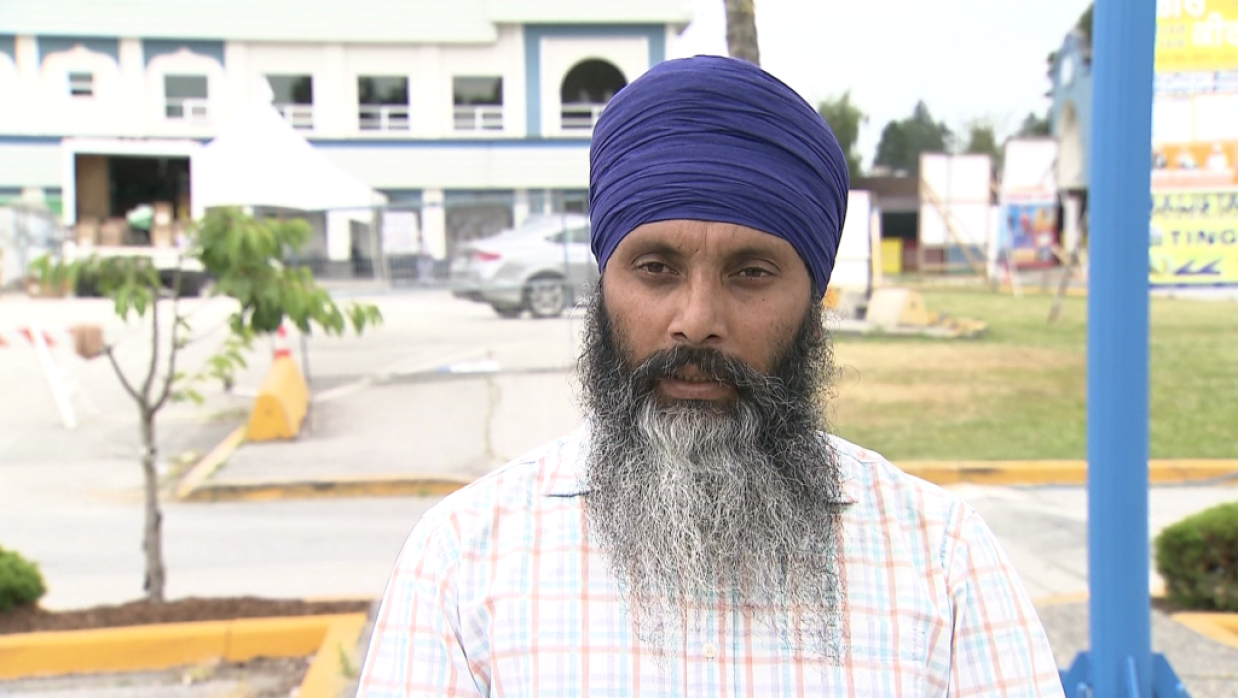
Hardeep Singh Nijjar was a Sikh independence activist fighting for Khalistan, a separate Sikh homeland. He was a former president of Guru Nanak Sikh Gurdwara located in Surrey, British Columbia, and led the Khalistan Referendum movement alongside Sikhs for Justice.
Indian government further alleged him to be the top commander and brain behind Khalistan Tiger Force, a terrorist organization banned by India. Indian government declared him a terrorist and had two INTERPOL red notices issued against him. He was also repeatedly referred to as a peaceful human rights activist by Nijjar's supporters and Sikh organizations. Nijjar was shot dead outside his gurdwara on June 18, 2023. His murder resulted in diplomatic tensions between Canada and India when Canadian Prime Minister Justin Trudeau claimed Indian government officials were involved in the murder. In July 2026, the U. S. Department of Justice charged two members of an Indian crime gang, Lawrence Bishnoi and his deputy, for ordering the killing.
The recently released U.S. indictment also bolsters Canada’s claim that Bishnoi gangsters were centrally involved in Nijjar’s killing. However, unlike Canada’s intelligence briefing, the U.S. criminal indictment does not claim Indian officials or agencies orchestrated or were involved in the murder. That should not be lost in translation. Criminal prosecutions require proof beyond a reasonable doubt in a federal court. Intelligence briefings often contain sensitive information that cannot be revealed.
Organized Crime and Alleged Intelligence Connections
The controversy has nevertheless expanded beyond organized crime alone.
Canadian media and Reuters have reported that senior Canadian officials privately presented intelligence assessments to India's National Security Advisor, Ajit Doval, during confidential discussions in Singapore. According to those reports, Canadian authorities asserted that their intelligence pointed toward links between Indian operatives and criminal intermediaries associated with the Bishnoi network. Doval reportedly rejected any suggestion of Indian government involvement while acknowledging Lawrence Bishnoi's capacity to direct criminal activities from prison.
Allegations are not proven facts from a court ruling. India has not been proven by any court to have had its external intelligence agency organize the murder, and India continues to deny any involvement. However, the allegations have colored international views nonetheless and remain topics of discussion between India and various Western countries.
A Broader Pattern of Transnational Repression?
The Nijjar affair has also revived a broader international debate concerning transnational repression, the practice whereby governments allegedly intimidate, threaten, surveil, abduct, or seek to silence political dissidents beyond their national borders.
Western democracies have begun expressing alarm about foreign influence campaigns directed at diaspora communities. Legislators in democracies targeted by Russia, China, Iran, Saudi Arabia and other countries have introduced new laws, bolstered intelligence sharing, and increased scrutiny of foreign operations.
India has now entered that conversation. While the available public evidence does not establish a systematic state policy of overseas assassinations, the allegations themselves have placed New Delhi under unprecedented international scrutiny. Investigations in both Canada and the United States, together with an earlier U.S. criminal case involving an alleged murder-for-hire plot against another Sikh separatist in New York, have intensified concerns among Western security agencies about possible instances of transnational repression involving Indian-linked actors.
It is still not clear whether they are individual cases or actions taken by middlemen, or indications of a wider trend. Open legal proceedings and external review can help answer those questions.
Claims of extrajudicial executions and kidnappings
Intelligence agencies of India have been accused of extrajudicial executions, kidnappings, and transnational repression by several foreign governments, investigative journalists, and global organizations for conducting clandestine operations, mostly against Kashmiri and Sikh militants.
Similar widespread activities have also been alleged in Bangladesh. Pakistan's government and other investigators have claimed that India's premier intelligence agency, the Research and Analysis Wing, has carried out several assassinations in Pakistan. Pakistan claimed their investigators found links between more than a dozen killings and local goons and foreign shooters who they say were funded by Indian agents through the Hawala system.
India has historically denied all involvement in targeted killings overseas, categorizing them as unsubstantiated.
Global watchdogs and analysts have raised concerns about a surge in state-sponsored, cross-border repression. Western nations that share intelligence and security ties with India to counter geopolitical tensions have been challenged by these revelations, which have sparked ongoing diplomatic standoffs and intense international scrutiny.
Implications for India's Global Standing
India’s place in the world has never been more significant. It is a security partner of the United States and Europe, part of the Quad, a leader of the Global South, and one of the fastest-growing major economies on Earth. By any measure, these are impressive feats that make today’s allegations all the more serious.
When it comes to our democratic partners, trust matters. It matters more than trade deficits or ships in the water. Intelligence sharing, extradition treaties, law-enforcement cooperation, and mutual legal assistance all require a level of confidence that governments will adhere to international norms and respect the sovereignty of other nations.
Allegations like the ones India faces today will always have domestic political consequences even if they’re unsubstantiated; asylum claims that potentially implicate violations of another country’s territorial integrity will always carry diplomatic costs. India will want to see credible allegations dealt with openly through legal and diplomatic channels rather than through mere rhetoric if for no other reason than to avoid future allegations like these.
Similarly, Canada's allegations and US criminal prosecutions should be judged on the basis of evidence, due process, and judicial rulings, not by political rhetoric. Democracies are made stronger when claims against friends or foes of the government are fairly tested in court.
Conclusion
At first blush, Operation Hard Ball appears to have unearthed one of the most complex India connected transnational criminal syndicates ever discovered. The charges laid out against Lawrence Bishnoi, Goldy Brar and their accomplices allegedly paint a picture of a network capable of ordering hits, extortions and drug shipments anywhere in the world.
It has also reignited long-standing questions about transnational repression, how diaspora communities are protected from it, and how international law holds states accountable. The fact that Canada laid intelligence-based allegations while the US chose to charge several individuals with crimes described in a far more limited indictment speaks to how often intelligence can be tangled with actual criminal proceedings.
But what does all of this mean for India? It means that going forward, as a rising global power trying to assert itself on the world stage, it will have to lean not just on economic might and coercive power, but also on how secure democracies that matter to India feel about its adherence to the rule of law, due process, and respect for the sovereignty of other countries. How these allegations pan out through actual evidence, trials, and mature diplomacy will affect not just how Canada and India work together. It will affect the legitimacy of the global fight against transnational crime and transnational repression.


0 Comments
LEAVE A COMMENT
Your email address will not be published