

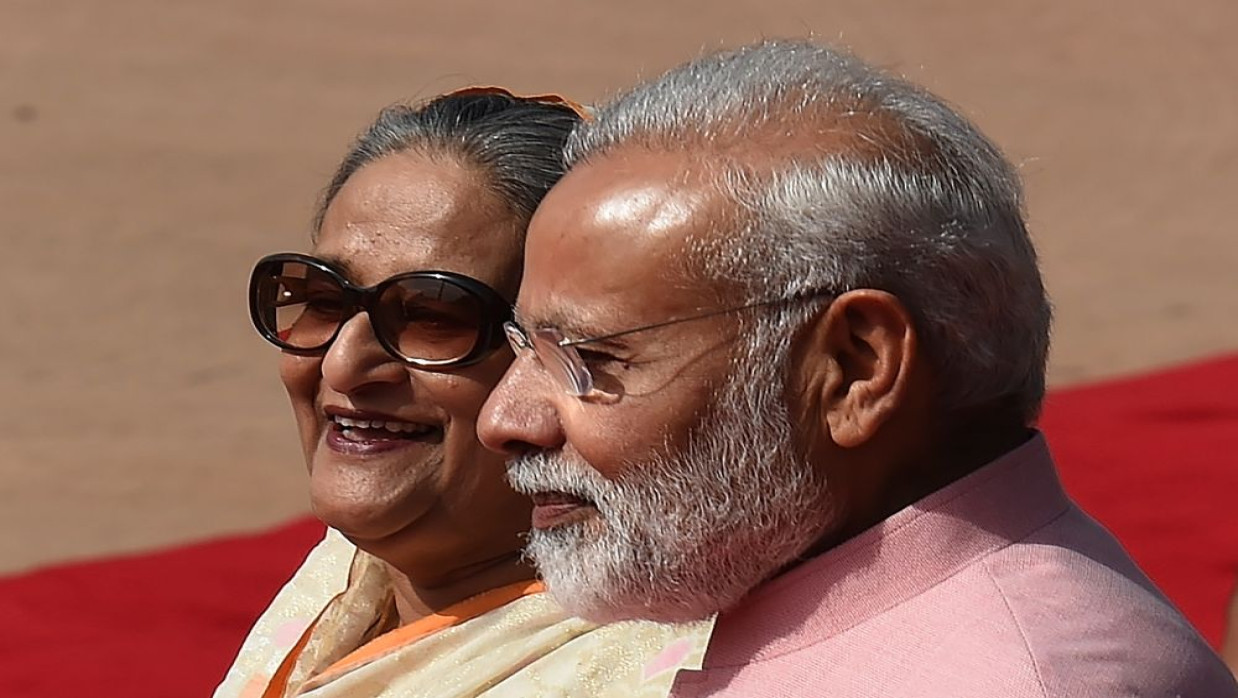
Bangladesh's exiled prime minister, Sheikh Hasina, returned with her first live speech in two years on August 5, 2026, saying she is not done yet and intends to return home by December. Hoping to prove that her voice has not been stifled by two years away from home nor will her political career be coming to an end anytime soon, Sheikh Hasina addressed her supporters remotely via audio at an event held by the Foreign Correspondents' Club of South Asia in New Delhi, India, on Thursday. During her speech, she unleashed some verbal ammo at Bangladesh's current government and judicial system.
Sheikh Hasina Vows Return to Bangladesh by December 2016. While firmly denouncing the current political order in Bangladesh and promising justice upon her return, Sheikh Hasina said she plans to return to Bangladesh by December of this year.
"I will return to Bangladesh in December," Hasina said during the event.
Her appearance instantly became a sensation, both within Bangladesh and around the world. Supporters hailed her return as that of a political force that had ruled Bangladesh for over a decade and a half. Detractors saw it as just another effort by an exiled strongman to meddle in Bangladesh's domestic affairs. Bangladesh's long-time neighbor India, which allowed Hasina to stay in exile after leaving Bangladesh on August 5, 2024, found itself with another foreign policy headache.
The speech succeeded in bringing Hasina back to the forefront of political conversation. It also revealed a stark contrast between political rhetoric and logistical reality. She issued a strong statement of intent yet gave few specifics as to how her vow would be fulfilled or how she and the Awami League would navigate the considerable legal, diplomatic, and logistical hurdles in their way.
Expectations and the Audio-Only Appearance
Considerable publicity preceded the event. It was presented as Hasina's first major live engagement with the international media since she left Bangladesh two years earlier. Many followers apparently expected a live video appearance, a symbolic moment in which the former prime minister would finally be seen publicly after such a long absence.
Hasina addressed the conference by phone from an undisclosed location. Hasina's son, Sajeeb Wazed Joy, was more physically present, including interacting with reporters and taking control of parts of the conference. The format change shifted the tone of the conference. Rather than a high-drama return, it was stage-managed and removed.
The initial online viewership went into the hundreds of thousands, showing the remarkable draw Hasina still commands. Overall viewership purportedly eventually reached the millions. However, the number of viewers watching simultaneously decreased significantly after viewers learned she would not be shown on screen. It did not mean her political base had dissipated by any means, but it reflected the disparity between idle interest and political support.
Images matter in politics. Seeing a leader projects strength, physical prowess, independence, and action orientation. Hearing a voice without seeing who it belongs to gives the impression of fear, physical weakness, and dependence on others. Security, legal, or logistical reasons may have warranted the decision to go audio-only, but the White House didn't say why. The absence of any explanation left open questions about her welfare and robbed the occasion of some symbolic imagery.
All this added levity - at times frenzied, at times satirical - didn't help the gravity of the occasion, either. The visible presence of Hasina's son, along with his mother's absence, gave viewers the sense that Bangladesh's former prime minister was out of touch with political developments on the ground. Rather than an orchestrated exercise in issuing a firm message of intent, parts of it came across as dramatic.
It should nevertheless be recognized that Hasina had issued statements and reportedly participated in online party discussions before this event. The August 5 appearance should therefore be described as her first major live international media address since her fall from power, rather than her first communication of any kind.
The Promise of a December Return
The central political message was Hasina's reaffirmation of her intention to return to Bangladesh by December. She had previously indicated in an interview that she was prepared to return with other exiled Awami League leaders and surrender before the courts, despite the possibility of arrest or even death.
It's clearly emotionally charged language. It casts Hasina as a leader who will take risks along with her followers back home. But it also invokes the Awami League's traditional language of sacrifice, victimization, defiance, and political martyrdom. For party activists down by demoralizing arrests, court cases, detentions, and displacement, having a return date to plan around can help muster some hope and some organizational activity again.
However, a statement is not an itinerary. Hasina did not announce a day, flight, point of entry, or courthouse at which she will surrender. Nor did she say whether her attorneys are filing appeals or motions to set aside the convictions entered against her while she was abroad. She did not reveal whether security assurances were requested, negotiations were entered into, or foreign governments or organizations were asked to monitor her arrival and treatment.
She also failed to mention who among the senior party leadership would travel with her, if anyone, or if the Awami League had the organizational framework required to deal with the political fallout. If Khan were to willingly face arrest and possibly harsh punishment, her return would require considerable legal groundwork, logistical organization, security planning, and political outreach.
The failures are significant because the Bangladesh government has requested her extradition and has said she will be arrested if she returns. Her arrival could also trigger protests by supporters and opponents, raising serious public-order and security issues. In the absence of any apparent preparation, the December commitment was arguably more of a political gesture.
It doesn't render the pledge hollow. Leaders often set future deadlines to maintain hope, gauge reactions and keep opponents on their heels. Hasina may want to keep her options open and see if conditions improve. However, until legal and logistical preparations are put in place to make good on the promise, it's powerful symbolism but not a believable plan of action.
An Awami League Without a Visible Alternative
It did accomplish one goal: Hasina reminded Bangladesh that she is still the uncontested leader of the Awami League. There has not yet been a viable challenger who can match her stature, name recognition, or control of the party's ground network. She spoke, and millions listened enough to thrust her back into the limelight.
However, this sustained hegemony is also a double-edged sword for the party. Awami League continues to rely on a physically absent, legally embattled, and deeply divisive figure. Restrictive laws limit its capacity to regroup within Bangladesh; the detention/exile of top leaders; its local infrastructure has been eroded; and public resentment over charges of repression and deaths linked to their crackdown during the 2024 elections.
Critics of Hasina view these cases against her as justice delayed, after decades of authoritarian rule. Supporters of Hasina view the cases as a political witch hunt to eliminate AL and disenfranchise a major political demographic. The lack of consensus over the legitimacy and autonomy of Bangladeshi institutions further polarizes the divide.
Hasina's defiant tone was hardly going to inspire confidence that the party needed to re-invent itself institutionally. She fulminated against the electoral process, the judiciary, and the government. Still, she offered little in the way of a credible program to regain people's trust or to answer accusations against her government. Rallies fueled by defiance alone may keep the die-hard Awami Leaguers fired up, but are not going to win over the voters who turned against AL while it was in office.
For Hasina to stage a political comeback, more than offering to return physically would be required. She would have to apologize for the reasons why she was ousted, explain how the party would change, and provide a political agenda that didn't entail reinstating the status quo.
India's Delicate Diplomatic Position
The speech also brought up an immediate diplomatic issue between Bangladesh and India. Before the incident, the Ministry of External Affairs in India stated that a private media organization had organized the program and that the Government of India had neither participated in nor approved the content.
New Delhi distancing itself shouldn't have been surprising. India has allowed Hasina asylum and tried to strike a balance with whatever comes after her regime in Bangladesh. Actively sponsoring her political moves would make New Delhi vulnerable to charges of meddling in Bangladesh's internal affairs. But allowing her to make blatantly political speeches from Indian soil also subjects India to questions regarding just how free she is to organize and campaign in exile.
The argument that there is a difference between official sponsorship and government tolerance may have legal validity, but it rings hollow amid the highly politicized environment of Bangladesh–India relations. Dhaka responded angrily, claiming that permitting Hasina to use India as a platform for political speech weakened Bangladesh's sovereignty and made normalization of bilateral ties difficult.
The timing of the episode could not have been more inopportune. India and Bangladesh were said to have reached an understanding on specific steps to normalize relations, including exchanging ambassadors, easing visa requirements, and reopening official contacts. Hasina's speech threatened to undermine that nascent détente by stoking suspicions in Bangladesh that India will never come to terms with the changed political landscape here.
India now faces a difficult balancing act. It cannot easily abandon a former regional ally who maintained close strategic relations with New Delhi. Yet continued tolerance of her political activities could damage India's long-term interests in Bangladesh, where public attitudes toward India have become increasingly sensitive. The challenge is further complicated by Bangladesh's relations with China and Pakistan. Any perception that New Delhi is attempting to determine Bangladesh's political future may encourage Dhaka to deepen its engagement with India's regional competitors.
Political Relevance Is Not Political Restoration
Hasina's August 5 speech was thus both an assertion of strength and a revelation of vulnerability. It showed that she still knows how to mesmerize followers, rile enemies and embarrass Bangladesh's foreign allies from afar. Few politicians in Bangladesh could do the same over a phone line.
But attention-getting is one thing. Delivering a political resurrection is something else. Her speech didn't show she has legal options, political safety in Bangladesh, or an organizing network to facilitate her return. Nor did it signal India was prepared to assist her in that goal or absorb the diplomatic repercussions.
Let's not write her political obituary just yet. History is full of South Asian strongmen who have come back from exile or prison to rock the national stage. But survival in politics isn't just about making bold statements. It also takes organizing, credibility, listening to the people, and having a firm grasp of the new realities.
The vow to return in December has given Hasina's supporters something to cling to. It has also provided her detractors with a metric by which to measure her reliability. Should real preparation materialize, this speech may one day be looked back on as the start of a bold political comeback. If nothing happens in December, however, it may be recalled instead as nothing more than an effort at symbolism, a theatrical bid to stay in the public eye while ignoring what awaits her back home.
For the time being at least, Hasina will be politically alive and absent. She can still dictate the news, but she can't dictate terms. Hasina is back in Bangladesh's political discourse. Will Hasina herself return? Only time will tell.


0 Comments
LEAVE A COMMENT
Your email address will not be published