

Sunaina Kumar
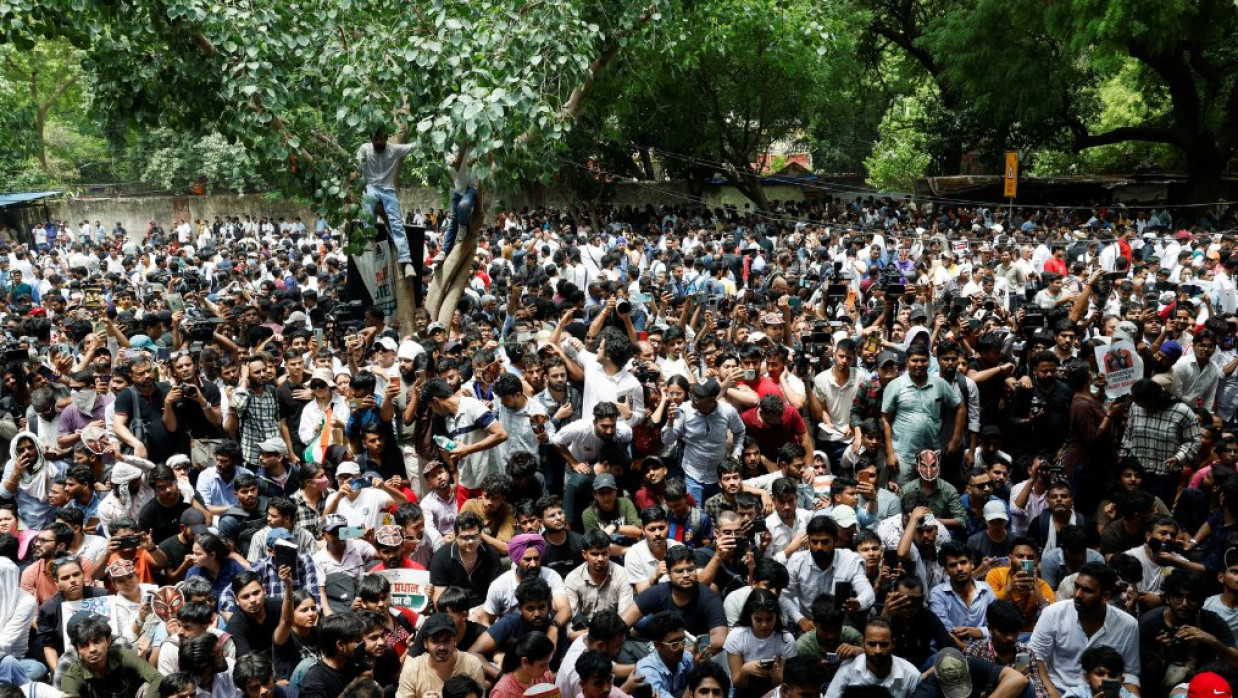
Unlike its neighbouring countries in South Asia, Sri Lanka, Bangladesh and Nepal, where well-established political regimes were brought down by gen Z protests, India has so far bucked the trend. The Indian political establishment, however, has been closely monitoring a viral meme that took off in May focused on the issue of unemployment. It started in response to remarks by the Chief Justice of India, who compared(Opens in new window) unemployed youth to “cockroaches” and referred to “parasites of society who attack the system”. The remarks drew online outrage, which then turned into a digital youth movement(Opens in new window) that over 20 million followers on Instagram within the first few weeks. Led by gen Zs and millennials, the mock political movement calls itself the Cockroach Janta Party (CJP). It has unveiled a manifesto(Opens in new window) in which it has demanded “Jobs for All”.
India is among the fastest-growing major economies of the world. Despite recent setbacks from the Middle East crisis, the World Bank has projected growth in India at 6.6 per cent(Opens in new window) in the 2026–27 financial year. The country has strong macroeconomic fundamentals – low inflation, substantial foreign reserves, low external debt, a healthy financial sector, and trade diversification. Despite the forecast, India’s economic growth story is accompanied by the spectre of jobless growth, like an uninvited ghost at the banquet.
The challenge is also deeply gendered.
Jobless growth is a global phenomenon(Opens in new window), but in India it carries the risk of dire consequences. This is due to India’s unique demography – with 371 million(Opens in new window) young people, India has the largest youth population in the world. It also has the most expansive workforce. Nearly 65% of the population is of working age (15 to 59 years), which holds huge potential for economic growth, provided there are jobs. In the next ten years, India’s working-age population is expected to cross 980 million(Opens in new window). This is India’s demographic opportunity, which is simultaneously a test of governance and policy-making – with job creation for the youth at its centre.
To accommodate a rising workforce – about 7 to 8 million youth will be added to the labour force annually in the next decade – India needs to create millions of jobs. It also needs to improve the quality of jobs available to young people, who are increasingly educated, aspirational, and connected. Job quality remains a persistent issue, with nearly 90% of workers informally employed, according to International Labour Organization estimates(Opens in new window), the underlying paradox of India’s economic growth.
Unlike East Asian economies, India bypassed the shift from agriculture into labour-intensive manufacturing and transitioned directly to services-led high-skilled growth, which has expanded markets and the economy, but has also left a majority of its workforce trapped in low-productivity employment. India is also a case of “precocious globalisation”(Opens in new window) as it has exported doctors, nurses, engineers, software and professional services to countries across the world. In Australia, Indians have the highest proportion of skilled visa grants, and the Australia–India Economic Cooperation and Trade Agreement has targeted mobility provisions for highly skilled professionals from India.
For youth in India, though, the looming challenge of unemployment has become a ticking clock. According to the State of Working India report(Opens in new window) by Azim Premji University, “unemployment rates are stubbornly high for young graduates.” Between 2004 and 2023, 5 million graduates were added every year, the report finds, but 2.8 million graduates found employment. The gap between education and employment has been widening across the country, as job creation has failed to keep pace with the rapid expansion of higher education, and the labour market has struggled to absorb new entrants with formal qualifications. An annual assessment(Opens in new window) of the economy by the government for 2024–25 estimated that only 8.25% of graduates are employed in roles aligned with their qualifications, while over 50% are working in “elementary” or “semi-skilled” jobs that do not require their level of education.
The challenge is also deeply gendered, as the youth unemployment rate is higher among women than men. The proportion of young women not in employment, education, or training is nearly five times higher than that of men, driven by restrictive social norms, unpaid care work, a lack of suitable jobs, and infrastructural constraints that reduce women’s mobility. Increasing the participation of women in the labour force to 55%(Opens in new window) by 2050 will be critical for maintaining a high annual GDP growth trajectory. It currently stands at 40%(Opens in new window), showing an uptick from previous years, but job creation for women has mostly been in agriculture or self-employment in low-productivity markets or services.
To fill this gap, which is structural and long-term, the political economy has found a quick-fix solution. Nearly ten state governments across the country offer unconditional cash transfers to educated unemployed youth, combined with programs linked to skill development or on-the-job training, as youth unemployment has emerged as a key electoral issue in the last few years.
The recent fracas with the CJP has shown that youth unemployment is a tinderbox, one that needs long-term solutions, not quick fixes.

0 Comments
LEAVE A COMMENT
Your email address will not be published