

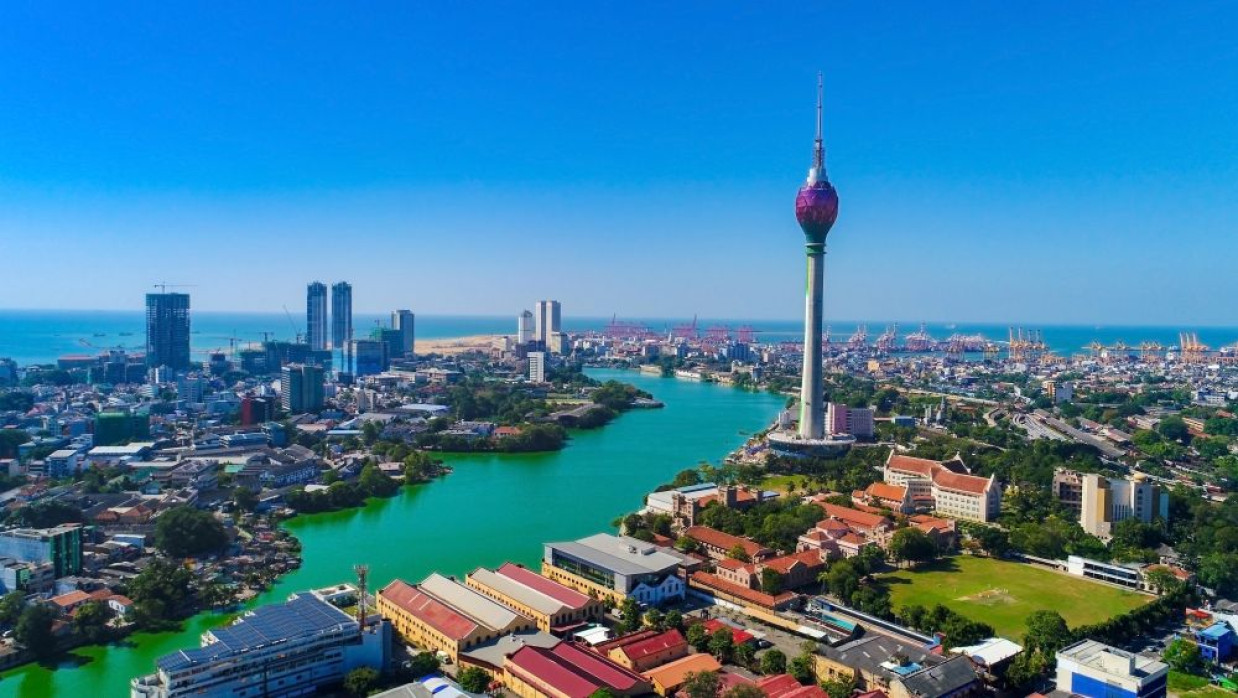
Countries are not only defined by their economies, borders, or political systems. They are also defined by the narratives that shape how they are perceived by the world. Long before Sri Lanka became known for beaches and tea plantations, it had already travelled across the world through stories. Centuries ago, Persian and Arab travelers knew the island as “Serendib”, a name that later entered European imagination through the story of The Three Princes of Serendip. Over time, the name of an island became a word describing one of the most fascinating human experiences: discovering something valuable by chance.
For many people, Sri Lanka first existed not as a country on a map, but as an imagined world. In Iran, as in some other countries, many children of my generation encountered the word “Serendipity” through the animated series Serendipity the Pink Dragon. Long before we knew that the name came from an ancient name for Sri Lanka, Serendipity had already become a symbol of wonder and imagination.
Sometimes, a country travels farther through its stories than through its ships. But eventually, every story must confront reality.
Stories create curiosity. They create emotional connections. They influence how people perceive a place. Yet transforming a powerful image into economic opportunity requires something less visible: institutions that make that image believable.
When Heritage Meets Reality
Many countries possess extraordinary historical, cultural, or natural advantages. However, these advantages do not automatically translate into prosperity.
A country may have ancient civilizations, valuable resources, or a strategic location. But these assets are only possibilities. Turning possibilities into reality requires systems that allow people, companies, and institutions to cooperate with confidence.
Sri Lanka represents one version of this broader challenge. For centuries, the island has existed in different civilizations’ imagination. Some Islamic traditions and local narratives associate it with Adam and Eve after their descent from paradise. Hindu traditions connect the island with the epic story of Ramayana and the journey of Rama to Lanka. For Buddhists, Sri Lanka became one of the most important centers of Theravada Buddhism.
At Sri Pada, also known as Adam’s Peak, different communities have found different meanings in the same mountain: the footprint of Adam, Buddha, or Shiva.
An island can therefore exist in two forms at the same time: as a physical place on a map and as an idea in the minds of millions of people.
The difficult question for many countries is how to transform that idea into reality.
This challenge is not unique to Sri Lanka. Many societies with rich histories, natural resources, or strategic advantages face the same problem: the distance between the story they carry and the institutions they have built.
The Invisible Foundation of Investment
Economic discussions often focus on visible assets: natural resources, infrastructure, geography, or human capital.
However, some of the most important elements behind investment are invisible.
A company considering investment in a foreign country does not only ask whether opportunities exist. It asks whether those opportunities can be protected.
Can contracts be enforced?
Are regulations predictable?
Are property rights secure?
Can disputes be resolved fairly?
Can financial transactions operate through trusted systems?
These questions represent the institutional foundation of economic confidence.
A country may possess enormous natural resources, but resources alone do not guarantee investment.
In Fear: Trump in the White House, Bob Woodward describes a discussion about Afghanistan in which Donald Trump questioned why American companies were not entering Afghanistan to exploit its mineral resources. His adviser replied that “it’s not like we just walk in there and take the minerals. They have no legal system, no land rights.”
The lesson extends far beyond Afghanistan. Resources create potential. Institutions create trust.
Why Sri Lanka’s Story Matters Today
Sri Lanka’s current situation makes this question particularly relevant.
After one of the most severe economic crises in its modern history in 2022, Sri Lanka has been attempting to rebuild confidence among citizens, international partners, and investors.
The crisis was not only a financial event. It was also a crisis of trust.
When a country struggles to pay for essential imports, experiences a collapse in public confidence, and faces questions about economic governance, the damage extends beyond economic indicators. It affects how the world evaluates the country’s future.
Rebuilding confidence is far more difficult than restoring foreign reserves. That is why Sri Lanka has sought support from institutions such as International Monetary Fund for a reform program designed to restore economic stability, strengthen public finances, and support structural reforms. The World Bank has also developed a partnership framework focused on supporting economic transformation, private sector development, and long-term growth.
However, financial support and reform programs are only part of the recovery process.
International institutions can provide funding and policy frameworks. But lasting confidence depends on whether a country can demonstrate that its institutions are predictable, transparent, and capable of supporting sustainable development.
Economic recovery is therefore also a process of rebuilding credibility.
The Danger of Selling a Story Before Building It
Countries often attempt to change their international image by promoting a new narrative.
They organize investment conferences. They launch tourism campaigns. They present themselves as emerging markets.
However, there is a fundamental risk: selling a story before creating the reality behind it.
Political agreements, diplomatic openings, or investment campaigns can create opportunities. But they cannot replace trust.
The challenge is not unique to Sri Lanka. Iran’s experience after the 2015 nuclear agreement offers a parallel example: political opening can create expectations of foreign investment, but expectations alone cannot overcome uncertainty surrounding banking relations, financial compliance, and legal predictability.
A country cannot simply announce that it is open for business. It must create conditions that convince others to believe it. Reputation is not created by statements. It is created by consistent experience.
Sri Lanka’s Interrupted Story
Sri Lanka’s modern history has also been shaped by competing narratives.
For centuries, the island was associated with cultural richness, spirituality, and natural beauty. Yet, for nearly three decades, international perceptions were also influenced by the civil war between the Sri Lankan government and the Liberation Tigers of Tamil Eelam.
The end of the conflict in 2009 created an opportunity for a different chapter. But history shows that ending a crisis is often easier than changing the perceptions created by that crisis.
There is a historical irony here. When Singapore gained independence in 1965, its founding leaders—including Lee Kuan Yew and Goh Keng Swee—envied Sri Lanka, seeing it as a peaceful and prosperous country they hoped to emulate. As Kishore Mahbubani later observed, few would have imagined that, within a generation, the trajectories of the two countries would diverge so dramatically.
The difference cannot be explained by geography or history alone. It also reflects how institutions shape a country's ability to transform opportunity into lasting prosperity.
The Future of a Story
The most successful countries are not those without difficult histories. They are those capable of transforming their histories into foundations for the future.
Singapore transformed its geographical limitations into global connectivity through institutional development. Botswana used its natural resources as a foundation for relative stability through governance choices. These examples demonstrate that a country’s future depends not only on what it possesses, but also on how it organizes itself.
Sri Lanka does not need to invent a completely new identity. It already possesses centuries of stories carried through languages, religions, and cultures.
The challenge is whether it can build institutions strong enough to support those stories.
The island that gave the world the word “serendipity” carries a deeper lesson: Stories may shape how the world remembers a country. Institutions determine how the world invests in it.


0 Comments
LEAVE A COMMENT
Your email address will not be published