

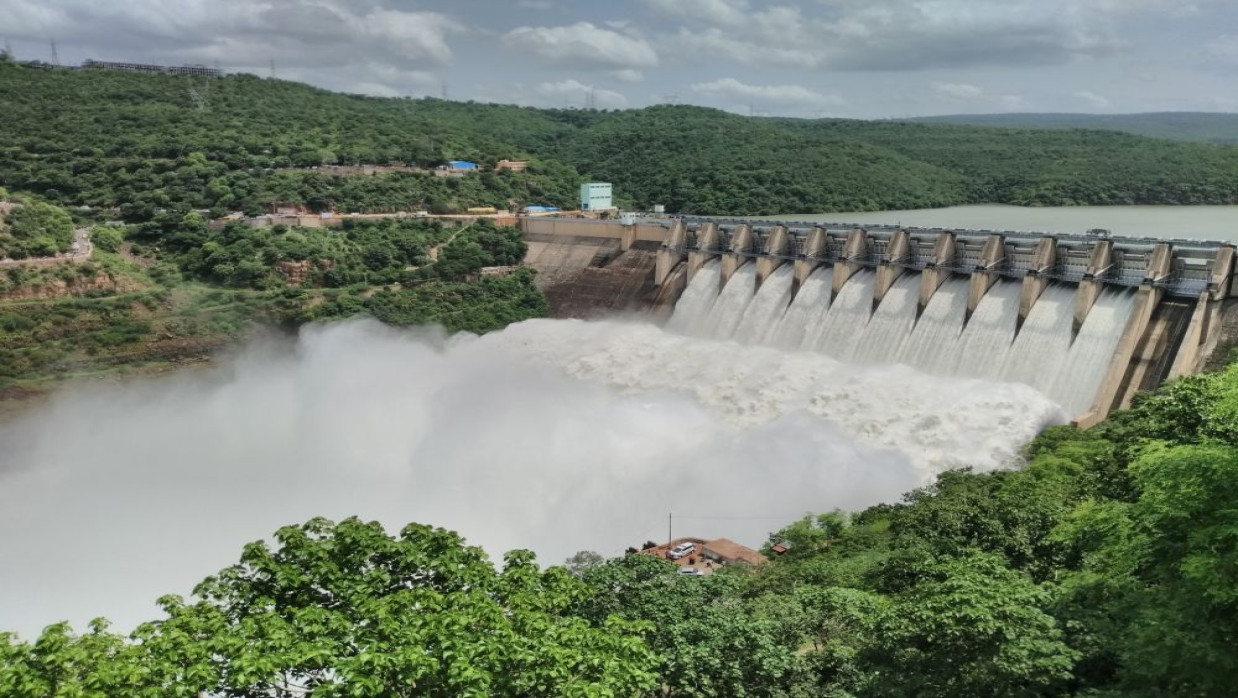
India has a long, bruising political history with dams. Koyna, Narmada, Polavaram, Sardar Sarovar, each became a national flashpoint, a byword for the violence development can do to the people it claims to serve. Tribal communities organised, courts intervened, activists’ built resistance and reputations around resettlement, and "displacement" entered Indian political vocabulary as a synonym for state betrayal.
So, it is worth pausing on what just happened, quietly, in the hills of Karjat taluka, 50 miles outside Mumbai. In March 2025, the Maharashtra government confirmed the Shilar Dam project, which will submerge a cluster of Thakar tribal villages in Mograj Gram Panchayat. There has been no Narmada Bachao Andolan moment here. No sit-in, no court case, no national media cycle. Instead, conversations in these villages over the past year have been dominated by a different question entirely: how much compensation, and how soon.
This is not a story about apathy, and it should not be read, as it likely will be by some in Delhi and Mumbai, as evidence that tribal communities have finally been persuaded of the wisdom of "development." It is a story about how the Indian state, after decades of underinvesting in agrarian life, no longer needs to coerce displacement. It can simply wait for rural precarity to make displacement look like an upgrade.
A Quieter Kind of Dispossession
The standard account of development-induced displacement in India runs through dispossession theory: the state and capital seize land, communities resist, and the state wins through force, delay, or co-optation (the Sardar Sarovar and Polavaram histories are instructive here). What is harder to theorise, and what Mograj makes visible, is a scenario where resistance barely materialises because the state has already won the argument years before the bulldozers arrive.
Mograj is a cluster of nine villages, roughly 11,000 people, overwhelmingly Thakar with a smaller Mahadeo Koli population, sitting at the edge of the Mumbai–Pune metropolitan corridor. For two decades, this corridor has exported its weekend leisure economy into Karjat's hills: resorts, gated farmhouses, "eco-retreats" for Mumbai's professional class, built on land bought cheap from people who could not make that same land pay through agriculture. Rainfed, fragmented, increasingly unpredictable under shifting monsoon patterns, farming here has been losing the economic argument for a generation. Young men from these villages now build the very resorts that have priced their families out of the local land market, earning daily construction wages that, however precarious, still outperform a season of paddy.
This is the precondition the Shilar Dam walked into. By the time the project was confirmed, many households in Mograj had already concluded that their agrarian future was not worth defending too hard. Several residents spoke about anticipated compensation, reportedly three to four times prevailing land values, not as a violation but as a windfall: a route to a concrete house, a child's college fees, a motorbike, an escape from debt. The dam did not manufacture this calculation. It exploited one that the state's own decades of agricultural neglect had already produced. This is the part of India's displacement story that deserves more scrutiny than it gets: a state does not need to suppress resistance to land acquisition if it has spent forty years making sure people have nothing left to lose. Call it dispossession by attrition rather than dispossession by force, slower, less visible, and considerably harder to put on trial.
The Politics of Manufactured Optimism
There is a reason this pattern should worry policymakers and civil society across South Asia, not just in Maharashtra. The dominant resettlement and rehabilitation (R&R) framework in India, and across much of the region's large-infrastructure politics, from Bangladesh's river projects to Pakistan's dam disputes in Sindh, still assumes displacement is something communities must be persuaded or coerced into accepting. R&R policy is built defensively, around the expectation of resistance: consultation processes, compensation tribunals, rehabilitation packages calibrated to manage anger. What Mograj suggests is a future where that entire architecture becomes unnecessary, not because the state has become more just, but because rural communities arrive at the negotiating table already defeated by agrarian economics, and read compensation as liberation rather than loss.
This should not be mistaken for genuine consent. Indian resettlement history is unambiguous on what comes after the optimism: compensation rarely converts into durable livelihood security, particularly for communities entering informal urban labour markets without land, skills certification, or social capital. The Sardar Sarovar farmers who took cash compensation in the 1990s are a documented cautionary tale; many were landless and poorer within a decade. In Mograj, almost no one I spoke to in the past year discussed what happens after the compensation is spent and the dam has submerged the only asset their household has ever held. The optimism is real. The risk it is built on is largely invisible to the people taking it on.
This is precisely where the political problem lives. A state that allows hope about compensation to substitute for actual livelihood planning is not resolving the displacement question; it is outsourcing the long-term political and economic risk of dispossession onto households least equipped to absorb it, while collecting the short-term political benefit of an acquisition that generates no protest, no headlines, and no embarrassing footage for the evening news.
Why This Should Matter Beyond Maharashtra
Read narrowly, this is a Maharashtra story: one dam, one tribal cluster, one state government. Read regionally, it is something more consequential, a preview of how large infrastructure politics may increasingly play out across South Asia as agrarian economies continue to hollow out from the inside.
Across the region, governments are pursuing dams, highways, special economic zones, and resort corridors through landscapes occupied by populations whose relationship to agriculture has already been weakened by decades of price volatility, climate stress, and labour migration, from Pakistan's Indus basin communities displaced by hydropower and irrigation schemes, to Bangladesh's char-land and river-erosion populations, to Nepal's hydropower frontier in the hills. In each of these contexts, the political establishment has historically had to reckon with the moral and electoral cost of visible resistance. Mograj suggests that cost may be quietly disappearing, not because governments have improved their human rights record, but because rural economies have deteriorated to a point, where leaving no longer feels like loss.
That should alarm anyone thinking seriously about land and water politics in South Asia, for a simple reason: resistance to displacement has historically been one of the few mechanisms forcing states to negotiate more seriously on compensation, resettlement quality, and long-term livelihood guarantees. If agrarian precarity is quietly dissolving that resistance, replacing it with relief, states lose one of the only points of political leverage rural communities have ever had over the terms of their own displacement. Future R&R frameworks built only around managing anger will be poorly designed for communities who are not angry, and consequently will offer them even less.
What a Different Politics Would Require
None of this argues against compensation, mobility, or the right of Thakar households in Mograj to want concrete homes, salaried jobs, and futures beyond rainfed paddy. Treating their optimism as false consciousness would be its own form of condescension, these are rational households responding to a genuinely punishing agrarian economy, not naïve communities being tricked. The political failure is not that people in Mograj want to leave farming. It is that the Indian state, and South Asian infrastructure politics more broadly, has no serious policy instrument for households who want exactly that: support for moving out of agriculture on dignified terms, rather than only on the terms a dam happens to offer once construction is already approved.
That would require resettlement frameworks that take long-term, non-agrarian livelihood planning as seriously as they take one-time compensation valuation: skills training tied to actual regional labour markets, not symbolic job fairs; compensation structured as annuities or asset-linked support rather than lump sums that vanish into debt repayment and weddings within a few years; legal recognition that consent secured through agrarian desperation is not the same as consent secured through genuine choice. It would also require South Asian states to stop treating the absence of protest as the absence of harm, a conflation that has let governments from Colombo to Islamabad declare success on projects whose costs simply haven't been counted yet.
Mograj's households are not wrong to want more than farming has given them. But a regional politics that only learns to negotiate with people who fight back is a politics that will keep failing the people who, for entirely rational reasons, no longer have the energy left to.


0 Comments
LEAVE A COMMENT
Your email address will not be published