

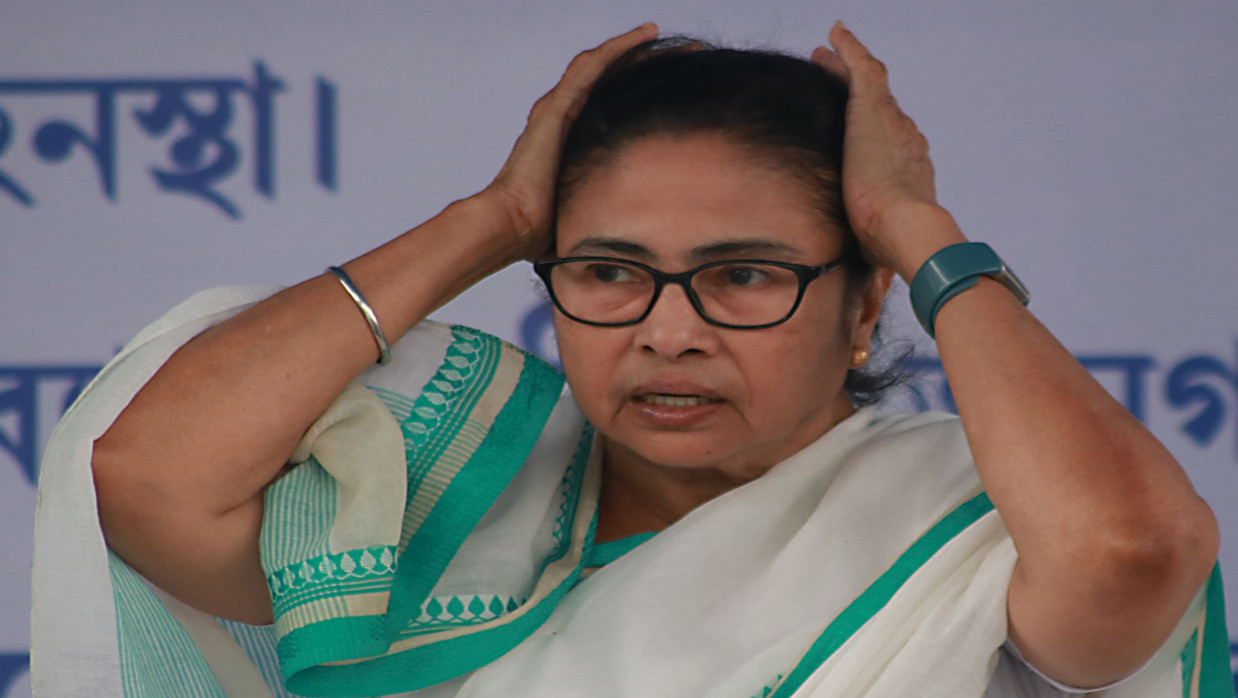
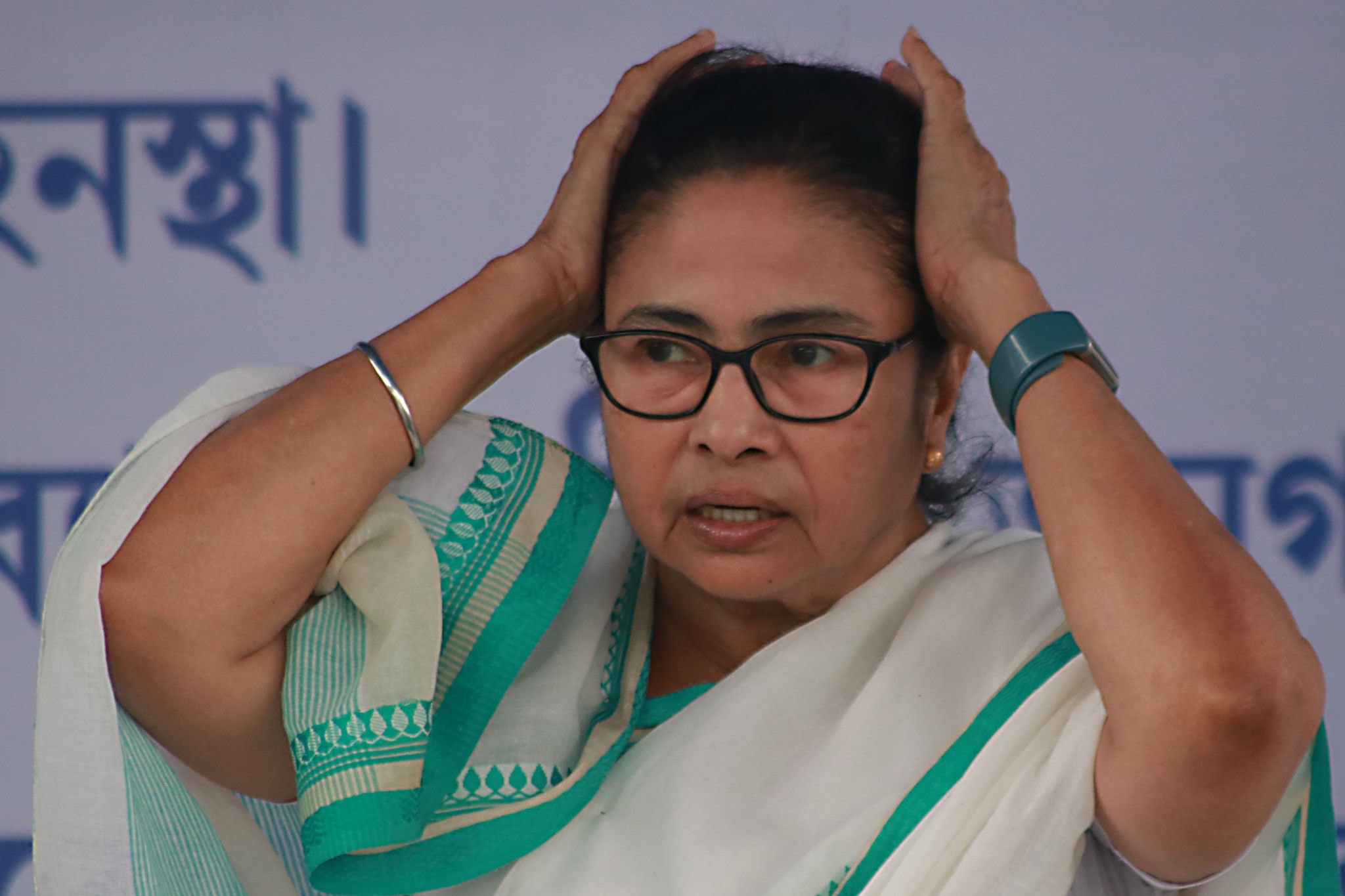
The 2026 West Bengal Assembly election will decide the political fate of a key Indian state. But unlike what many take for granted, changes in the guard, i.e., the replacement of the incumbent All India Trinamool Congress (TMC) government with the Bharatiya Janata Party (BJP), will have ramifications that far exceed the cycle of political power. As India braces for a potential BJP victory that will conclude its political Hindu mahapanchayat after ruling Bengal for three decades, one cannot help but realize that the Bengal verdict would be much more than a shift of parties ruling the state.
Analyzing polling patterns, narrative development over the course of the campaign period, and developments on the ground in the region, the verdict will mark the arrival of India's new political normal, where electoral calculations will be inseparable from the optics of neighborly Bangladesh.
A Historic Electoral Upset
BJP's massive win will speak volumes. It is no longer a fight over statistics. After the exit polls predicted its win, it was clear that the BJP had managed to broaden its support base from urban hubs to the semi-urban and border districts of Bengal. It wasn't enough for the party to cross the majority line of 148 in the 294-member assembly. Still, it looked like it would comfortably cross the 200-mark, something unthinkable until a few months ago, when the BJP was fighting to be recognized as a player in the state. It appears the tables have turned quickly since the BJP was reduced to the Opposition during the 2021 elections, when the TMC, led by Mamata Banerjee, clinched a resounding mandate. If the numbers hold, it will signal a seismic shift in Bengal voters' mindset. The party made inroads with multiple groups, cutting across religions and classes. BJP, riding on the charismatic leadership of Prime Minister Narendra Modi, had pitched the election as a fight between development and corruption, nationalism and identity politics, and, at the national level, gentility and women's safety and security.
The Decline of Regional Dominance
This election spells the end of one of Bengal's dominant parties in recent years. Mamata Banerjee's TMC has been Bengal's central political force since 2011. It built its image around regional pride and its welfare-centric governance model. Corruption scandals, governance complacency, and infighting led to the erosion of their vote share.
The BJP, on the other hand, has steadily increased its vote share over the last decade by developing an organizational network at the booth level and by involving the central leadership, providing a consistent opposition to TMC's political machine.
This change signals another shift in the slow demise of regional parties across India in the face of an authoritarian and ideological party structure. Bengal was once seen as a Left stronghold, but it is now a regional player in politics. With this change, Bengal joins the new India order as a BJP stronghold.
Electoral Controversies and Institutional Questions
BJP's massive victory parade wasn't without its drama, of course. The biggest rival, TMC, cried foul and accused the BJP of attempting to influence the counting by delaying it and releasing trends "secretly". Eyebrows were raised at how the Election Commission handled information during the counting process. Critics and Opposition asked for greater transparency from the Election Commission of India.
Instances of violence broke out at counting centers too, with TMC and BJP supporters skirmishing at a few places like Asansol. As our democracy finds new stresses in an increasingly polarized India, incidents like these are worrying.
The elections were held following a very controversial revision of the voter roll. Millions of voters had their names removed from the voter list initially, only to have them restored after complaints. At the height of the controversy, 11.8 crore had been dropped from the rolls. That was 11.9% of the voters who were registered at the time.
One lesson this election drove home was that institutions matter. When they work, they matter a lot in keeping our faith in democracy intact. The people have spoken and made it clear that the BJP will be in power for the long haul. But the disputes around how will linger.
The Bangladesh Factor in Electoral Politics
It cannot be denied that one of the standout aspects of the 2026 electoral campaign will be narratives about Bangladesh. In speeches after speeches, rallies after rallies, political discourse would often speak of fears of Bangladeshi migration, appeasement of minorities, and Bangladesh in polls and riots related instability in Bangladesh. Affecting districts along the India–Bangladesh border with grave acuity, this rhetoric elicited strong responses in these areas.
India's border with Bangladesh is one of the most densely populated in the world, with centuries-old exchanges of migrants, traders, and culture.
Election campaigns in districts along the India–Bangladesh border have historically focused on a range of these issues. However, the 2026 election focused on these issues through the prism of nationalism and demographic change.
Arguments that these claims reduce Bangladesh to a monolithic paradigm within itself do hold merit; however, such arguments do not diminish the effectiveness of such rhetoric at the polls.
Identity Politics and Strategic Messaging
The BJP has successfully synchronized identity politics with communication tactics. Their messages revolved around culture and identity, national integrity and nationalism, and security combined with elements of fear over what the future may or may not bring.
These tactics saw the BJP increase its vote share in border areas where fears of cultural erosion and competition were strongest. But this was only possible because of connecting with voters across states on these larger issues.
What we are also seeing is the increased impact that media houses have on elections, both on social media and in news channels, which focus on exaggerating law and order problems in the state.
Strategic Importance of West Bengal
Geopolitically, West Bengal also holds a strategic position. West Bengal acts as India's gateway to the Northeast. Northeast India is connected to the rest of the country via a thin stretch of land known as the Siliguri Corridor, also called the "Chicken's Neck."
West Bengal shares a border with Bangladesh, making the state significant for border management, trade, and connectivity with both Bangladesh and the Northeast.
India's ports in West Bengal serve as trade outlets not only for East India but also for the countries around India's East coast. Kolkata and Haldia are extremely important for trade.
Because the BJP now holds power in Kolkata, decision-making and policymaking on issues of strategic importance, such as infrastructure development along the borders and around ports, and connectivity to the Northeast, might see better cooperation between the Center and Bengal. This might raise new challenges for India-Bangladesh relations if Bengal and the Center come onto the same page, and that page turns out to be more hawkish.
Implications for India–Bangladesh Relations
This political change in West Bengal will have ramifications for India's relations with Bangladesh. India-Bangladesh ties have mostly sailed smoothly, with agreements on security, trade, and connectivity. Issues like migration and treatment of minorities, however, have been troublemakers.
India may see the BJP-led government in Bengal take a harder line on these issues. Mirroring national political compulsions, tough talk could find a place in bilateral discourse.
Mutual business interests and geopolitics will, however, keep ties moving forward. Bangladeshis are watching Bengal keenly, given close people-to-people and commercial ties with the state.
A Broader Transformation in Indian Politics
The Bengal result in 2026 signifies a paradigm shift in Indian electoral politics. Elections to state assemblies are no longer disconnected from national and global events. Localized issues now have strategic overtones. The BJP has managed to both expand its territory and consolidate its ideological ground. It has further entrenched itself as a party to beat in India. Opposition parties have reasons to sit up and take notice. They will have to reinvent themselves to find a language that speaks to the electorate's aspirations, both local and global.
Conclusion: The Geopolitics of Democracy
India’s West Bengal election of 2026 will be not only a watershed moment in the state’s politics, but also provide clues about electoral politics across South Asia. Ways in which. Bengal voters will demonstrate that popular perceptions of local governance, identity politics, and their vision of the regional balance of power will impact electoral outcomes for years to come. As New Delhi navigates these fault lines in the emerging regional order, it will do well to closely study the politics at play in Bengal.
Tying your geopolitical worldview to electoral fortunes is likely to become a more prominent feature of future political campaigns in India. Bengal's verdict will remind every country in South Asia that domestic political shifts in its neighbors can have significant regional impacts. In the future, domestic politics and geopolitics in this region will be increasingly difficult to disentangle. Welcome to the new era. The era of Hyper-Politics.


0 Comments
LEAVE A COMMENT
Your email address will not be published