

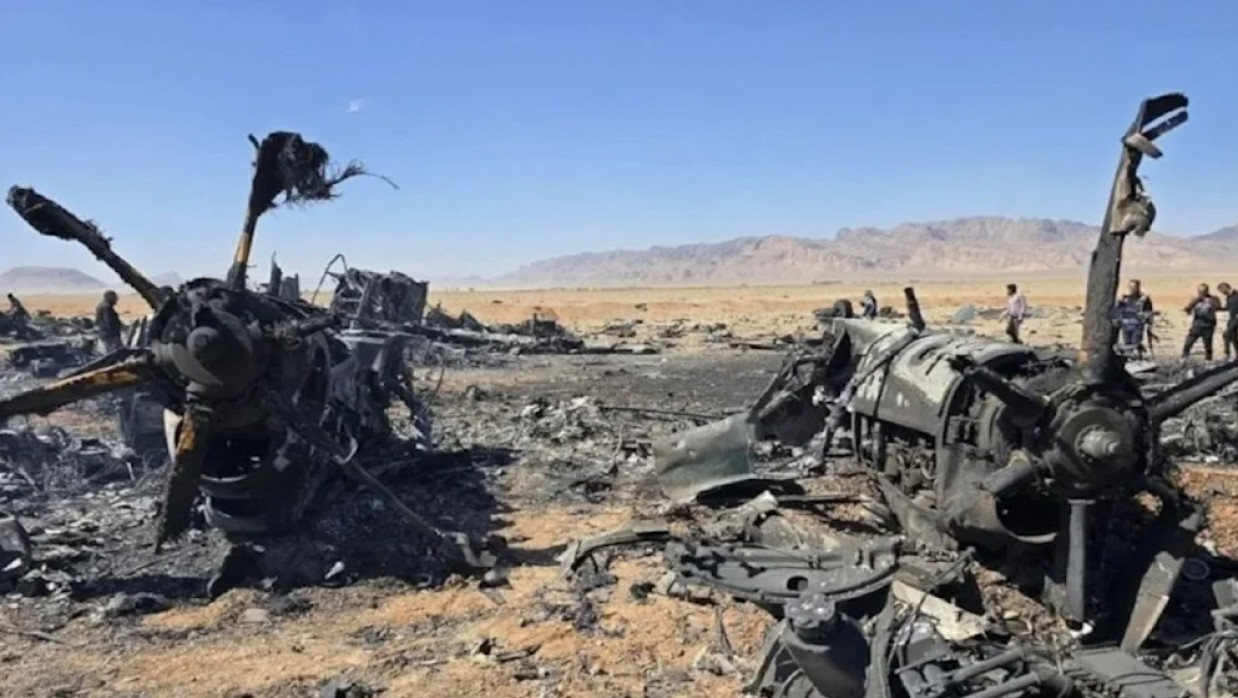
Claims that at least seven American fighter jets were shot down over Iran in the most recent escalation of US–Iran tensions have significant ramifications for modern aerial warfare. Even if proven only partially true, these reports would upend decades-old beliefs about American air dominance and point toward fundamental changes in the world's power structure. Specifically for India, these developments have serious implications for how it will fare against China and Pakistan in the years to come.
The reason for this has less to do with aircraft and more to do with shifting trends in technology proliferation, proxy conflicts, and great-power realignment, which are likely to define future wars in Asia.
Air Superiority Under Question
The United States has held uncontested air supremacy for generations. If anything got shot down over the tangled web of US campaigns in Iraq, Afghanistan, Libya, and Syria, it was usually an isolated incident. Claims that Iran shot down multiple aircraft, possibly including fifth-gen technology, in Iranian airspace are significant.
Another important aspect is the context in which they took place. Leading up to these operations, US and Israeli officials claimed Iran's air defense networks had been severely degraded. But the alleged shootdowns indicate that Iran still had significant capability left or was able to quickly reconstitute it through redundancy, relocation, or outside support.
Perhaps even more revealing is the reported necessity of a prolonged rescue mission to recover a downed American airman. Missions like these are among the most sensitive in today's conflicts. The fact that these missions had to occur indicates that the battlespace was not permissive, but contested. These events have called into question both the fragility of Iranian air defenses and the viability of modern high-tech air campaigns.
The Resilience of Iran's Air Defense Architecture
Iran has been building towards this moment for years. Under sanctions, embargoes, and years of threat of regime-change operations, Tehran pursued a philosophy of asymmetric survivability.
Rather than building static, giant radar systems, Iran focused on:
deployable missile batteries
numerous air defense networks
missile-indigenization
cell towers
jamming capabilities
Decentralized systems are harder to neutralize. If primary targets are eliminated, numerous fallback options can remain active and deadly.
Iran has also, during this same war, shown growing competence in weaving together drones, missiles, and cruise missiles into a cohesive defensive-and-counterstrike matrix. The tally of downed planes may thus be less evidence of a technological miracle than the fruition of years of planning.
China's Quiet but Expanding Role in Iran's Defense Ecosystem
Perhaps more significant still is evidence suggesting that China may have played a role in hardening Iran's defenses. There have been numerous reports of burgeoning Sino-Iranian ties in missile development, surveillance technologies, and air defense integration. China is Iran's largest oil importer, even under sanctions. Naturally, trade between the two in the energy sector has also enabled robust military-to-military ties. Gulf Arab sources quoted by The National claim that Chinese engineers helped Iran maintain its air defense systems. Furthermore, technology may have been shared with Tehran that would improve radar tolerance and help shoot down missiles.
If true, this would fit into China's modus operandi of building strategic relationships with countries along its Belt and Road Initiative energy routes. Furthermore, it would allow China to indirectly balance the US through technological sales rather than matching American might.
A Strategic Template with Direct Implications for South Asia
For India, the most alarming implication is not the fate of American aircraft but the precedent established by Sino-Iranian cooperation.
If China has managed to surreptitiously improve Iran’s military capacity while under sanctions and while Iran is at war, there’s no reason to suspect China would balk at coming to Pakistan’s aid militarily should Pakistan find itself in another crisis with India. China’s stake in Pakistan via the CPEC initiative is already one of its largest foreign investments with strategic implications. In past India-Pakistan crises, Indian defense analysts have openly accused China of sharing satellite imagery with Pakistan. Capture of Chinese weapon systems during previous skirmishes lends credence to that assessment as well. It won’t be long before China is at least indirectly sharing a fingerprint on acts of violence against India, if it hasn’t already during outright war.
The Expanding Two-Front Challenge for India
India has long prepared for the possibility of a simultaneous confrontation along both its western and northern borders. However, the emerging pattern of technological integration between China and Pakistan introduces a new dimension to this challenge.
Future conflicts may involve:
Instantaneous satellite guidance
networks enabled targeting
swarms of UAVs
jamming communications
improved air-defense systems
It will also help narrow India's crisis response times and add complexity to its planning. What happens in Iran should serve as a warning to Indian strategists rather than being viewed as an esoteric Middle Eastern phenomenon.
Missile Fragmentation Technology and Emerging Threat Vectors
Another development attracting attention among defense analysts is Iran's use of so-called "splinter" or fragmenting missile technologies designed to overwhelm conventional interception systems.
These weapons release multiple submunitions during flight, creating complex engagement scenarios for air defense networks. If transferred or adapted for use in Pakistan, such systems could pose new challenges to India's layered missile shield.
Modern air warfare increasingly revolves around saturation rather than precision alone. The ability to overwhelm defenses with multi-vector attacks represents a growing feature of 21st-century conflict.
China as Ceasefire Broker and Strategic Beneficiary
Apart from operational considerations, China may also have been a diplomatic winner from the US–Iran standoff. It seems the Chinese were involved in brokering the ceasefire agreement. If true, this would be another sign of China gaining leverage as a peace broker in areas where Western influence once reigned supreme. Chinese diplomats reportedly held talks with various regional foreign ministers during the crisis and called for a five-point peace proposal. Separately, Iran also reportedly asked China to act as a future guarantor of regional security. These moves serve China's interests both at home and abroad by buttressing its image as a "responsible great power" and helping ensure future deals for cheap Iranian oil. China also gets to tout itself as a responsible alternative to supposed American aggression abroad.
Energy Security and the Strait of Hormuz Factor
China's interest in preventing escalation between Washington and Tehran is closely tied to its dependence on Gulf energy flows. Roughly half of China's oil imports and a significant portion of its natural gas supplies transit the region.
Any prolonged closure of the Strait of Hormuz would have immediate consequences for Chinese industrial production and economic stability. Beijing's diplomatic engagement, therefore, reflects pragmatic economic calculation as much as geopolitical ambition.
For India, which also depends heavily on Gulf energy imports, instability in the Strait similarly represents a major strategic vulnerability.
Postwar Reconstruction and the Belt and Road Opportunity
China also stands to gain from long-term reconstruction efforts in Iran. Already having invested in Iranian infrastructure early on as part of its Belt and Road Initiative, Beijing may seek greater involvement in the country's road, telecom, and construction sectors. Further Chinese engagement would provide Beijing with increased strategic footholds in West Asia and further link Central Asia with the Persian Gulf via land routes. China's growing influence could potentially realign the region, especially should Western sanctions block other avenues of investment.
Strategic Lessons for India's Defense Planning
For India, the most important lesson from the reported aircraft losses over Iran lies in the evolving character of modern warfare. Technological superiority alone no longer guarantees uncontested operational dominance.
Instead, future conflicts are likely to involve:
networks of kill
offensive technology cooperation
cross-domain battlespace
proxy deterrence thresholds
This is why India should continue to invest in reconnaissance satellites, anti-ballistic missile systems, information warfare infrastructure, and drones.
We should also improve intelligence integration across our forces to better predict live battle-space scenarios.
Conclusion: A Warning from the Skies Over Iran
Even if every single loss attributed to Iran isn't verified, what matters is the larger strategic trend. The balance between offense and defense can shift, particularly if air defenses continue to improve while offensive airpower growth stagnates. There's also newfound kinetic activity from China supplying airpower to partners like Iran. Welcome to great-power competition by proxy.
For India, the takeaway is clear: future wars with Pakistan will likely see Chinese technology aiding their aggression in ways that make conventional war vs. proxy war harder to distinguish.
So keep an eye on Iran's airspace. It may just be a foretaste of Asia's future.


0 Comments
LEAVE A COMMENT
Your email address will not be published