

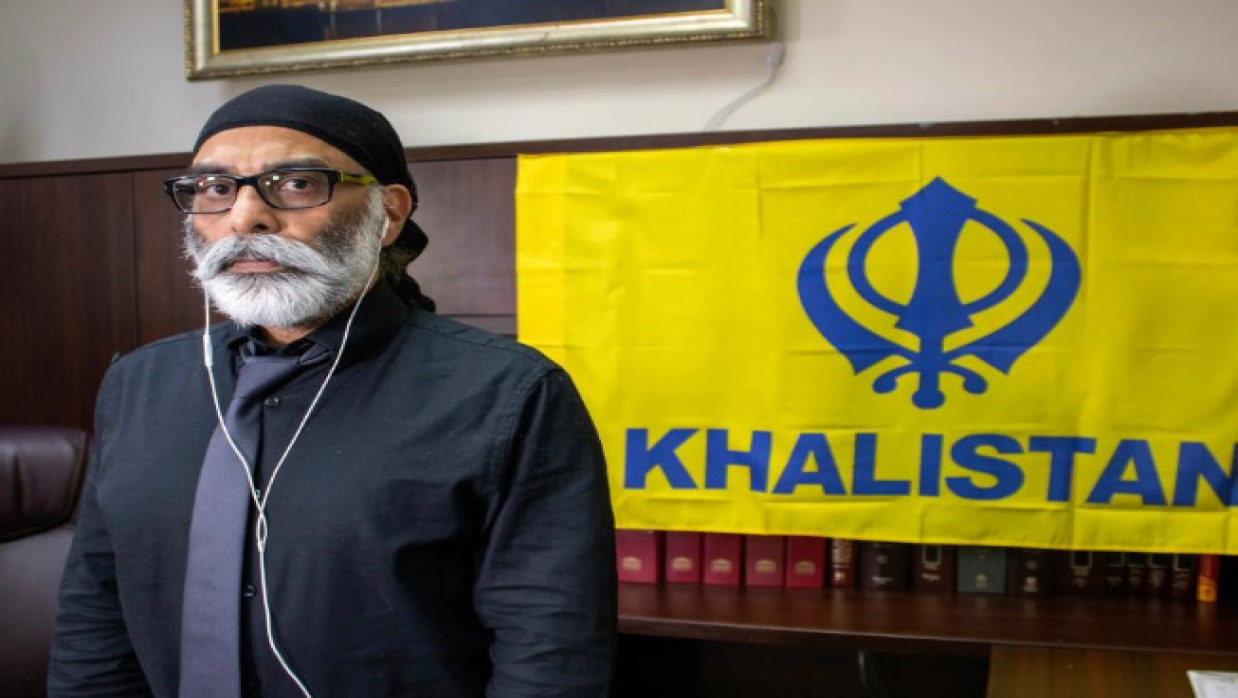
A major international controversy involving the Indian government and its external intelligence agency has evolved into one of the most serious diplomatic crises India has faced in recent years. The case centers on an alleged conspiracy to assassinate Gurpatwant Singh Pannun, a Khalistani separatist activist based in the United States. What might once have remained a shadowy intelligence episode has instead erupted into a full-scale geopolitical scandal following the arrest and guilty plea of Indian national Nikhil Gupta in a U.S. court.
The revelations have strained India’s relations with the United States and Canada, damaged its international reputation, and raised fundamental questions about the conduct of intelligence operations abroad. At its core lies a troubling dilemma: whether the operation was sanctioned at high levels of the Indian state or represents a rogue effort gone disastrously wrong.
The Anatomy of the Alleged Plot
According to the U.S. Department of Justice, Nikhil Gupta pleaded guilty to charges including murder-for-hire, conspiracy to commit murder-for-hire, and money laundering. He faces a potential sentence of up to 40 years in prison. The intended target, Gurpatwant Singh Pannun, is a U.S. citizen and a prominent Khalistani activist whom India has designated a terrorist.
Prosecutors allege that Gupta worked in coordination with Vikas Yadav, described as an Indian government employee linked to the Cabinet Secretariat, which houses India’s external intelligence agency. The timeline presented in court suggests that Yadav recruited Gupta in May 2023 to arrange the killing of Pannun in New York. By June 2023, an advance payment of $15,000 had reportedly been delivered to what Gupta believed was a hired assassin, unbeknownst to him, a U.S. Drug Enforcement Administration undercover agent.
Operational details revealed in court documents were particularly damaging. Gupta allegedly instructed the supposed hitman not to carry out the assassination during the Indian Prime Minister’s official visit to the United States in June 2023, indicating awareness of the diplomatic sensitivity. Shortly thereafter, Gupta was arrested in the Czech Republic and extradited to the United States, where he eventually entered a guilty plea.
U.S. authorities framed the case as a warning to foreign actors contemplating violence on American soil, emphasizing that sovereignty and legal norms would be strictly enforced.
Connections to Canada and a Possible Pattern
Notably, the Pannun case was not the first incident that has raised questions about Indian intelligence agencies targeting separatists abroad. In May 2023, Indian intelligence agents were already suspected of murdering Khalistani activist Hardeep Singh Nijjar in British Columbia. Canadian Prime Minister Justin Trudeau accused India of killing Nijjar. As a result of strained relations after these allegations, Canada and India expelled diplomats and suspended bilateral meetings.
Soon after the Singh Nijjar case, another Khalistani activist was murdered in Canada. These events have caused some to question whether there is an extraterritorial trend in assassinations. India has denied involvement in all of these allegations. Despite India’s denial of any involvement, the plethora of allegations suggests something may be awry with Indian intelligence operations.
Because the alleged plot took place in the United States and a guilty plea was entered, supported by documentary evidence, this plot has hurt India the most. These plot points point to a planned extrajudicial killing on American soil.
Was the plot sanctioned? Or was it rogue?
One major debate about the allegations is whether senior members of the Indian government were aware of the plot or if rogue officers attempted it without authorization. Many former intelligence officials have weighed in on this subject, with varying opinions.
Some former Indian intelligence officers have stated that, for a plot like this to happen, senior officials would have had to know. On the other hand, some argue that Indian intelligence agencies have never conducted assassination attempts in countries like the United States and Canada.
There were also claims that Gupta was a double agent and that he pleaded guilty so quickly to prevent any international damage. However, with evidence such as wire transfers, phone calls, and information on the alleged hit released to the public, it has become more difficult to believe this claim.
India has yet to issue an official statement on the allegations, but it has said it is cooperating with U.S. officials. Because India has no official stance or account of the allegations, more questions continue to arise.
Diplomatic and Strategic Fallout
The scandal's implications are severe for India’s diplomatic ties. With the U.S., this scandal brought, for the first time, an element of mistrust to an otherwise blossoming strategic partnership. Especially since Washington preferred indictments to quietly settling the matter behind closed doors when its sovereignty was breached.
With Canada, relations were already tense, but allegations of murders on Canadian soil took the debate around counterterrorism, diaspora politics, and state sovereignty to another level.
Internationally, the ramifications go beyond diplomatic ties between states. India wants to be seen as a responsible major power, but if indeed RAW used mafia groups to assassinate someone overseas, it creates questions both at home and abroad about how it conducts its intelligence operations.
Lessons for Intelligence Agencies
Espionage or covert action will become harder as countries develop better cyber intelligence and digital forensic capabilities to trace cross-border transactions, and as international cooperation increases regarding breaches of sovereignty. This incident will come to light through forensic investigations rather than a whistleblower.
Secondly, operations such as these call into question intent and capability. Why target a non-entity like Pannun, who, according to some experts, lacks the capability to impact India’s national security? Yes, he was vocal and received praise from anti-India elements, but did his presence actually threaten India’s national security? Eliminating him ended up doing the opposite and creating a global superstar out of him.
Examining India’s Intentions
It is unclear whether this was ordered from the top brass or was an off-the-books operation R&AW thought could go unnoticed. India will face intense scrutiny either way, but if the former is true, it now has international proof that it not only condones but also encourages this behavior.
India needs to investigate the matter itself, be transparent with its findings with Canada and the U.S., and reevaluate how it conducts intelligence operations if it wants to shed this narrative. Otherwise, states will think twice before partnering with India or sharing intelligence.


0 Comments
LEAVE A COMMENT
Your email address will not be published