

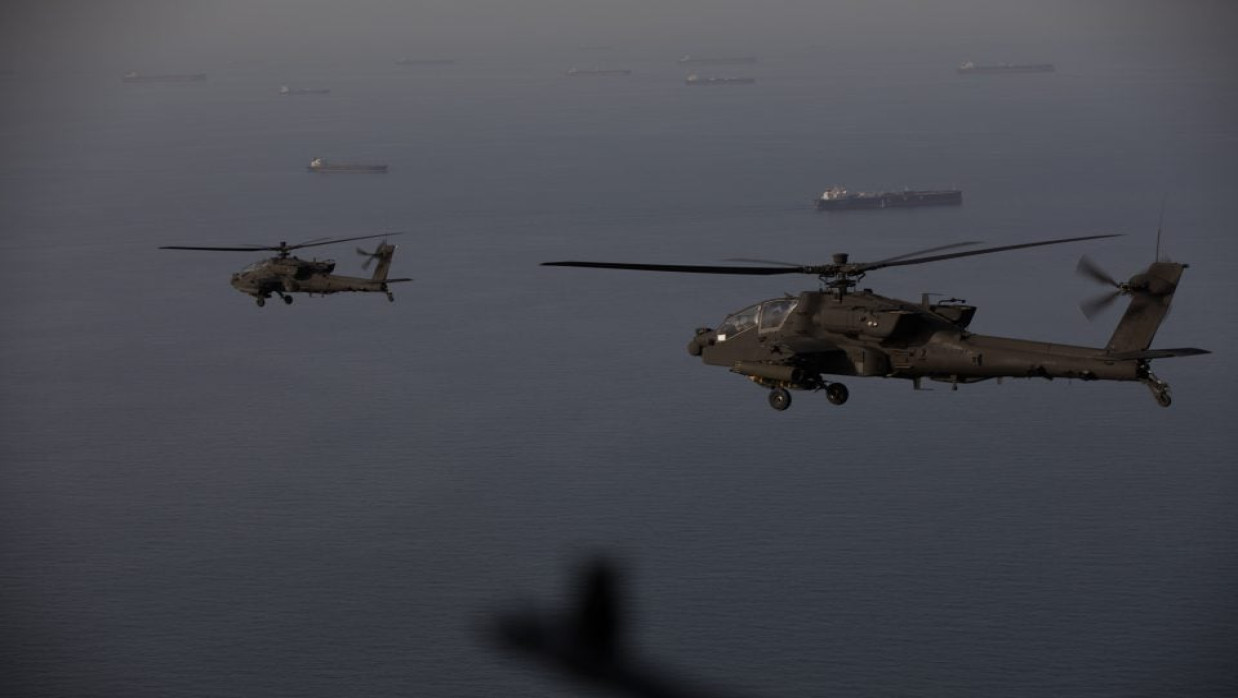
The current escalation in U.S.-Iran tensions demonstrates a truism of modern strategy: when two countries have significant capabilities to harm each other economically and militarily but limited ability to achieve their larger strategic goals, the result is often a conflict of exhaustion. We are now living in a sanctions-induced stalemate characterized by oil market posturing, proxy militias, domestic political pressure, and failed diplomacy. Leverage does not equal victory.
The Trump administration’s campaign to create an “economic D-Day” for Iran demonstrates that Washington retains powerful instruments short of an expanded military campaign. These include sanctions on oil exports, restrictions on financial transactions, and threats to penalize foreign governments and companies that continue doing business with Tehran. Iran’s petroleum sector remains the principal target because oil revenue helps finance the state, support domestic programs, and sustain its regional activities.
The administration expanded sanctions in August 2026 while warning other countries that continued business with Iran could jeopardize their access to the dollar-based financial system. However, Washington stopped short of immediately imposing some of the most severe available measures. This suggested an attempt to increase pressure without triggering an uncontrolled economic or military response. Reuters reported that the announcement was intended to threaten Iran’s economic lifeline while leaving room for additional escalation.
Iranian oil exports have already been severely affected. The disruption has gone beyond the familiar sanctions regime because American military pressure and restrictions on maritime movement have made physically transporting oil considerably more difficult. According to Reuters, Iran went approximately seven weeks without exporting a meaningful volume of crude through the Strait of Hormuz, an interruption far more extensive than anything previously achieved through sanctions alone.
Nevertheless, permanently reducing Iranian exports to zero would be extremely difficult. Iran has decades of experience circumventing restrictions through intermediaries, shell companies, ship reflagging, disabled transponders, ship-to-ship transfers, and cargo blending. These practices can obscure the ownership, origin, and destination of petroleum shipments. Such methods cannot fully neutralize an intensive maritime enforcement campaign, but they can make it costly and complicated to sustain.
Moreover, pressure does not inevitably lead to political submission. Economic sanctions may deplete regime revenues, devalue Iran’s currency, and cause shortages without convincing its leadership to comply with Washington's demands. Iran has already built informal channels of commerce that let it keep its economy going, and it often shifts most of the pain onto regular Iranians. Inflation, lost purchasing power, and empty store shelves can certainly weaken Iran, but they also fan the flames of anti-foreign sentiment and don't necessarily lead to policy changes. The risk with sanctions is that they start to become a goal rather than a tool. They let leaders look tough, meet political needs at home, and create big headlines. If they're not tied to realistic demands at the negotiating table, however, they could just prolong misery without producing any real solution to the conflict. Pressure becomes a useful tool only if it has a diplomatic off-ramp and a clear outline of what Iran can do to gain substantial relief.
Domestic political considerations also shape Washington’s calculations. With the 2026 congressional elections scheduled for November 3, the Trump administration has a strong incentive to keep the conflict from dominating the news again, particularly if voters grow increasingly concerned about rising energy prices, American casualties, or the mounting costs of an open-ended regional military deployment. Washington may therefore seek to intensify economic pressure while avoiding measures likely to provoke a disproportionate Iranian response. The apparent gap between the administration’s forceful rhetoric and its more restrained actions may be deliberate: threatening stronger measures preserves leverage, while holding them in reserve reduces the risk of an escalation that could spiral beyond Washington’s control.
Iran is pursuing its own form of calibrated pressure. Tehran has warned that attempts to prevent it from exporting oil could further disrupt shipping and energy supplies through the Persian Gulf. At the same time, it has not closed every diplomatic channel. Oman, Qatar, Pakistan, Egypt, Turkey and Saudi Arabia have varying relationships with the parties and could help carry messages, explore ceasefire arrangements or support a return to negotiations.
Military signaling and diplomatic engagement are not mutually exclusive. Iran’s threats raise the cost of further American pressure, while agreeing to talk, even indirectly, signals a willingness to engage. Iranian leaders may believe waiting until after the U.S. midterm elections improves their bargaining position. The risk is that one government may interpret the other’s self-restraint as weakness and take an action that spirals into broader conflict neither side wants. Already complicated, American strategy is further confounded by international perceptions. Many governments continue to strongly criticize Iran’s domestic repression, nuclear program, and regional activities. But resentment of American unilateralism has grown as well, particularly when U.S. sanctions punish third countries for deals allowable under their domestic laws. Increasing reliance on threats to the dollar-based financial system as a tool of coercion has pushed some governments to seek alternative payment mechanisms and lessen their vulnerability to future American actions.
Consequently, the conflict is not always viewed abroad simply as a confrontation between a liberal democracy and a theocratic state. In parts of the Global South, it is also interpreted through the history of Western intervention, contested sovereignty, and resistance to American or Israeli regional dominance. The war in Gaza and continuing hostilities involving Israel and Lebanon have strengthened this interpretation among some audiences. This does not necessarily indicate support for the Iranian government, but it complicates Washington’s efforts to assemble a broad international coalition and enables Tehran to present itself as resisting a hegemonic regional order.
The same is true of U.S. forces stationed around the Middle East. Troops can secure bases, escort convoys, conduct retaliation strikes, and temporarily set back adversaries. They cannot, on their own, eliminate the competing political and security objectives driving the conflict. An indefinite deployment without clearly defined goals threatens to further diminish morale, cost more lives, and disconnect military operations from any possible political end state.
Iranian-backed militias are another wildcard. Hezbollah in Lebanon, Yemen’s Houthis, and militias across Iraq and Syria should not be treated like extensions of the Iranian government. Tehran provides different levels of financial support, weapons, training, and political cover to these groups. But they also draw strength from local support networks, have their own leadership, and pursue their own political goals. Tehran can pressure them, but cannot always control them. “Partner forces” is often a more apt description than Iranian puppets.
This distinction matters because a regional armed group could escalate hostilities even when Iran wishes to exercise restraint. Conversely, Tehran might be unable to guarantee that every allied organization would comply with a ceasefire. Events on September 8 demonstrated this danger when Houthi attacks on Saudi cities and energy installations injured dozens of people and contributed to higher oil prices, according to Reuters.
Any lasting deal would need to account for a broader regional security arrangement. Dialing down tensions between Washington and Tehran might be reciprocated with Hezbollah restraint, limits on Houthi attacks against maritime traffic, security guarantees for Gulf shipping companies, and a scaling back of Israeli strikes. Israel will never agree to an accord that leaves Iran with a nuclear option and unconstrained ability to arm militias abroad. Gulf countries want guarantees against future Iranian aggression while Tehran demands relief from economic sanctions and that its security concerns are taken seriously.
Sanctions/blockades and airstrikes can build leverage but cannot indefinitely replace a political solution. Each party to the conflict has red lines. Escalation only heightens the risk of miscalculation. If leverage is not used to reach a verifiable political agreement, it's strategically worthless. We could see increased economic sanctions and air strikes that do nothing to make the region any safer and only make everyone involved pay more.

0 Comments
LEAVE A COMMENT
Your email address will not be published