

Security tensions have rocked the grouping, but institutional reform and practical cooperation could steady it.
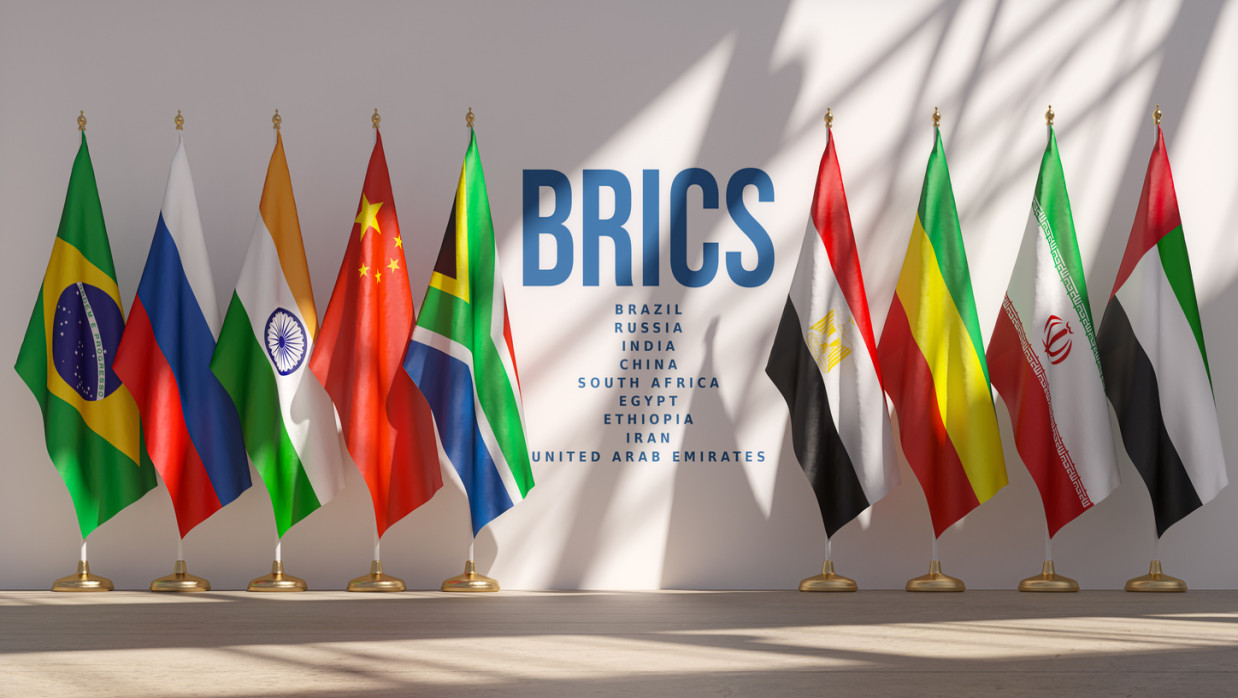
When Brazil, Russia, India, China and South Africa expanded BRICS in the 2020s, the grouping appeared poised to become a major pillar of an emerging multipolar order. Today, it comprises 11 full members and 10 partner countries, giving it considerable demographic, economic and diplomatic weight. Yet expansion has also exposed a fundamental problem: BRICS is much better at expressing dissatisfaction with the existing international system than at agreeing on what should replace it.
The question is not whether BRICS is collapsing. It is not. The grouping continues to attract governments seeking greater international influence, diversified partnerships and alternatives or at least supplements to Western-dominated institutions. The more pertinent question is whether BRICS can translate its expanded membership into practical power or whether internal rivalries, institutional weaknesses and geopolitical contradictions will gradually drain its momentum.
Expansion Without Cohesion
BRICS began as a group of major emerging economies seeking reform of the international financial architecture. Its members were united in the belief that institutions such as the International Monetary Fund, the World Bank and the United Nations Security Council did not adequately represent the Global South.
Expansion strengthened that claim. Egypt, Ethiopia, Iran and the United Arab Emirates joined the grouping in 2024, while Indonesia became a full member in 2025. Saudi Arabia, whose status had initially remained somewhat ambiguous, is now listed as a full member by India’s 2026 BRICS presidency. Ten other countries participate as partners.
However, numerical strength does not automatically produce political cohesion. The expanded grouping contains democracies, monarchies and authoritarian governments; energy exporters and importers; sanctioned states and close Western security partners. Some members want BRICS to become an explicit counterweight to American power. Others see it as a platform for reforming global governance without joining an anti-Western bloc.
Political limits on unity were on display at this week's July 2025 summit in Rio de Janeiro. China's President Xi Jinping did not attend, and Russian President Vladimir Putin appeared via video. Their notable absences did not make the summit meaningless. Far from it, they allowed leaders like Brazil's and India's, both eager to avoid BRICS becoming an anti-Western club, more freedom to strike a balanced tone. But the absences did signal doubts about political commitment at the top.
Security Reveals the Fractures
Security cooperation is even more difficult than economic coordination. BRICS countries don’t have a shared threat perception. India and China are strategic competitors, even as they work to stabilize their border dispute. Iran’s adversarial stance toward Israel and the United States isn’t seen the same way in India or Abu Dhabi or Riyadh or other capitals. Russia’s war in Ukraine has further complicated efforts to develop a joint stance toward sovereignty, territorial integrity and military intervention.
This is not just a BRICS problem. At a Shanghai Cooperation Organization defense ministers’ meeting in Qingdao in June 2025, members could not issue a joint statement because India refused to sign onto a text that India said didn’t sufficiently recognize its concerns about terrorism. The incident showed how India-Pakistan tensions can muddy any effort at consensus even at institutions that have carved out more robust structures for regional security cooperation.
Calls for the peaceful resolution of disputes, respect for international law and adherence to the U.N. Charter are common features of BRICS communiqués. But such declarations have limited value without implementation mechanisms or conflict-resolution processes. The bloc has neither a collective defense commitment nor an institutional process capable of resolving major disputes that may arise among its members.
That does not mean BRICS is not useful. Far from it. But its members should not delude themselves into believing that it can evolve into a collective-security alliance or a geopolitical rival to NATO. Its greater value lies in serving as a consultative body for countries that may not trust one another but cannot afford to ignore one another.
The New Security Agenda
Under India’s 2026 presidency, security has moved closer to the center of the BRICS agenda. The 16th Meeting of BRICS National Security Advisers, held in New Delhi on June 22–23, concentrated on terrorism, cybersecurity, critical infrastructure, emerging technologies and other non-traditional threats.
This expanded concept of security reflects present-day realities. A cyberattack against a port, disruption of an energy supply line, interruption of food deliveries or closure of a strategic chokepoint could be as damaging as a conventional military clash. For many emerging economies reliant on maritime commerce, imported energy and just-in-time supply chains, economic and technological vulnerabilities have become matters of national security.
These subjects offer BRICS its best chance at productive cooperation. Allies can diverge on where the red lines are in Ukraine, Gaza, or US strategic ambiguity. They can agree on defense of critical infrastructure, cracking down on technology abuse by extremists, improving health security and resilience, and hardening supply chains. That won’t send as many cable-news-clapping headlines as pronouncements about the emerging world order. But it will likely lead to results.
The Economic Promise Remains Incomplete
BRICS also suffers from a credibility gap on the economic front. Years of rhetoric about "de-dollarization" have fueled hopes that the bloc will soon launch a common currency or dramatically scale back its reliance on the dollar. Neither seems likely anytime soon. Members have instead focused on increasing trade conducted in local currencies, creating cross-border payment systems and generally boosting financial connectivity.
The New Development Bank remains BRICS’ most substantial institutional achievement. It has financed infrastructure and sustainable-development projects, but it has not become a full-scale alternative to the World Bank or IMF. Western financial sanctions, differences among members and the continued centrality of dollar-based financial markets constrain its reach.
BRICS should therefore avoid making promises it cannot fulfill. A common currency among economies with radically different monetary systems, capital controls and political priorities is unrealistic without much deeper economic and institutional integration. Improving payment interoperability, expanding local-currency financing and strengthening the New Development Bank would be more credible objectives.
How BRICS Can Recover Its Momentum
BRICS can stabilize itself by toning down confrontational rhetoric and focusing on nuts-and-bolts institution-building. It can set clearer guidelines for new membership; specify the rights and responsibilities of partners vs. full members; streamline decision-making procedures so flagship projects don't gather dust; and so on. Members will want to retain consensus-based decision-making to preserve national sovereignty. But such a large grouping cannot operate effectively if every practical initiative needs political sign-off from each capital.
BRICS can agree to keep consensus on major declarations, but allow members who choose to pursue voluntary initiatives on a subset of issues. Bloc-wide consensus can be sought in areas where there is already significant common ground: infrastructure financing, food and energy security, climate adaptation, public health, cybersecurity and trade facilitation. Voluntary coalitions of willing members can pursue specific projects without obligating the entire bloc.
BRICS also needs to maintain its pluralistic nature. Should China or Russia try to push it toward becoming an overtly anti-Western alliance, India, Brazil, Indonesia, and the UAE, among others, will push back. If member states instead treat BRICS as little more than another arena for diplomatic grandstanding, it will lose its strategic edge.
Simply disagreeing will not make BRICS irrelevant. Falling out with each other is pretty much guaranteed in such a diverse grouping. But it will become irrelevant if it talks only for the sake of talking or adds new members faster than it can build consensus. Ultimately, BRICS' longevity won’t depend on how big its table is or how loudly it screams about Western hegemony. What will matter is whether it can actually build something that provides tangible benefits to both its members and the Global South. Institutions don’t last because of what they are against. They last because of what they can build.


0 Comments
LEAVE A COMMENT
Your email address will not be published