

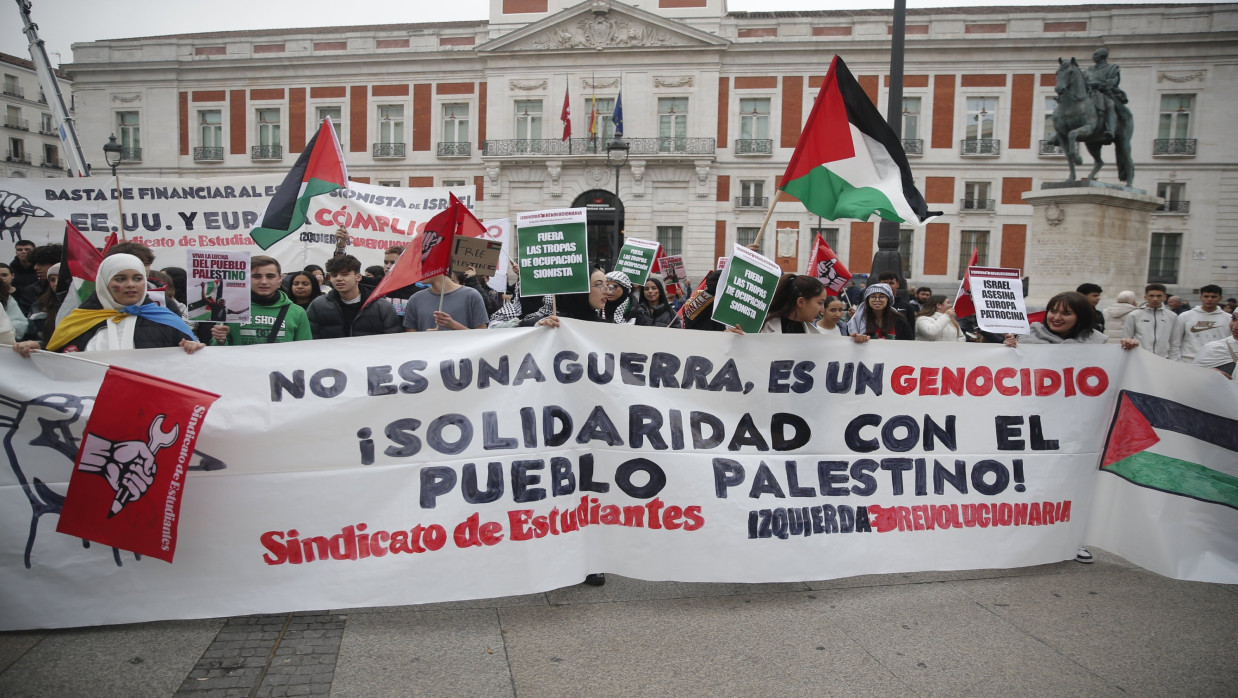
At a time when the devastation in Gaza has tested the credibility of governments and international institutions, Spain has emerged as one of Europe's most forceful advocates for Palestinian rights. Prime Minister Pedro Sánchez's willingness to challenge Israel's conduct, defend international humanitarian law and support Palestinian statehood has given Spain's position significance far beyond its borders. For people who feel politically isolated in countries where criticism of Israel is discouraged or fiercely contested, Spain's stance has become a source of hope.
Spain’s example matters because cases of moral leadership are clearest when speaking out diplomatically and politically costs. Madrid has done more than speak out against the war. Spain issued formal recognition of the State of Palestine on May 20th, 2024. Spain then submitted a declaration of intervention in South Africa’s case against Israel at the ICJ under the Genocide Convention. The case is ongoing, and any finding of genocide will be decided by the Court. But by intervening, Spain signaled Israel’s war effort will and should be held accountable through legal channels, not insulated from criticism by great power politics.
Spain wasn't acting entirely alone: Ireland and Norway officially recognized Palestine alongside it, and Ireland too has led a boldly vocal response on Gaza. Taken together, these governments signal a growing European boldness to challenge orthodoxy on issues that have too often been treated as diplomatic holy cows. They can't stop this war single-handedly. But they chip away at the idea that supporting Palestinian rights should always be secondary to geopolitical expediency.
Figures in the world of culture have echoed such courage. Spanish actor Javier Bardem has been vocal in his solidarity with Palestine on the international stage. When celebrities use their platforms to speak out on divisive issues like this, they have the potential to reach people beyond the fora of official politics. They can also give comfort to activists, students and everyday citizens that standing up for civilians is not a fringe position.
Argentina's President Javier Milei, by contrast, has fostered particularly warm ties with Israel and Prime Minister Benjamin Netanyahu. Milei has even promised to move Argentina's embassy from Tel Aviv to Jerusalem. Sánchez has made Palestinian recognition and legal accountability a near-bottom line of Spain's response. The juxtaposition between the two countries was bound to lend added symbolism to Sunday's 2026 World Cup final between Spain and Argentina.
But football is more than just a proxy battleground for war. Political leaders do not necessarily represent the full moral compass of their citizens. Many Argentinians will not agree with Milei's approach to foreign policy, just as many Spaniards may not agree with Sánchez. Players should not be forced to become unwilling ambassadors for the policies of governments they cannot control. Transforming a game into a de facto referendum on Gaza turns compassion into nationalist tribalism.
The real question is not whether Spain can claim to be morally flawless, or whether each action by its government has been perfectly consistent. The question is whether or not states have the courage to stand up for universal principles when it is not convenient to do so. When civilians are killed, they must be denounced whether they are Israeli or Palestinian. Hamas' attacks and hostage-taking cannot be justified, but that does not absolve Israel of its obligations under international law nor excuse the horrific suffering that has been inflicted on Gaza's civilian population.
Spain's action shows that international solidarity can have political resonance and emotional impact. For those who feel they are fighting against silence, or censorship or hostility, hearing these words from a government can give them strength; the knowledge that they are not alone. In an age where many states hide behind national interests and neglect their humanitarian duties, Spain and Ireland have reminded us that ethical foreign policy can still play an important role in shaping the world agenda. Moral authority might not stop rockets or open borders overnight, but it can end the silence that allows injustice to prevail.


0 Comments
LEAVE A COMMENT
Your email address will not be published