
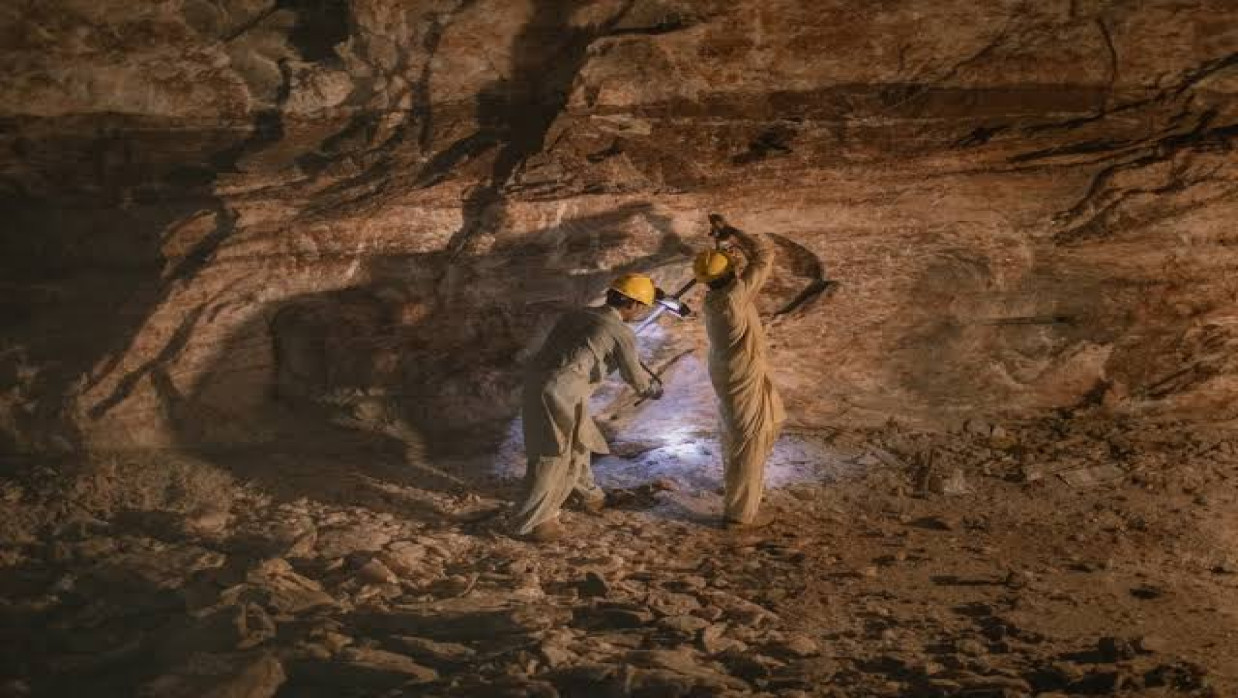
The next chapter of global economic competition may be written not only in factories, financial markets and technology laboratories, but also beneath the earth’s surface. Rare earth elements and other critical minerals have become indispensable to electric vehicles, renewable energy systems, advanced electronics, aerospace and defence technologies. As major economies compete to secure reliable supplies, countries possessing promising mineral resources have an opportunity to strengthen their economic position. For Pakistan, this emerging competition presents a potential route towards export diversification, industrial development and more consequential international partnerships.
Pakistan’s mineral potential has attracted renewed attention because of its geological diversity and the presence of established deposits of copper, gold, antimony, chromite and other industrial minerals. Balochistan, in particular, has long been associated with significant mineral prospects, while exploration activities in other parts of the country are expanding understanding of its geological resources. However, rare earth elements require particular attention. Their occurrence, concentration and commercial recoverability must be established through systematic surveys and laboratory analysis. Pakistan’s opportunity is substantial, but its true scale will depend on scientific verification rather than ambitious estimates of underground wealth.
The distinction matters because rare earth elements are not simply another category of mineral exports. Neodymium and praseodymium, for instance, are important components of permanent magnets used in electric motors and wind turbines. Other rare earth elements have applications in specialised electronics, optical equipment and industrial technologies. Their importance has increased as governments seek to strengthen supply chains for clean energy, advanced manufacturing and national security. In this environment, dependable access to critical minerals can become an economic advantage and a source of strategic leverage.
Pakistan has already taken steps to enter this evolving market. In September 2025, the Frontier Works Organisation signed memoranda of understanding with US Strategic Metals covering cooperation in critical-mineral development, processing and logistics. The framework contemplated an investment of approximately $500 million and envisaged cooperation that could extend towards establishing a polymetallic refinery in Pakistan. The subsequent dispatch of mineral samples to the United States attracted attention to the country’s potential role in diversified supply chains. These developments represent an opening for Pakistan, although the proposed investment framework should not be confused with a completed, fully operational domestic processing industry.
The more important question is what Pakistan does next. Exporting mineral samples or raw materials can establish commercial relationships, but lasting economic gains depend on moving further along the value chain. Mining generates revenue; processing creates additional industrial value; and manufacturing finished components can generate specialised employment, technical expertise and stronger export earnings. Pakistan should therefore seek partnerships that include technology transfer, local workforce training, research collaboration and the development of processing facilities within the country.
The government’s approximately Rs950 million project for the exploration, beneficiation and extraction of rare earth elements, precious metals and critical minerals in Gilgit-Baltistan reflects the need to strengthen this domestic capacity. Scheduled for 2026–2028, the initiative includes geological investigation, improved extraction methods and laboratory capabilities. Such investments are important because a credible mineral industry begins with reliable data, analytical expertise and an understanding of which resources can be developed economically and responsibly.
International partnerships can accelerate this process. Cooperation with established mining and processing companies, universities and geological institutions can help Pakistan improve exploration methods, introduce modern technologies and develop commercially viable projects. The United States has shown interest in critical-mineral cooperation, while the United Kingdom has supported capacity-building initiatives for Pakistan’s geological institutions. Pakistan should use these opportunities to diversify partnerships rather than become dependent on a single country, company or market. Transparent agreements and competitive investment arrangements would strengthen its negotiating position.
Nevertheless, mineral wealth does not automatically produce prosperity. Extraction projects require substantial capital, reliable energy, transport infrastructure, skilled labour and predictable regulation. Rare earth processing can also involve complex chemical procedures and environmentally hazardous waste. Weak oversight could expose local communities to pollution while allowing much of the economic benefit to leave the country. Transparent licensing, credible environmental assessments, effective revenue-sharing and meaningful provincial participation must therefore be central to any national critical-minerals strategy.
Pakistan also needs a realistic understanding of the international market. Competition is intense, processing technologies are specialised, and established producers possess significant advantages in infrastructure and industrial experience. The country should not expect to become a global rare-earth powerhouse overnight. Its immediate priorities should be to establish verified resource estimates, improve geological mapping, identify commercially viable deposits and build the technical foundations for processing. Only then can ambitious industrial targets rest on a credible economic basis.
Pakistan has an opportunity to move beyond the traditional pattern of extracting and exporting commodities with limited domestic value addition. If it develops the necessary expertise and institutions, its mineral resources could support a broader industrial transformation. The real prize is not simply to sell what the earth contains, but to build the technological and economic capabilities that allow Pakistan to create greater value from it.


0 Comments
LEAVE A COMMENT
Your email address will not be published