
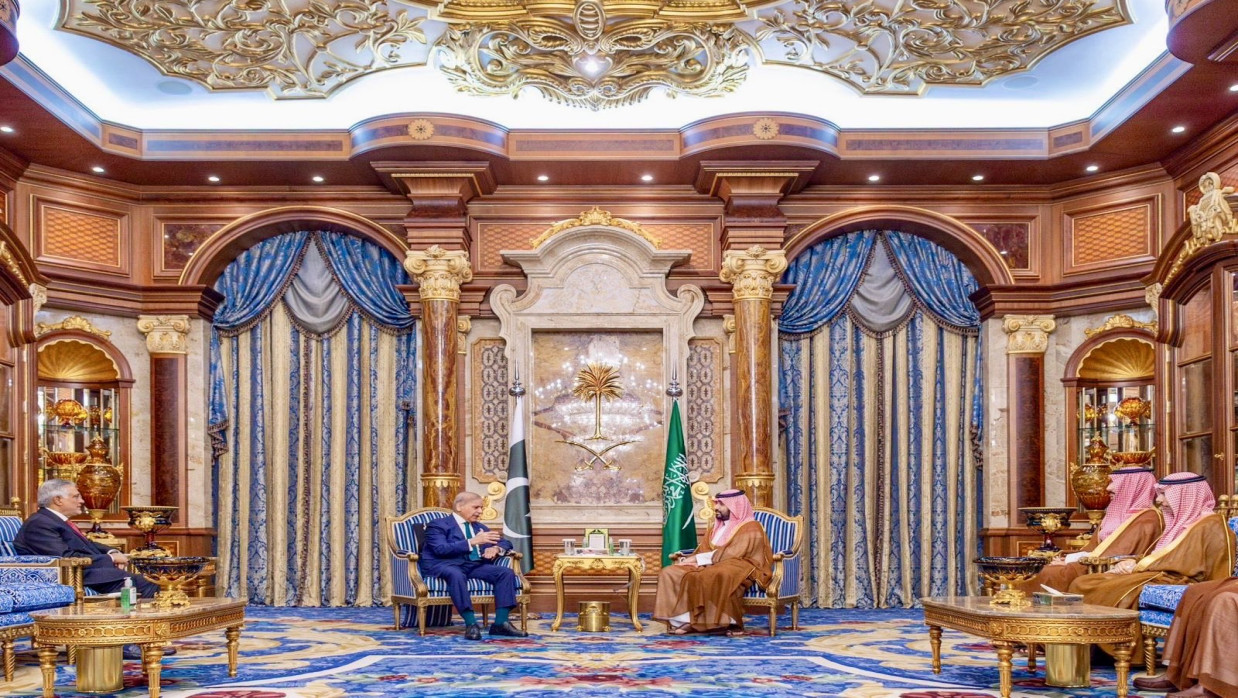
The Strategic Mutual Defense Agreement (SMDA) between Pakistan and Saudi Arabia, signed in September 2025, is indeed a security realignment. However, in this case, the economic dimension is more important. There has long been mutual dependence between Pakistan and the Gulf states, including Saudi Arabia, the United Arab Emirates (UAE), and Qatar, in the areas of labor, loans, and religion. However, this limited cooperation can extend to a broad spectrum and potentially transform Pakistan into a productive powerhouse.
The $6 trillion in mineral wealth in Pakistan, coupled with potential capacity and Gulf capital needs, could enable execution. The Gulf is the capital provider, and Pakistan is the one that needs to become productive. Pakistan is a large South Asian partner with a coastline, a labor force, and mineral deposits. The success of this would turn a relationship built on labor and loans into a genuine two-way partnership.
The dependence everyone knows
Over five million Pakistanis are posted and working in the Gulf, with the highest number (2.64 million) residing and working in Saudi Arabia and 2.2 million in the UAE. Foreign remittances worth $41.6 billion were received in FY2025–2026, and these foreign exchange earnings are lifelines of the faltering economy, which is always dependent on the International Monetary Fund (IMF) program. Saudi Arabia and the UAE have also rolled over oil payments and deposited cash with Pakistan's State Bank to help Islamabad meet external financing needs.
This is an interdependent relationship and is one-way. The Gulf needs Pakistan's labour force, and it receives remittances in return. This is a traditional pattern that has sustained Pakistan's economy but is not sustainable.
Why the Gulf needs more than oil
Saudi Vision 2030, UAE Centennial 2071, and the Qatar National Vision 2030 all want to move away from hydrocarbons and other nonrenewable energy sources. They are all ambitious about building a futuristic and self-sustaining infrastructure, and their agendas are prominent. So, their needs are material: a new food security in countries where there is not much land for cultivation, skilled workers and a workforce for giga-projects, digital talent, rare earth minerals, and, last but not least, the most important trade routes that are not geopolitically tied to a single chokepoint.
Pakistan could be asked to provide some of each asset, from a geopolitical point of view.
The country has diverse farmlands, with 9.1 million hectares of agricultural land and 22.4 million hectares of livestock land; and its young people have skills in the technology sector. In the fiscal year 2025–2026, it exported $4.6 billion. Islamabad provides investment opportunities in copper, gold, and lithium deposits for future-generation projects. Geographically located on the Arabian Sea and having a defense oversight capability, coupled with its land-based connections to Central Asia and China, Pakistan has the potential to be a long-term economic partner of the Gulf states.
The case that tests everything
Two projects are a testament to the fact that the spectrum of cooperation can also extend beyond. Under a 50-year concession agreement with AD Ports Group, a UAE-based company is operating to transform the East terminals of Karachi Port. Hence, due to the pivotal geostrategic location of Karachi Port, it will be a potential trade hub for South Asia, the Arab world, and Africa. Saudi Arabia’s Manara Minerals has expressed interest in Pakistan’s Reko Diq in Balochistan, with Barrick’s $5.5 billion in the first phase.
Each project also ties a strategic need of the Gulf to an asset in Pakistan, and each is also impacted by the institutional issues common to the country, such as security in Balochistan, policy changes, and slow approval processes. Most important of all, the projects demonstrate the possibilities and challenges of regional cooperation. They offer a rough but telling glimpse into the cooperation between the Gulf States and Pakistan that may unfold and where the significant challenges lie.
Why previous promises fell short
The institutional grievances in Pakistan that have persisted in the country have caught the policy gaze. Investors faced challenges in the power sector caused by circular indebtedness, tax issues, delays in project approvals under the 18th Amendment of the Constitution -provincial autonomy, and, of course, security concerns. Predictability is something all investors require when it comes to investing, and Pakistan has not always been able to offer that.
In response to these concerns, the civilian and military leadership of Pakistan set up the Special Investment Facilitation Council (SIFC) as a single window system for strategic investment coordination and regulation. The SIFC will accelerate progress, as it is a legitimate body and was passed by parliament in 2023. Gulf investors are guaranteed protection and a change of government will not affect them, in contrast to personal assurances which are backed by the courts.
The regional contest
There is a wider contest for corridors in the 21st century. At the 2023 G20 summit, India proposed the India-Middle East-Europe Economic Corridor (IMEEC), and China’s presence through CPEC, Gwadar, and Central Asian routes all compete to connect Gulf capitals with Asian markets. However, Pakistan sits at the center of this contest but is often absent from the planning.
For Asia, the question is whether the trade corridors will run through Pakistan, around it, or despite it. The answer to this question heavily relies on Islamabad's commitment to provide reliable infrastructure and robust facilitation.
The wider point
Pakistan is not a bystander in the transformation of the Gulf, and is not now an essential player. It has assets the Gulf wants but it's yet to prove itself in reliably delivering them.
If it closes the policy gaps in governance and the outdated bureaucratic model, it would move from supplying a labour force and receiving deposits to becoming an enduring economic partner linking Gulf capital to Asian growth. If it does not, the security umbrella will extend to other Gulf nations, and Islamabad's role would be to protect the economic corridors of other nations and remain the strongest part of a relationship that would never become economic.


0 Comments
LEAVE A COMMENT
Your email address will not be published