

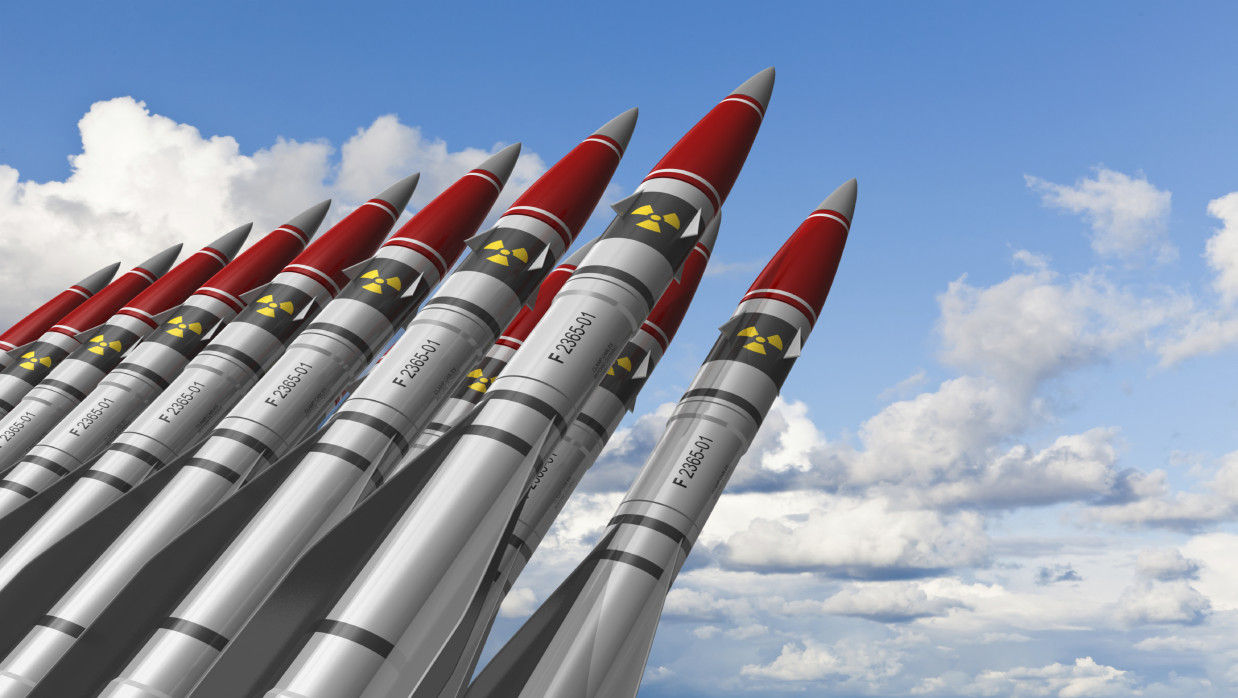
The political advocacy in Washington about resumption of the nuclear testing is more than technical necessity of the United States. Rather, it is a political argument that foregrounds US’ recognition of the structural transformations that feature increasing deterrence dilemmas, strategic distrust and uncertainty regarding nuclear guarantees that too among the US allies, more than the rivaling states. The recently released US’ National Security Strategy also signals the US distrust in the traditional allies and vice versa , to name these allies is Europe which takes it as Trump administration’s departure from the American unconditional support in return for which Europe had relied on US’ permanent domination. Can the United States afford to let Europe slip from its influence? Pentagon also appears to be critical of Trump’s ideological antagonism of Europe as featured in the administration’s policies. The ‘overmatch brief’ prepared by Pentagon for the White House assesses US’ incapacity to win a long war with a major power, China cited as the most probable in the document; and the only way to counter the Chinese defence superiority again is outsourcing US’ potential war with China with the aggregate strategic and conventional capabilities of Europe and the US. This means that the US is in need of another reassurance strategy like it has for Asia Pacific wherein Trump redirected US’ focus on strengthening old allies including Philippines, but this time it has to be Europe.
Current trends convey that the great and medium power have been over-emphasizing the nuclear signaling in day-to-day statecraft. So, what is this regular feature of nuclear signaling (of resuming nuclear testing) aimed at? The answer is both - friends and foes alike. Contemporarily, the dual challenge for the US is to deter its rivals and the greater than before tendencies of decoupling of the allies. What motivated the US call for resumption of the nuclear testing might not be perception of any confirmed technical failure of its arsenal and the subcritical experimentation, laboratory testing and advanced simulation never actually stopped. The argument for nuclear testing was under discussion in Trump’s first term also. The congress archives mention press accounts of May 2020, that state that nuclear testing could help US in negotiating any deal with nuclear great powers, however, could be used as a pretext by others to actually restart nuclear testing. Notably, it also states that even the states without nuclear weapons may initiate their nuclear weapons programs and interestingly these states include mostly US’ allies like Japan, South Korea, Australia, in Europe and even KSA. Also, the argument of nuclear testing by US is also aimed at building the ground for a trilateral future arms control regime with Russia as well as China, since the deadlock over New Start now seems to be deliberate to incorporate China. Advanced missile systems are of equally concern to the US as are the nuclear arsenal. Therefore, it is more likely that US’ advocacy for nuclear tests is aimed at serving dual purpose: First, to compel the rivals to enter into arms control on the US’ terms; second, to deny the US’ allies from pursuing their indigenous nuclear weapons programs.
Quiet diplomacy has already begun in Europe reassessing US’ reliability to provide extended deterrence to its allies and that too away from US’ scrutiny. The Trump administration National Security Strategy clearly outlines the intimidation for Europe to “stand on its own feet” which is an unexpected setback to Europe’s immediate defensive necessity. To bear the burden of US’ precipitous retrenchment from European security and specifically amid the European War, European allies are seeking a joint-European security architecture, advocated particularly by France, Germany, and others. It has started within the conventional domain of weapons, for instance with the European Long-Range Strike Approach, and may be predicted to enhance into some sort of Europe’s own nuclear umbrella. Similar developments can be witnessed in the Pacific where Japan and South Korea are exploring options for layered security with the European states as well as China amid increasing North Korean and Chinese threat. With China, despite offensive signaling over Taiwan, they are simultaneously negotiating some sort of East Asian security framework. South Korea’s nuclear powered submarine deal with the US might be a balancing strategy for the US to deter North Korea, but for South Korea, it is a step towards exploration of latent nuclear options. Even Trump’s hasty Ukraine peace deal is a European nightmare since it exclusively prioritizes US’ political standing in any multilateral emerging order, compromising the European security to Putin’s edge. Though it is understood that US wants to get over the long Ukraine war and concentrate on its competition with china in the Pacific and now Latin America; however, Europe takes it as hasty withdrawal of the US from its commitments to European security since if US ends the Ukraine War this way, Putin would definitely refocus on managing the European threat that recurred during the Ukraine War.
The fragmented deterrence and reassessment of the nuclear hedging among US allies reveal the structural realization of an emerging multipolar order wherein the allies are seeking recalibrated security architectures through regional autonomy by reciprocal disengagement from US’ alliance-based stability. The demonstrable cumulative effects could be analogous nuclear postures and increased signaling to somehow restore deterrence.

0 Comments
LEAVE A COMMENT
Your email address will not be published