


When it was released that the Bhola region might be the host to between 2.0 and 5.1 trillion cubic feet (TCF) of natural gas—confirmed by a collaborative exploration carried out by Russian oil and energy giant Gazprom and Bangladesh’s own BAPEX—it caused excitement all over policy circles and the wider economic fraternity. The euphoria was dampened, however, by Bangladesh’s Interim Government Energy Adviser, Muhammad Fouzul Kabir Khan, who clarified that while earlier reports suggested reserves of 5 TCF, the established reserves are 2 TCF. Even with this, at prevailing import prices of LNG, this find is valued over Tk 6.5 lakh crore—a figure so enormous that even the cynic and world-weary energy economists can’t help but sit up and take notice. But passion unguided is a vessel without direction. Suppose the Bhola gas field is to be a pillar of Bangladesh’s energy security, industrial potential, and macroeconomic stability. In that case, it cannot be handled as a windfall to be hasty with or a stroke of fortune to be neglected. Instead, it must be recognized and addressed as a strategic national asset—preserved with caution, managed in the light of day, and reinvested to return on a steady basis to the nation. This article outlines what Bhola has to offer, the strategic pathways to harness it effectively, and the economic turnaround that it can deliver—if we have the vision and self-restraint to make it happen.
The Opportunity in Numbers
The Bhola gas discovery occurred when Bangladesh was facing its worst-ever energy crisis. Petro Bangla estimates put indigenous production at about 2,700 million cubic feet per day (mmcfd), considerably less than the nation’s consumption of more than 4,100 mmcfd. The deficit of about 1,400 mmcfd is being mainly met through imported liquefied natural gas (LNG), regasified at floating storage and regasification units (FSRUs) in Maheshkhali. But at an enormous price: they are three or four times higher in cost than locally produced gas, with prices subject to shock from chaos in global markets, such as those generated by the war in Ukraine.
Visual: Bhola Gas Field in Context – Supply, Reserves, and Potential Output
In this context, Bhola reserves are not just a geological discovery but an economic strategic discovery that can change the country’s energy landscape fundamentally. Geological explorations and exploratory drilling placed 2.047 trillion cubic feet (TCF) of gas in the Bhola tract, of which approximately 1.432 TCF is technologically and infrastructurally short-term recoverable. This amount alone would fulfill Bangladesh’s whole current gas need for more than two years without imports—a benefit unrivaled by any other local discovery in recent history.
Besides that, which has previously been proven, ongoing 3D seismic surveys carried out by BAPEX and Gazprom show resources in the field to have potential as high as 5.109 TCF. If these reserves are found to be technically recoverable and proven, they would add Bangladesh’s recoverable reserves by nearly half, advancing energy self-sufficiency five to seven years beyond the target with current consumption levels. Such a cushion would provide policymakers and business leaders with an unparalleled window to stabilize supply, moderate costs, and look toward phased steps towards cleaner energy sources.
“The discovery of gas in Bhola is a rare and transformative opportunity to unlock industrial competitiveness on a scale Bangladesh has never experienced. With the right investment climate and efficient infrastructure, we can translate energy security into a decisive advantage in the global marketplace.” Mohammed Shajahan, Member, Board of Trustees & Founder Life Member, NSU Trust; Former Chairman, Bangladesh Textile Mills Association (BTMA).
Mr. Shajahan also emphasizes that the government should seriously consider establishing a standalone facility at Bhola to convert natural gas into liquefied natural gas (LNG). Bangladesh has an LNG terminal at Chattogram port at present, where the imported LNG is regasified and fed into the national grid. By reversing this process, gas locally produced in Bhola could be liquefied at the site of production and transported by LNG carriers to the Chattogram terminal, where the infrastructure to feed it directly into the national grid already exists.
Such LNG carrier ships may be purchased outright or leased from Middle Eastern experienced operators, with cost and operations time frame flexibility. In case there is a further requirement for supply, Bhola gas output can be enhanced through the drilling of more wells, leveraging the vast proven reserves of the area. This strategy, as Mr. Shajahan explains, will enable Bangladesh to transition gradually away from expensive LNG imports, conserve valuable foreign currency reserves, and cover the country’s short-term gas supply deficit with urgency and efficiency.
The economic advantages are also robust. Bangladesh incurs about $3–4 billion per annum in the import of most of its LNG (Petrobangla Annual Report 2023). If Bhola could replace even half of such imports, the country would be saving over Tk 35,000 crore annually, improving foreign exchange reserves and balance of payments. Such an economic respite can then be allocated to strategic sectors such as renewable energy infrastructure, grid modernization, or upgradation of industry.
Early production estimates indicate that with adequate infrastructure—pipelines, gas plants, and compressors—Bhola would be capable of sustaining 920 mmcfd of production. It would substitute two-thirds of the current LNG deficit, effectively ending Bangladesh’s exposure to world price fluctuations and supply chain interruptions.
Industrial and grid implications would be transformative. Safe and affordable domestic gas would enable key industrial hubs at Narayanganj, Gazipur, and Chattogram to operate continuously, which would facilitate export-oriented industries such as ready-made garments (RMG), ceramics, and steel. The Ashuganj and Ghorashal fertilizer plants would be operated at full capacity, reducing costly imports and enhancing food security through better farm production. Moreover, in the context of providing bulk volumes of the nation’s grid, Bhola power generation can rule out load-shedding, increase investor confidence, and support overall economic competitiveness.
Strategically, Bhola gas is not only an immediate relief—it is a time-purchasing tool. With its five-to-seven-year buffer, Bangladesh has the time to judiciously diversify the energy basket into renewables, cross-border electricity trade, and energy efficiency schemes, and not the crisis-ridden high-cost LNG purchases that stretched the economy in recent years. Simply put, Bhola is not only a resource; it is a timely policy window to design a sustainable energy future.
Three Pillars of Strategic Development
Project Financing: Getting the Money Right
It will cost a substantial initial outlay to develop the Bhola gas field. Industry estimates it will need $2–3 billion to bring the project from the exploration stage right through to commercial-grade production, industry says. These will involve confirmatory drilling to establish reserve volumes, well pad and production facility construction, marketable quality gas processing facilities, and installing long-distance pipelines for Bhola production into the national power grid. These cannot be piecemeal expenditures; they must have a structured, Mult funding source scheme for timely completion as well as economic viability.
A proper strategy is utilizing Public-Private Partnerships (PPP).
By allowing experienced foreign players with proven technical expertise to develop massive gas fields, Bangladesh can tap into superior drilling technology, operating efficiencies, and risk-sharing terms. Above all else, though, the PPP model must ensure that Petro Bangla maintains strategic control of the resource, safeguarding national interest while taking advantage of private sector capability. This would comprise contract structures to facilitate technology transfer, train locals, and open exit mechanisms to avert foreign partner dependence.
The second alternative is the issuance of Sovereign Energy Bonds to the global investment community. These would particularly be promoted to transition fuel mandate funds—those willing to invest in natural gas as a cleaner transition fuel than oil and coal as the world transitions towards renewables. With competitive yields, underpinned by cash flows from gas revenues and topped up with an unambiguously stated “use of proceeds” strategy, these bonds should be able to raise funds from institutional investors, diaspora communities, and climate-conscious sovereign funds.
Third, Bangladesh has access to concessional funding on multilateral terms from its development partners such as the Asian Development Bank (ADB), Japan International Cooperation Agency (JICA), and the World Bank. All the above institutions have dedicated windows for projects that seek energy security, climate resilience, and economic development. With funding comes rigorous due diligence systems and governance assistance, which can lead to greater transparency and investor faith in the project.
Finally, there should be a Revenue Reinvestment Mandate for the greater long-term good. Some of Bhola’s gas production income and royalties should be reserved for infrastructural development, for renewable energy projects, and energy efficiency measures. Not only does it turn short-term resource acquisition into long-term national assets, but it is also consistent with Bangladesh’s commitments under the Sustainable Development Goals (SDGs) and its Nationally Determined Contributions (NDCs) regarding climate change mitigation.
By blurring these funding sources—blending foreign investment, sovereign raising of capital, concessional lending, and national reinvestment of revenue—Bangladesh can ensure Bhola is funded in a way that maximizes national influence, minimizes fiscal risk, and creates long-term economic returns.
Stakeholder Roles: Unambiguous Mandates, No Duplication
The success of the Bhola gas field project will not only hinge on technical feasibility and investment expense, but also the role definition among its many stakeholders. Where mandates overlap or where roles are poorly defined, inefficiency, delay, and even conflict can undermine national interest. Conversely, where roles are defined and complementary, the result is synergy—where each player performs its role toward a shared vision without getting in another’s way.
At the apex, the Government of Bangladesh must offer strategic guidance. This comprises formulating coherent energy policy, granting licenses, signing off on significant agreements, and ensuring revenues are openly collected and disbursed. Its role is not the micromanagement of operations but the establishment of policy certainty and regulatory stability that allow all other stakeholders to move forward with confidence.
BAPEX, as the national exploration and production company, carries the dual responsibility of operational leadership and partnership building. It must lead field development activities, while at the same time engaging in strategic partnerships with foreign companies to gain access to cutting-edge technologies, enhance drilling capacity, and develop indigenous capabilities through knowledge transfer initiatives.
Gazprom brings in specialist technical expertise, particularly in the development of high-pressure, high-yield gas fields. Its role is to introduce cutting-edge drilling technology, high safety and environmental standards, and help BAPEX attain maximum recovery rates from the Bhola reserves.
Petrobangla plays the role of integrator—responsible for facilitating Bhola’s gas to flow into the national transmission grid without any hindrances. This includes planning and overseeing the construction of new pipelines, maintaining grid stability, and coordinating with local distribution companies to ensure a guarantee of uninterrupted supply.
The private sector must be the economic driver—signing industrial off-take agreements that ensure a stable market for Bhola’s production and investing in downstream industries such as fertilizer, petrochemicals, and power generation. These industries can multiply the value of the gas beyond its raw energy content, magnifying its impact on GDP and employment.
The surrounding communities are not onlookers; they are valuable stakeholders whose buy-in will be critical to the project’s long-term success. They need to benefit directly from job creation, training initiatives, and improved infrastructure—roads, schools, and health facilities—stemming from the activities of the project.
Finally, the media and civil society are the project’s conscience. Through their watchdog role, they can make sure that environmental protection is followed, utilization of revenues is transparent, and commitments to local communities are honored. Clear, non-conflicting mandates for each of these stakeholders will prevent duplication of effort, reduce bureaucratic bottlenecks, and keep everyone’s eyes fixed to the target: bringing Bhola’s gas reserves online as a viable source of national energy.
Stakeholder Roles: Aligning Responsibilities for Success
The successful development of the Bhola gas field will demand a collaborative effort from different stakeholders with their respective responsibilities and expertise. The Government of Bangladesh takes the central role in giving the project its strategic direction. These encompass national energy policymaking, granting exploration and production licenses, management of revenues, and guaranteeing transparency in all contractual and operational matters. An efficient and predictable regulatory policy of the government will be vital in securing investment, safeguarding public interests, and maintaining the confidence of local and foreign partners.
The Bangladesh Petroleum Exploration and Production Company Limited (BAPEX) will serve as the technical arm for field development, capitalizing on its local experience and operating capability. As the state-owned exploration company, BAPEX will also be charged with forming partnerships with reputable international companies to bring in advanced technologies, best operating practices, and capacity-building programs for the local workforce.
Gazprom, with extensive global experience in extracting high-pressure, high-yield gas fields, is poised to introduce the advanced technical expertise and high-technology drilling capabilities that will be required to maximize Bhola’s production efficiently and safely. They will be instrumental in confirmatory drilling, well completion, and introducing enhanced recovery techniques that extend the life of the reserves.
“Energy security is the bedrock of industrial growth. Without reliable and affordable gas, our factories slow, our exports shrink, and our competitive edge erodes. Bhola offers a rare chance to reverse that trend. And Bhola’s gas won’t last forever—20 to 30 years at most. We must invest in renewables now, or risk ending up at the mercy of others.” — Abdullah Talha, Managing, Industrialist, MD, Noman Group and MD and CEO of Talha Group the Export Manufacturing Sector
Petro Bangla, as the holding state-owned energy company, will be responsible for integrating Bhola’s production into the national gas transmission system. This includes ensuring that there is a necessary pipeline infrastructure in place and operational, to enable the continuous supply of gas from Bhola to the major consumption centers of the country.
The private sector will play a complementary and essential role. Industrial stakeholders will need to commit to long-term off-take agreements providing stable demand for Bhola’s production, as well as investing in value-added industries, e.g., fertilizer production, petrochemicals, or power generation—that can maximize the economic contribution of the gas both locally and at the national level.
For the people of Bhola, the project also represents an opportunity to benefit directly in the form of employment, training, and the development of community facilities. Improved road conditions, better health facilities, and better education opportunities can transform the socio-economic landscape of the area if these benefits are designed into projects right at the outset.
Finally, civil society and the media will be extremely valuable watchdogs. Their role will be to monitor the project’s adherence to accountability, environmental stewardship, and equitable benefit-sharing. Through independent oversight and public information sharing, they can help ensure that the Bhola gas development is undertaken in a manner that serves national as well as community interests.
“Linking Bhola’s gas reserves to industrial expansion in Bhola, Sandwip, and Chattogram could be revolutionary—fueling factories, boosting exports, and creating jobs while giving Bangladesh a decisive competitive edge.”— Abul Quasem Haider, Former Vice President, BGMEA and BTMA.
When all these stakeholders act together led by coherent mandates, respect for each other, and a shared vision for sustainable development, the Bhola gas field will be a role model in resource management that brings benefits to every stratum of society.
Environmental & Social Safeguards
Bhola’s mangroves, wetlands, and coastline are more than a pretty landscape—these are vital ecosystems that provide fisheries, protect shorelines from erosion, and offer breeding grounds for populations of migratory birds. They are also vastly vulnerable to industrialization. Thus, any development strategy for the Bhola gas field must begin with overall Environmental Impact Assessments (EIAs) and go beyond complacency, adopting international best practices of the International Finance Corporation (IFC) and the Equator Principles. EIAs must be conducted transparently with the affected people and published so that environmental concerns are addressed before a single well is drilled. Technical priority number one is minimizing flaring.
“The private sector stands ready to invest in value-added industries around Bhola—from fertilizer plants to petrochemicals and power generation—but only if the project is guided by consistent policy and transparent governance.”— Industrialist from the Energy-Intensive Manufacturing Sector
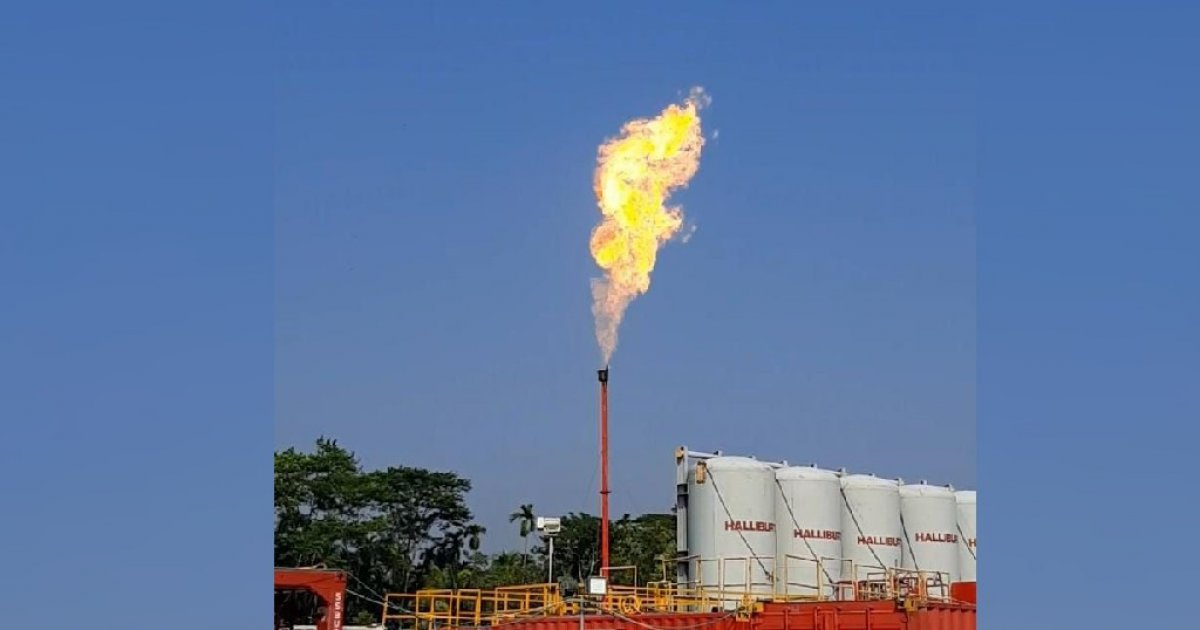
Gas flaring or burning excess gas in the production of oil and gas, is an energy resource waste and emission of greenhouse gases and toxic particulates. Instead of investment in traditional upstream facilities, however, Bhola’s policy for development has to be investment in gas capture and utilization technology to redirect associated gas into the national grid, generate it as compressed natural gas (CNG), or fuel nearby power plants. By harvesting rather than burning, Bangladesh can reduce emissions and increase the amount of output available from the field as well.
Conservation of biodiversity should have priority in planning the project as well. Bhola’s waters have productive fisheries that provide livelihoods for thousands of individuals and seasonal populations of migratory birds. Industrial interference, contamination, and boat congestion in the sea could endanger such populations and individuals who benefit from them. To avoid this, exclusion areas can be established where drilling, dumping, and heavy boat use are limited. These areas need to be sustained through continuous monitoring of the environment for alteration in fish stocks, aquatic conditions, or habitat in real time. Water management is no less critical. Gas production and development come with dangers of contamination of coastal water and groundwater via produced water, drilling fluids, or spills.
To ensure protection against such hazards, the developers shall be obliged to implement state-of-the-art spill prevention under ISO 14001 environmental management standards, closed-loop drilling mud circulation, as well as waste treatment facilities. As a result of Bhola’s coastal position, emergency response systems in place for potential cyclones, floods, or storm surges would also need to be part of the business plan.
Finally, the success of the Bhola project will also depend on not only environmental safeguards but also social license to operate. This includes Community Benefit Agreements (CBAs), which guarantee at least a certain percentage of the project revenues for local health care, education, and infrastructure. By having a direct impact on the hospitals, schools, roads, and water treatment facilities of host communities, the project will be able to create local goodwill, reduce social tensions, and promote a sense of common ownership of the resource. These benefits need to be legitimized in legally binding agreements with open reporting procedures so that the communities may track how the resources are being exploited.
Most importantly, social responsibility and environmental stewardship must be built into Bhola’s development from the very beginning—not an afterthought. By minimizing ecological disruption, maintaining biodiversity, conserving water resources, and providing material benefits to residents, Bangladesh can demonstrate that resource development and sustainable development can coexist harmoniously.
The Macro Impact: Why Bhola Matters Beyond Energy
Foreign Exchange Savings: Importing LNG in exchange for Bhola gas on prevailing rates would save $3–4 billion annually—money to be spent on infrastructure and social services.
Industrial Competitiveness: Less secure indigenous gas will drive export-oriented industries like RMG, ceramics, and steel, reducing costs of production and increasing global competitiveness.
Regional Development: Laying pipelines from Bhola to Barisal, Khulna, and Dhaka will de-concentrate industrial growth, reducing economic dependence on Dhaka and Chattogram.
Energy Resilience: Domestic gas caps exposure to world LNG price volatility, shielding the economy from shocks such as the Ukraine crisis.
Risk Mitigation
Overestimation of reserves, Conservative production planning until reserves are established
Governance lapses: Open bidding, independent audits, real-time public reporting
Environmental degradation: Enforce EIAs, implement low-impact drilling technology.
Overreliance on gas. Invest part of the revenues in renewables and energy diversification.
The Geography of Opportunity
Bhola’s geography offers a natural blessing of propinquity to the large riverine trade routes and pipeline access of major industrial corridors. Barisal and Dhaka access would allow quick integration into the national energy grid. LNG conversion terminals, on the contrary, can offer fungible access to non-pipeline-served markets.
A Policy Imperative: Gas as a Bridge, not a Crutch
Bhola’s gas is a bridging blessing. It has to be utilized as a bridging fuel—saving finances, improving supply security, and giving Bangladesh room to invest in solar, wind, and hydro power. A Sovereign Energy Transition Fund, funded by a fixed share of Bhola’s revenues from gas, must be established to support renewable energy initiatives, energy efficiency initiatives, and storage technology. When the gas is finally exhausted, Bangladesh must be left with a low-carbon, secure energy system—not a mad dash to the next fossil fuel boom.
Final Thought
Bhola is a challenge and an opportunity. Wisely managed, it can be the foundation for generations of energy self-sufficient, industry-equipped, economically secure Bangladesh. Frittered away, it can be another tale of missed opportunity.
The choice is ours—and time is short.

0 Comments
LEAVE A COMMENT
Your email address will not be published