


“Efficiency is intelligent laziness.” — David Dunham.
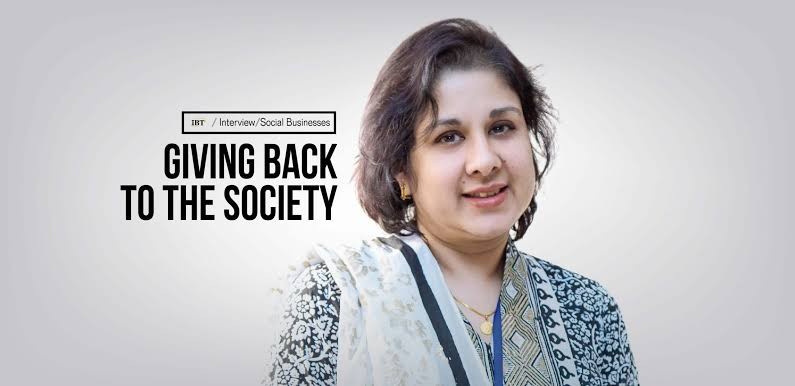
Ms. Lamiya Morshed has been the Principal Coordinator for SDG Affairs in the rank of Senior Secretary to the Government of Bangladesh since August 2024—a historical first that indicates the coming together of bottom-up innovation and high-level statecraft. Renowned for her intelligence, diplomatic savvy, and relentless work ethic, Morshed’s elevation to this pivotal post signifies not merely a personal advancement but a fundamental institutional shift to outcome-based, value-driven governance.
Her journey from leading global nonprofit activities to leading the nation’s sustainable development agenda is the epitome of transformational leadership: the ability to break out of organizational silos, see and motivate shared vision, and translate remote ideals into concrete, operational plans. In an age beset by bureaucracy and complacency, she deploys precision of purpose, adaptability of strategy, and measurable efficiency to arguably the most formidable mandate in public administration, the delivery of the United Nations’ 17 Sustainable Development Goals (SDGs). She prefers to remain behind the scenes, choosing humility over publicity. Reluctant to seek the spotlight, she finds purpose in working quietly yet powerfully in the background—where her impact speaks louder than her presence.
With her extensive international experience and sharp social sensitivity, Morshed is remapping Bangladesh’s SDG strategy. She doesn’t only preach change; she practices change. Her work encapsulates what Peter Drucker’s Efficiency-Effectiveness Matrix identifies as leadership in the “high efficiency–high effectiveness” quadrant: doing the right things and doing them well. Through improving inter-ministerial processes, doing away with redundancy within the system, or synchronizing national indicators with global standards, she makes sustainable development in Bangladesh not wishful—a far cry from it—but actionable and accountable.
This article aims to explore how Lamiya Morshed embodies a remarkable model of effective and productive leadership—one that balances strategic vision with responsible implementation, global diplomacy with local imagination, and ethical integrity with institutional productivity. It’s homage to a leader whose authority lies not in visibility but impact, not in positions but in the systems, she builds and the futures she helps make.
A Legacy of Visionary Implementation: Lamiya Morshed’s Leadership at the Yunus Centre and Grameen Healthcare Trust
“Productivity is never an accident. It is always the result of a commitment to excellence, intelligent planning, and focused effort. — Paul J. Meyer
For more than two decades, Lamiya Morshed served as the Executive Director of the Yunus Centre and the Grameen Healthcare Trust and the Grameen Family, her time marked by purpose-driven innovation, operational efficiency, and international reach. Under her direction, these entities transcended the constraints of traditional development interventions and emerged as giants of social transformation, facilitating strategic interventions in more than 100 countries. With rare insight, Morshed conceptualized a matrix of global initiatives, formed multi-sectoral alliances, and initiated high-level summits that brought together Nobel laureates, world leaders, policymakers, social entrepreneurs, and corporate innovators.
Yunus Centre, originally designed as the world’s think tank for social business and the focal advocacy space for Professor Muhammad Yunus, flourished under her guidance. It was made a symbol of innovation, ethics, and social justice, and organizations such as the United Nations, the World Economic Forum, and the Clinton Global Initiative sat up and took notice. From organizing the Social Business Day, an annual event that gathered changemakers from across the world, to organizing collaborative efforts with a few of the world’s most renowned universities, such as MIT, INSEAD, and HEC Paris, Morshed was instrumental in the global operationalization of Professor Yunus’s vision for a poverty-free world.
Her management style directly resonated with the principles of Total Quality Management (TQM) and Lean Management—organizational ideologies that emphasize constant improvement, operating efficiency, and stakeholder satisfaction. Under such paradigms, Morshed justified complex programmatic schemes, streamlined redundant processes, and optimized human and financial resources to achieve the best possible impact of every project while reducing waste. She built agile teams that could operate at speed to tackle global crises from public health crises to economic shocks to climate-related disturbances—all underpinned by empathy, equity, and accountability.
Besides, her visionary leadership of the Grameen Healthcare Trust transformed the provision of healthcare to marginalized communities. She promoted social business models in healthcare, where the services were not only affordable but sustainable, such that even the most marginalized groups could afford basic care. The initiatives positioned the Trust as a pioneering model in inclusive healthcare innovation, where replicable models earned the attention of international health institutions and social impact investors.
In essence, Lamiya Morshed translated vision into speed. She developed a high-impact working culture where all efforts, whether of global aspiration or local scale, were thoughtfully aligned to Dr. Yunus’s ethical model of non-extractive capitalism and business that comes first. Her legacy at the Yunus Centre is not simply one of administrative success, but of profound institutional transformation, where ideas had infrastructure, and dreams had delivery systems.
Strategic Architect and Global Diplomat: The Backbone of Yunus’s Global Mission and Coordination
“The best executive is the one who has enough sense to select good men to do what he wants them to do, and self-restraint enough to keep from interfering with them while they do it.” — Theodore Roosevelt.
Frequently credited by coworkers and international commentators in equal proportion as “the backbone of Dr. Muhammad Yunus’s international coordination,” Lamiya Morshed has carved out a unique and irreplaceable trajectory as his architect for global presence. Her brilliance is not in the public spotlight but in quiet diplomacy, careful planning, and steadfast reliability. Operating primarily behind the scenes, she has coordinated the global travels of one of the globe’s most sought-after public intellectuals and Nobel Peace Laureates with the tact of a master diplomat and the strategic foresight of an executive leader.
Whether coordinating intimate events with President Barack Obama, facilitating meetings with President Bill Clinton and Secretary Hillary Clinton, or coordinating international forums with the United Nations, European Commission, World Economic Forum, and World Bank, Morshed ensures that every event—no matter the complexity—is delivered flawlessly. From high-profile keynotes to high-stakes policy discussions and international delegations, her operational leadership ensures continuity, relevance, and precision. Her impact transcends continents, and her presence quietly infiltrates diplomatic circles, development institutions, scholarly communities, and social innovation spaces around the globe.
This unprecedented degree of administrative excellence is better understood within the framework of the Theory of Constraints (TOC)—a management ethic that identifies and removes bottlenecks to enhance system throughput. Translated to the setting of Dr. Yunus’s acutely busy global itinerary and multifaceted advocacy platform, Morshed is the ultimate constraint remover. She anticipates roadblocks before they materialize—whether logistical hiccups, protocol mismatches, or geopolitical subtleties—and removes them with seamless ease.
Her potential as a strategist exceeds mere coordinating of the itinerary. She is the first person to whom embassies, multilateral organizations, think tanks, media, and universities tend to reach out to organize and negotiate with Dr. Yunus. She functions as an institutional memory, a strategic adviser, and a reputation manager all rolled into one. Her proficiency in getting Dr. Yunus’s commitments from around the globe, time zones, cultures, and politics coordinated is simply extraordinary.
Above all, Morshed is a guardian of Yunus’s principles as well, ensuring each visit, collaboration, or venture is consistent with his overarching mission: creating a three-zero world—zero poverty, zero joblessness, and zero net emissions. It is not merely logistics work—it is protecting the ideological integrity of one of the globe’s premier humanitarians, even in the most transactional and politicized environments.
Lamiya Morshed is more than a mere administrator; she is the chief strategist, diplomatic mediator, and moral judge of a global mission. Her ability to operate under stress with composure, her grasp of geopolitical nuance, and her unbreakable commitment to mission-driven performance render her an irresistible force in the global spread of social business. She is the unseen hand moving visible impact, the quiet power behind public good.
Trustee of Grameen University: The Protector of the Next Generation
“Education is the most powerful weapon which you can use to change the world.” — Nelson Mandela.
Being a prominent Trustee of the Board of Grameen University, Lamiya Morshed is the mastermind of one of the most ambitious and visionary education endeavors not only in South Asia but globally. Purposed as an institution to upend traditional models of higher education, Grameen University strives to be an innovative leader in social business education with a commitment to excellent scholarship paired with a strong commitment to societal change. Morshed’s board position is central, rooted in her decades-long experience as a leader in developmental entrepreneurship, ethical capitalism, inclusive healthcare, and human-centric innovation.
With a prestigious academic training at The London School of Economics and Political Science (LSE) – one of the world’s top schools in economics, political science, and development studies – Morshed finds it easy to bridge theoretical excellence with practical application. Her LSE training gives her an educated understanding of global systems, and her admissions-driven operational exposure translates easily into a vision that can be easily converted into an implementable strategy. She not only brings the boardroom expertise but also an international reservoir of credibility, institutional knowledge, and policy acumen.
In keeping with Human Capital Theory, wherein an investment in education is seen to yield exponential productivity and economic growth, Morshed works towards establishing Grameen University as a “living laboratory for social innovation.” An advocate of an education model that not only dispenses information but also provides students—particularly from marginalized groups—the tools, mindsets, and networks to be agents of change themselves. The university’s emphasis on social business, ethical entrepreneurship, sustainable development, and environmental sustainability is an organic extension of the initiatives she has promoted over two decades as a champion at the Yunus Centre.
Morshed’s impact extends far beyond boardroom deliberations and governance checklists. She serves in a strategic advisory function, forging the university’s leadership and global reputation. Her role in the recruitment of a compelling future Vice Chancellor (VC) along the the other Trustee Board members is especially important. With her worldwide vision and sensitive judgmental abilities, she is acutely aware of the kind of attributes required in a founding Vice Chancellor: one who can articulate the university’s mission for transformation to the global community, forge good international relations, and balance academic excellence, universal access, and social responsiveness. Her involvement ensures that the leadership of the university will not just be intellectually capable, but also globally oriented, ethically grounded, and operationally competent.
Second, Morshed’s global network of world leaders, academic circles, philanthropists, and social business entrepreneurs places her in a unique position to utilize global goodwill, acquire top talent, and mobilize funding for the long-term sustainability of the university. She would like to see Grameen University as an international incubator of rising ethical leaders, who will redefine the frontiers of business, governance, and development.
Indeed, Lamiya Morshed’s involvement at Grameen University is an extension of the purpose of a lifetime—to cultivate systems of equity, excellence, and empowerment. Under her reflective leadership, the university will be ideally positioned to become a beacon of transformative learning, where knowledge meets purpose, and learning is a springboard for social good.
Born to Lead: Legacy of Diplomacy and National Service
“A great man attracts great men and knows how to hold them together.” — Johann Wolfgang von Goethe.
Lamiya Morshed’s exceptional skill in performing diplomacy, diplomatic coordination, and visionary leadership is not a happenstance—it is a legacy well established in a rich Bangladeshi diplomatic heritage. As a member of a family long situated at the crossroads of national public service and international diplomacy, Morshed inherited not only a name but a tradition of excellence, subtlety, and public service.
Her father, Ambassador Ali Kaiser Hasan Morshed, was also among the first visionaries of the Bangladesh foreign service in post-independence times. Following the liberation of Bangladesh in 1971, he was made Deputy High Commissioner to Australia and forged significant diplomatic connections between the newborn nation and the wider Asia-Pacific community. His career rose very fast as he held some of the nation’s most senior and sensitive diplomatic assignments within the country’s foreign affairs structure.
He was the Director General of Subcontinental Affairs in the Ministry of Foreign Affairs, guiding significant bilateral relations with India, Pakistan, Nepal, and Sri Lanka through some of the most developmental decades in the region. As Ambassador in Brazil and later in West Germany, he was instrumental in reinforcing Bangladesh’s diplomatic and commercial presence in Latin America and Europe. His appointment as the Permanent Representative of Bangladesh to the United Nations Office at Geneva located him at the very heart of multilateral diplomacy, from where he projected Bangladesh’s voice in international affairs.
Most visibly, possibly, Ambassador Morshed was the Bangladesh Foreign Secretary, the highest-ranking civil servant of the Ministry of Foreign Affairs. As Foreign Secretary, he led foreign policy planning and its implementation through periods of historic change in the country’s geopolitics. Even after retirement, he remained active with the country as Chairman of the Bangladesh Institute of International and Strategic Studies (BIISS), providing leadership through ideas on peace, security, and foreign policy.
This remarkable heritage has had a profound impact on Lamiya Morshed’s worldview. Raised in a household where global affairs, diplomacy, and statecraft were debated over dinner, she developed a sharp eye for international systems, power dynamics, and strategic negotiation at a very young age. Her ability to navigate complex geopolitical terrain, develop confidence across cultures, and choreograph high-level engagements is an extension of this rich inheritance, infused by her commitments to inclusivity, ethical leadership, and social justice.
Although her father established the diplomatic pioneering, Morshed has carried and broadened that legacy to new frontiers—to social business, sustainable development, healthcare, and education. Her worldwide network, including world leaders, philanthropists, multilateral institutions, and academic giants, is no birthright; it is a function of ceaseless effort, visionary pragmatism, and unwavering commitment to mission-based impact.
In every discussion she leads, every transaction she facilitates, and every global initiative she oversees, one can hear not only the echoes of her father’s legacy but also the sound of the next generation of leadership, modern, gender-free, socially conscious, and globally fluent. Lamiya Morshed today is not merely a scion of international diplomatic lineages but a tremendous shaper of global change in her own right.
Tributes to the Leadership and Irreplaceable Work Ethic of Lamiya Morshed: Voices of Praise
In diplomacy, development, and social innovation, Lamiya Morshed is not only respected but also admired. Her colleagues, collaborators, and observers across various fields and continents are inclined to talk about her with a combination of professional deference and personal appreciation. The following is a collection of ten robust quotes that demonstrate the enduring impact of her leadership, discipline, and effectiveness, with a special acknowledgment from Mr. Ghulam Suhrawardi, editor of South Asia Journal.
- “Lamiya is not only the most reliable second-in-command of Dr. Yunus—she is his compass. If she wasn’t around, many of his most far-reaching global projects would be only dreams and not realities.”
— Ghulam Suhrawardi, Publisher, South Asia Journal
- “Working with Lamiya Morshed is truly a privilege. She is instrumental in every initiative she undertakes—articulate in her communication, effective in her strategy, and remarkably efficient in execution. Her ability to multitask without compromising precision reflects a rare combination of discipline and dynamism. She is a perfectionist by nature and a leader by impact.”
— Dr. Abdul Hannan Chowdhury, Vice Chancellor, North South University & Chairman, Grameen Bank
- “Each company has that one individual who maintains the heart of the mission alive. For the Yunus Centre, it is Lamiya Morshed—unceasingly committed, boundlessly gifted, and perpetually at the cutting edge.”.
— Hans Reitz, Founder, The Grameen Creative Lab, Germany
- “She has the work ethic of a world leader and the humility of a silent warrior. I’ve never seen someone manage such complexity with such calmness and grace.”
— Shabana Azmi, Actress and Social Activist, India
- “Her diplomacy is invisible yet impactful, quiet yet far-reaching. If Bangladesh’s soft power has a face, Lamiya Morshed is it.”
— Ambassador Riaz Rahman, Ex-Foreign Secretary, Bangladesh
- “She doesn’t merely plan events, she architects results. Her thinking is a matrix of coordination, purpose, and precision.”
— Professor Erik Simanis, Cornell University, USA
- “I have worked with ministers and CEOs globally, but few approach the level of professionalism and responsiveness as Lamiya. She addresses every project, whether large or small, with the same level of urgency and attention.
— Sabine Wilke, Senior Advisor, UNDP Global Policy Network
- “She has that rare combination of vision and implementation. Lamiya is able to see the forest, the trees, and the ecosystem at one go.”
— Rokia Afzal Rahman, Former Advisor to the Caretaker Government of Bangladesh and Business Leader
- “Behind every Nobel Peace Prize speech, every policy conversation, and every summit Dr. Yunus is a part of, you will see Lamiya’s fingerprints—impeccable, unseen, invaluable.”
— Takeshi Ueno, Social Business Consultant, Japan
- “Her calendar is always booked, her mail always full, but never a commitment or detail is missed. She redefines leadership through discipline.”
— Professor Rehman Sobhan, Chairman, Centre for Policy Dialogue (CPD), Bangladesh
- “Working with Lamiya is working with a symphony conductor, she has all the notes, all the silences, all the tempos in her head. And she never misses the beat.”
— Dr. Naushad Forbes, Ex-President, Confederation of Indian Industry (CII)
These reflections express more than respect—they express the quality of a leader who blends intellectual brilliance, emotional intelligence, and management savvy. Working in policy networks, social movements, or university boards, Lamiya Morshed doesn’t lead with theatrics, but with substance, attaining respect more in title than Trust, but eventually in Trust.
A Personal Reflection: Behind Every Great Mission Is a Great Coordinator
The author of this article first encountered Lamiya Morshed in 2014 when he met her at her office in the Yunus Centre in Dhaka. From the very beginning, it was clear that she was the personification of the values and professionalism that define the institution she so ably directs. She was kind but commanding, speaking deliberately but with warmth as an elegant witness to the dignity and purposiveness which the Yunus Centre has since become identified with under her direction.
The get-together had been planned at Nobel Laureate Professor Muhammad Yunus’ initiative, and with the author then in residence as the founding Director of the Graduate Program in Mass Communication at Kuwait University, having been requested to collaborate with the Yunus Centre on potential academic and developmental ventures. In that inaugural meeting, Ms. Morshed very succinctly articulated the Centre’s vision, mission, and international perspective. Her deep understanding of the work, coupled with her assertive style of communication, left a lasting impression.
This initial meeting was the beginning of a professional relationship founded on respect and shared enthusiasm for knowledge sharing and social change. The second memorable session was in her office sometime later, when the writer returned to hand-deliver Professor Yunus an official invitation to launch the Lecture Series of Nobel Laureates at Kuwait University in 2016. The series had been launched in a noble gesture of patronage by His Highness the Amir of Kuwait, and Professor Yunus was particularly invited to be its first keynote speaker. It was the privilege of the writer, along with the Kuwait Ambassador to Bangladesh, then Mr. Ali Ahmed Al-Dhafiri, to hand-deliver the invitation.
As earlier, Lamiya Morshed guided the entire process with unmatchable efficiency, courtesy, and hospitality. From coordinating travel arrangements and diplomatic protocol to ensuring seamless interaction with Kuwaiti academic and government leadership, her efforts converted Professor Yunus’s visit into a model of international cooperation. The visit was not only a success but also a model one, raising the bar very high for subsequent academic diplomacy between the two countries.
With her tireless support, the author was in a position to conduct and publish a comprehensive interview with Professor Yunus for the Kuwait Times, later converted into a four-part video documentary posted on YouTube and other social media platforms to be viewed by people all over the world. Everything, every deadline, and every potential of spreading the social business message far and wide were made possible by the groundwork laid by Morshed.
In reflecting on these moments, the author recognizes that behind every successful public interaction exists an often-unseen builder of excellence. Lamiya Morshed, by her relentless commitment, strategic imagination, and human touch, is one such builder. Her role may be unseen, but her influence significantly shapes outcomes that reverberate far beyond the borders of her office.
Conclusion: A Pillar of Productive Leadership and Ethical Stewardship
“Leadership is the art of getting someone else to do something you want done because he wants to do it.” — Dwight D. Eisenhower.
Lamiya Morshed is more than a public servant or executive Director—she is a strategic agent of one of the most significant social movements of our times. Her leadership philosophy aligns with the intersection of productivity, diplomacy, and values-driven governance. In her, the values of Professor Muhammad Yunus are translated into operational reality—be it in a rural Bangladeshi village, a UN General Assembly speech, or an academic boardroom.
In a more transactional age of leadership, Morshed offers a strong blueprint for transformational leadership, where purpose precedes process, and ethics blend with excellence. As the world gets to the bottom of sustainable development, Lamiya Morshed is an unobtrusive builder behind raucous change, reminding us that actual effi

0 Comments
LEAVE A COMMENT
Your email address will not be published