

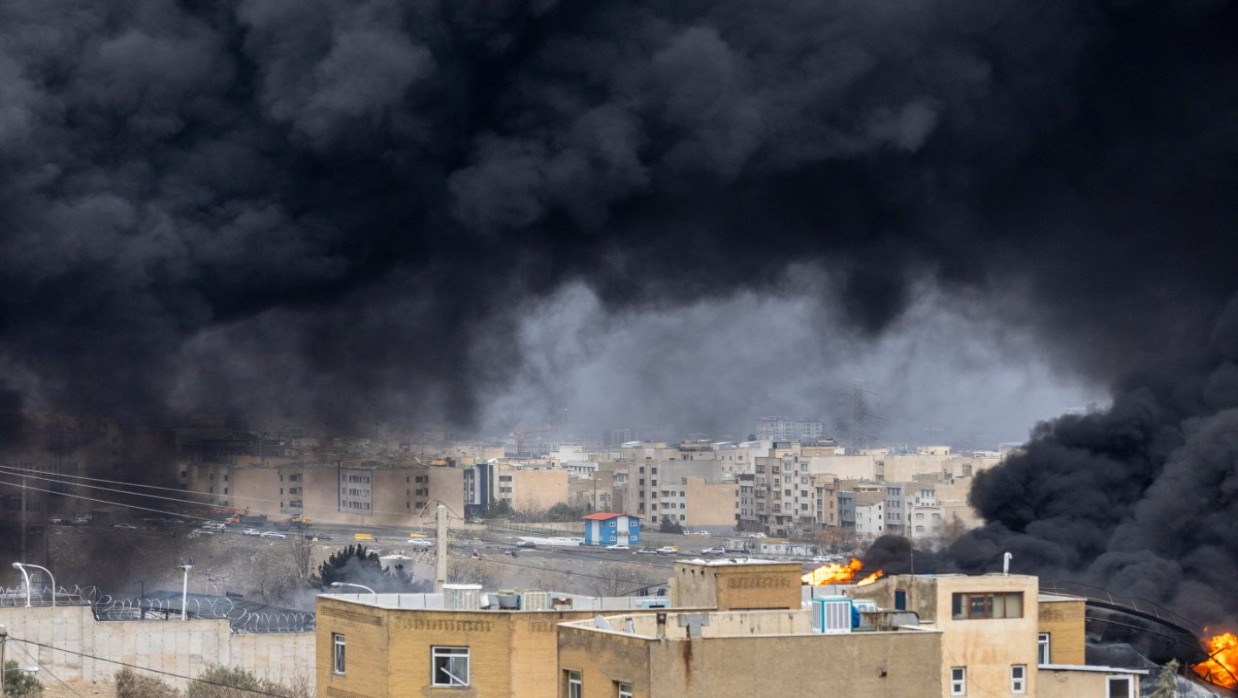
The US President Donald Trump’s calculation that Iran would buckle under overwhelming military pressure has been defied by diffused retaliation by Iran targeting American military bases, embassies and consulates, energy infrastructure and civilian locations such as airports around the Middle East with the intended objective of putting pressures on the Gulf countries to seriously ponder and question their security dependence on the US. The Trump administration’s push for a New Middle East with the demand for unconditional surrender of the Iranian regime seems to be far from success. The US and its allies who criticized Russia for violating international laws by attacking a sovereign state, Ukraine are in constant moral dilemma in arraying their arguments and rhetorical response following Israel’s massive military campaign against Gaza and its subsequent joint partnership with the US to breach sovereignty of Iran and strike its nuclear facilities in last year June and starting the current military faceoff without credible evidence of the imminence of Iranian threat. Recent opinion polls indicate that most of the American citizens oppose the current war in the Middle East. In a similar vein, opinion regarding American war alliance with Israel has also significantly become unfavorable. Lack of authorization by the Congress and preemptive strikes against Iran without credible evidence of the imminence of the Iranian threat to the US generated a perception that the Trump administration had ulterior geo-strategic objectives behind initiating the war which perfectly aligned with the anti-Iranian disposition of the Israeli government.
Limitless War
The administration’s initial belief that a heavy military campaign from the US and Israel combined would bring quick results with unbearable consequences for Iran and the latter would give in soon remained quixotic. The war entered into its second week with no signs from Iran to surrender whereas the devastations of energy infrastructure, uncertainties regarding energy supplies and the war's impacts on civilian lives are inviting more criticisms of the alliance between the US and Israel.
While Iran launched desperate strikes in its neighborhood to indirectly pressure the US for which it was criticized and it sought apologies, the Trump administration clearly sought to expand the horizon of the war when a US submarine sank an Iranian warship ‘Iris Dena’ in the Indian Ocean with a torpedo in which more than 80 sailors were killed (180 people were on board).
On the other side, President Trump was expecting the European countries would bring in their military resources to the region in support of the US and when Britain sent its aircraft carriers, he responded by saying it was a much late response from an ally and he no more needs this assistance as he had already won the war.
Many observers doubt the very purposes with which the war was initiated by the US and Israel. It is quite apparent that both powers never want a new nuclear power especially Islamic Republic of Iran for its inherent anti-American and anti-Israeli ideological propensities and operations. However, it was claimed by President Trump that the abilities of Iran to develop nuclear weapons had been degraded in last year June. This current confrontation was further characterized as a comprehensive operation to completely wipe out Iran's military capabilities by defanging its ballistic missile and drone strike capacities as well.
But wars cannot be confined to desired silos. As the objectives of the Trump administration kept shifting to invigorate the campaign, so did the trajectory of the war that moved beyond the control of the war campaigners. Energy infrastructure and energy resources began to be destroyed to an unprecedented level and lives of civilians came under constant threat as the death toll continued to inflate.
Iran carried on a low-cost war by resorting to cheap drones with the capacity to strike precise locations and mount casualties. In contrast to this, the American and Israeli operations rely on expensive military systems, missiles and aircraft carriers with clear targets within Iran and bigger devastating capabilities. They are now bent on destroying the oil depots and refineries within Iran to destroy the economic lifeline of the country and divert its military attention inward.
However, Iran has been retaliating with unstinted resolve with the sole objective of survival whereas the US remained highly sensitive to loss of lives of American soldiers. This prompted Iran to try and mount as much casualties as it can on American presence in the Middle East. Israel, on the other side, proved to be a more dedicated player demonstrating willingness to bear the losses of more material and human resources but it still needed American military support and cover. The Gulf countries are already frustrated with Israeli operations in Gaza and Lebanon since October 2023. As Israel is invigorating its military strikes against Iran and Lebanon again, the Gulf countries are becoming more uncomfortable. The American direct involvement in the war with the partnership of Israel is likely to brew a new understanding across the Middle East that hosting American military bases invite more insecurity than a sense of security.
Inconsequential War
Destroying Iran's military capabilities will not ensure peaceful and democratic regime change within the country. After the guns will fall silent, the US will have hard time making a deal with the remnants of the current regime like that happened in Venezuela. They will still remain hardliners and carry anti-American disposition and Iran's opposition remains divided and external engineering of regime change is unlikely to receive any suitable domestic client.
Decimation of the Iranian military capabilities would hardly end militancy in the region. On the other side, Israel's unbridled and indiscriminating military campaign in the Middle East is enabling the militant groups such as Hezbollah to recruit new members and fill their ranks. The Sunni Radical Islamist groups such as ISIS which has no links with Tehran's financial and economic strength will leverage the evolving disorder to their advantages in the region. Various militant groups have their own independent networks and supply chains to generate money and procure armaments. The Iranian regime's debacle would hardly spell the death knell of these groups.
In the evolving anarchic conditions, different countries are bringing their nationals back home from Gulf countries. Peace and stability, the buzzwords that characterized and boosted the economic engines of the Gulf countries by enticing the immigrants and tourists received severe blows in the evolving uncertain morbid conditions defined by tit-for-tat offensives.


0 Comments
LEAVE A COMMENT
Your email address will not be published