

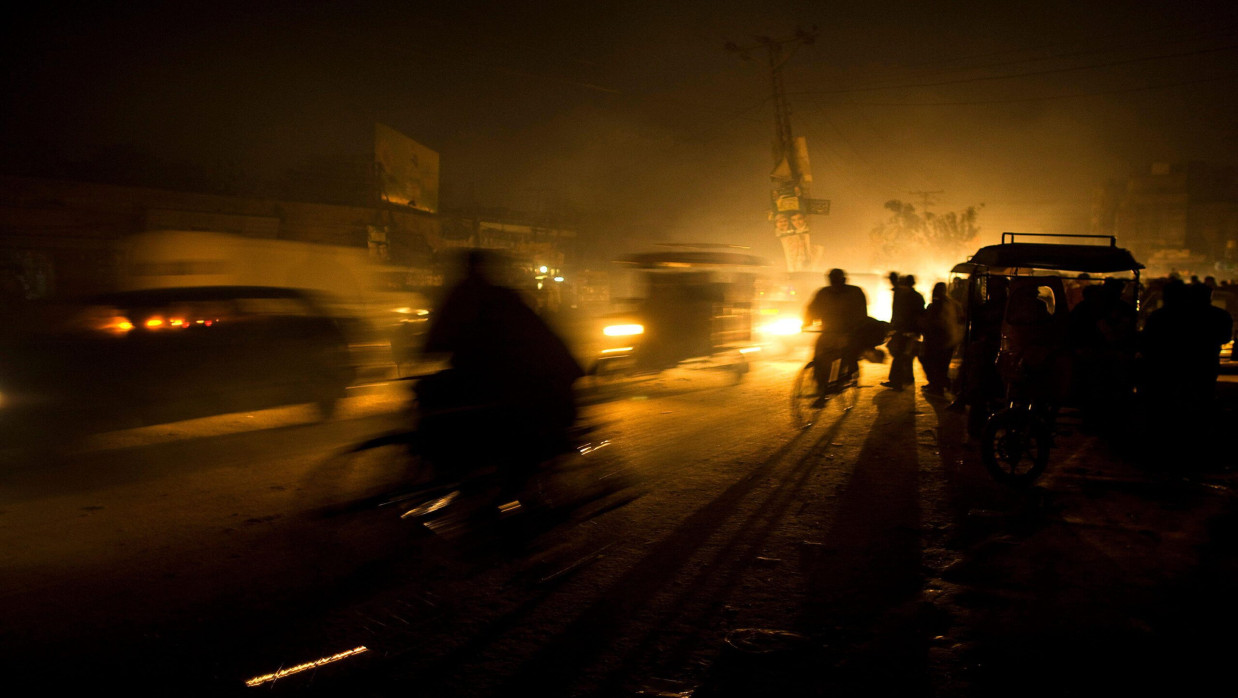
The ongoing Iran–U.S. conflict has exposed the vulnerability of oil-importing economies to geopolitical disruptions. Pakistan, with its heavy dependence on imported petroleum, limited strategic storage capacity, and constrained foreign-exchange reserves, remains particularly exposed to international oil-price shocks that can quickly translate into inflation, fiscal pressure, and higher transport costs.
Against this backdrop, Pakistan’s shift from periodic petroleum-price revisions to daily adjustments has emerged as one of the country’s most consequential and contentious energy-policy decisions. The government presents the new mechanism as a means of ensuring faster transmission of international market movements and greater transparency in fuel pricing. However, its implementation has generated strong resistance from the goods-transport sector and petroleum dealers, highlighting a broader policy challenge: market-based fuel pricing requires equally effective institutional mechanisms to manage its impact on transport costs, freight rates, and consumers.
Recent price movements illustrate the volatility created by the new system. During 22–24 August 2026, petrol was priced at Rs341.59 per litre, while high-speed diesel (HSD) stood at Rs368.29 per litre. At the same time, the government has faced pressure from transporters and petroleum dealers over the economic consequences of frequent price adjustments. The goods transporters have postponed their nationwide strike for 40 days while negotiations continue, whereas petroleum dealers have called off their planned strike following the government’s decision to increase their margin by Rs1.34 per litre.
These developments raise a fundamental question for Pakistan’s energy policy. Can daily fuel pricing be sustained without a corresponding reform of the institutional framework governing transport fares, freight rates, and fuel retailing? This article examines that question and argues that the challenge lies not in daily fuel pricing itself, but in ensuring that the broader regulatory system evolves alongside it.
The response of the goods-transport sector has been particularly significant. The All Pakistan Goods Transporters Association launched a nationwide wheel-jam strike on 8 August over rising fuel costs, daily diesel-price revisions, taxes, tolls, and other regulatory burdens. The strike continued for nine days and disrupted the movement of essential commodities and freight. On 16–17 August, transporters agreed to postpone the strike for 40 days after negotiations with federal and provincial authorities. The government sought additional time to consider the demand for replacing daily fuel-price revisions with fortnightly or monthly adjustments.
The government already imposes substantial taxes on petroleum products, including a petroleum levy of around Rs80 per litre on petrol and Rs70.82 per litre on high-speed diesel (HSD), in addition to a Rs5 per litre Carbon Support Levy (CSL) on both fuels. However, the recent reduction in the HSD price demonstrates that domestic cost factors can also create scope for consumer relief. On 20 August 2026, the government reduced the price of HSD by Rs32.63 per litre, from Rs395.69 to Rs363.06, following negotiations with local oil refineries. The petroleum minister stated that the refineries had agreed to pass on the benefit of lower domestic production costs to consumers. This development is significant because it suggests that fuel-price relief need not depend exclusively on movements in international crude prices; efficiency gains and savings within the domestic refining and supply chain can also be transferred to consumers.
Nevertheless, the continued reliance on substantial petroleum levies remains a major factor in the final retail price. Jamaat-e-Islami (JI) has continued its nationwide campaign against petroleum levy, demanding its abolition and lower fuel prices, and has staged sit-ins in major cities while warning of further escalation if the levy is not withdrawn. The government’s recent decision to pass on refinery-related savings therefore provides some immediate relief to consumers but does not address the broader debate over the structure and level of petroleum taxation.
This broader debate is closely linked to the concerns raised by the goods transport sector. The transporters’ position highlights a fundamental problem with daily fuel pricing: a freight operator may agree to a transport rate before a multi-day journey begins, while diesel prices can change during the journey. In the absence of a transparent freight-adjustment mechanism, the additional risk is either absorbed by the transporter or passed on to customers through higher freight charges. This can increase the cost of food, industrial input, construction materials, and other goods.
The country's largely private and fragmented transport sector is ill-equipped to absorb frequent price fluctuations. Without a transparent and institutionalized transport fare adjustment mechanism, daily fuel pricing risks amplifying inflationary pressures rather than improving market efficiency. Decision has also exposed the fragility of the government’s repeated claims of economic stability.
Petroleum dealers have also challenged the new system, although their principal concern has been the adequacy and predictability of their retail margin. The Pakistan Petroleum Dealers Association threatened a nationwide strike after negotiations with the government failed, citing the impact of daily pricing and its long-standing demand for a higher dealer margin. The government subsequently approved a Rs1.34 per litre increase in the dealer margin, from Rs8.64 to Rs9.98 per litre, and the dealers called off the planned strike. The revised margin is scheduled to take effect from 1 September 2026.
The decision to move from fortnightly to daily petroleum price adjustments is being presented as a step toward market efficiency and transparency. Leading developed economies have already adopted daily fuel pricing mechanisms. However, unlike developed economies that provide subsidized public transportation or operate under regulated fare mechanisms, Pakistan relies predominantly on privately operated buses and coaches for intercity travel, and on privately operated buses, minibuses, chingchis, and rickshaws for urban commuting.
These developments reveal an important distinction. Goods transporters are primarily challenging the uncertainty created by daily diesel pricing and its implications for freight costs, while petroleum dealers have focused more strongly on retail margins, inventory risk, and the commercial viability of petrol stations. Nevertheless, both disputes demonstrate that the transition to daily pricing has exposed weaknesses in the institutional framework surrounding petroleum distribution and transport.
In this largely deregulated environment, effective monitoring and enforcement are virtually non-existent, resulting in frequent and often arbitrary fare increases that impose an undue financial burden on commuters and fuel widespread public outrage. Likewise, the fares charged by app-based ride-hailing services, which are widely used by lower-middle-income commuters, remain largely unregulated, with little effective oversight or fare control.
Without a transparent and well-defined transport fare adjustment mechanism, the introduction of daily fuel pricing could create uncertainty for transport operators and commuters, complicate fare regulation, and add to inflationary pressures.
Adopting a daily fuel-pricing mechanism is not unusual. What matters, however, is the institutional framework that accompanies it. In many developed economies, fuel prices may be adjusted frequently in response to international market conditions, but public transport fares are not revised every day. Instead, fares are generally reviewed periodically, often annually or semi-annually, using transparent cost-index formulas administered by independent transport authorities, with targeted subsidies where necessary. This allows fuel prices to reflect market conditions while keeping public transport fares relatively stable, predictable, and affordable.
Pakistan’s transport sector differs fundamentally from this model. Intercity passenger transport is largely privately owned and operated, while urban mobility depends heavily on privately operated buses, minibuses, chingchis, and rickshaws. Freight transportation is similarly fragmented, comprising many small and medium-sized operators. In such a decentralized system, frequent changes in diesel prices can quickly translate into higher passenger fares and freight charges. At the same time, reductions in fuel prices may not be passed on with the same speed or magnitude. This asymmetry can increase the cost of transporting people and goods, reinforce inflationary expectations, and weaken public confidence in the benefits of lower fuel prices.
The solution, therefore, is not necessarily to abandon daily fuel pricing but to establish a predictable mechanism for adjusting transport fares. Pakistan could retain daily petroleum-price adjustments while reviewing passenger and freight fares monthly or quarterly based on average diesel prices. Fare revisions could also be triggered only when fuel prices move beyond a predetermined threshold, such as 10–15 percent. An independent transport-fare commission could oversee the process, supported by publicly available cost calculations and clearly defined adjustment formulas. Such a framework would reduce reliance on ad hoc negotiations between transport operators and government authorities.
The recent confrontation with goods transporters demonstrates why such reforms are necessary. Their 40-day postponement of the nationwide strike should be viewed not simply as a temporary resolution but as an opportunity to establish a more durable framework for freight-rate adjustments. At the same time, the government needs to address other cost pressures facing the transport sector, including toll charges, withholding-tax arrangements, axle-load regulations, and related compliance costs. Similarly, the increase of petroleum dealers’ margin by Rs1.34 per litre has addressed immediate commercial concern and helped avert a strike, but it does not resolve the broader institutional challenges created by frequent fuel-price changes.
Ultimately, the issue is not whether Pakistan should have daily fuel prices, but whether its transport and regulatory institutions can function alongside them. Daily pricing can improve the transmission of international market signals, but without transparent fare-adjustment rules and credible regulatory oversight, the resulting price volatility can simply be transferred from fuel suppliers to transport operators, businesses, and consumers. Pakistan therefore needs to modernize its transport-pricing and regulatory framework at the same pace as its petroleum-pricing system. This would allow fuel prices to respond to market conditions while ensuring that the costs and benefits of those changes are distributed more fairly across the economy.


0 Comments
LEAVE A COMMENT
Your email address will not be published