

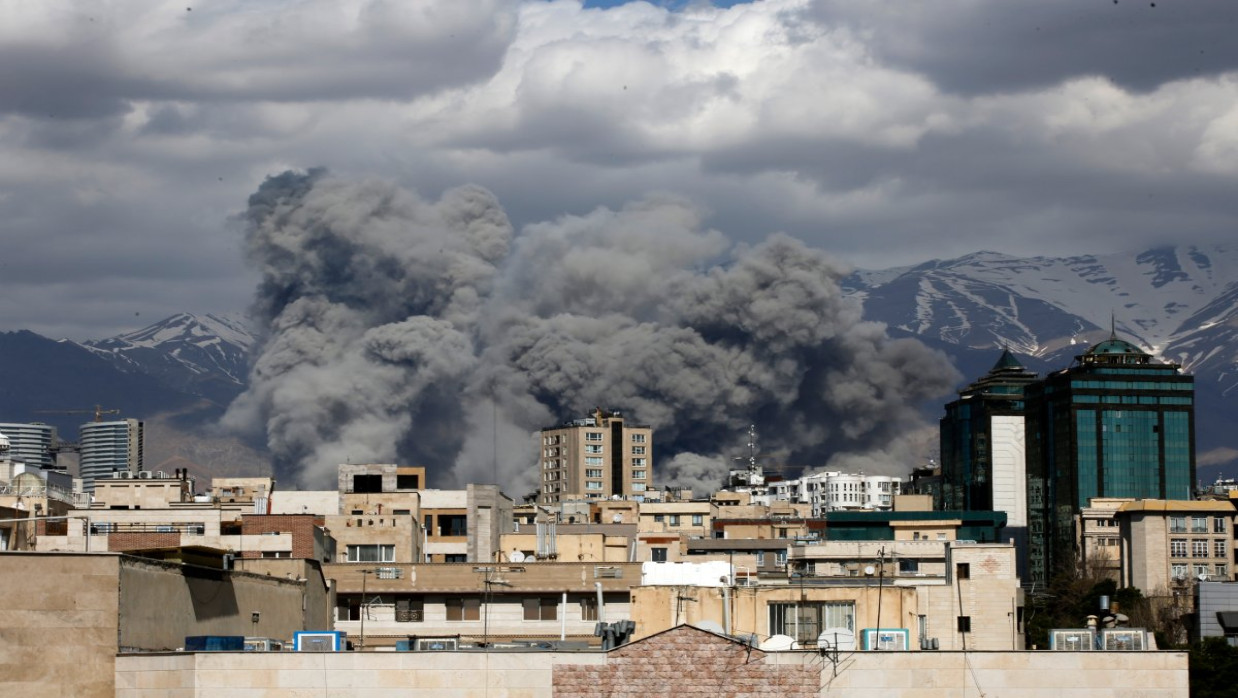
The US-Israel joint military campaign in the Middle East is often viewed through a geopolitical lens: Iran’s drive for nuclear capability and regional dominance set against American and Israeli efforts to deny Tehran that power. As the conflict unfolded, Iran’s drones, missiles, and control of vital choke points like the Strait of Hormuz emerged as potent strategic assets. The campaign sought to dismantle those capabilities by targeting air defences, naval fleets, and intercepting Iran’s missile barrages.
Yet the prevailing narrative largely sidesteps the war’s impact on identity politics. From the outset, the campaign aimed to marginalize Shiite communities, most visibly through the killing of Supreme Leader Ayatollah Ali Khamenei. Revered as a spiritual figure by Shiites well beyond Iran’s borders, his death sent shockwaves through Pakistan, Bahrain, and beyond, where grief quickly turned to protest.
In Pakistan, grief over Khamenei’s death spilled into the streets, with some demonstrations turning violent as protesters hailed him as their religious guide. In Bahrain, where Shiites form the majority yet live under a Sunni monarchy, mourners clashed with security forces while voicing solidarity with Iran.
Solidification of Shiite Identity
Meanwhile, Israeli operations in Lebanon have not only degraded Hezbollah’s capabilities and leadership structure since late 2023 but also unsettled the delicate sectarian balance within the state. Shiite civilians bore a heavy toll, with many killed in the strikes. Reports emerged of Israeli officials urging Christian and Druze communities in southern Lebanon to expel their Shiite neighbours, further deepening communal fractures. Driven by existential fear, Hezbollah entered the war in March this year and unleashed rockets into Israel despite its weakened state and fragile structure. Israel responded by pushing its offensive beyond southern Lebanon, displacing more than a million people, with Shiites bearing the heaviest toll. The scale of Israel’s campaign in Lebanon stirred deep anxiety among Shiites about their very survival.
The collapse of the Assad regime in Syria and the rise of Ahmed al-Shara’s Sunni jihadist-rooted government has left Syria’s Shiite population dangerously exposed. The shift threatens to ripple into Iraq, fuelling cross-border instability and emboldening Sunni radical groups like ISIS.
Across the Middle East, Shiite communities remain politically side-lined, even where they form the majority. In Bahrain and the Gulf states, their numbers have not translated into power. Iraq’s Shiites gained political prominence only after Saddam’s fall, yet their standing rests on a fragile balance with other sects, much like the precarious equilibrium in Lebanon. The war seriously challenged the delicate balance between various sectarian communities.
In Iraq, repeated US and Israeli strikes on Popular Mobilization Forces (PMF) positions eroded the militias’ restraint. The PMF is not just part of Iraq’s armed forces: it is the central pillar of Shiite power since 2003. The group had stayed on the side-lines during Israel’s campaign against Hezbollah after the October 7, 2023 Hamas attacks, and during the US-Israel strikes on Iran last June. But the militia group broke silence when this war came to be seen as existential, not only by Iran but by Shiite communities at large. The PMF began to strike drones and rockets at US military bases and diplomatic presence in Iraq.
In Lebanon, the diverse Shiite communities are coming together under the external pressures from Israel. For instance, Hezbollah and Amal- two significant Shiite political movements with mutual tensions joined hands in opposing the Lebanese government's decision to expel Iran's ambassador from Beirut. Sustained military pressures from the US and Israel could groundswell the support of Shiites for Iran and its proxies and contribute to communal tensions across the Middle East.

0 Comments
LEAVE A COMMENT
Your email address will not be published