

Power Beyond Politics
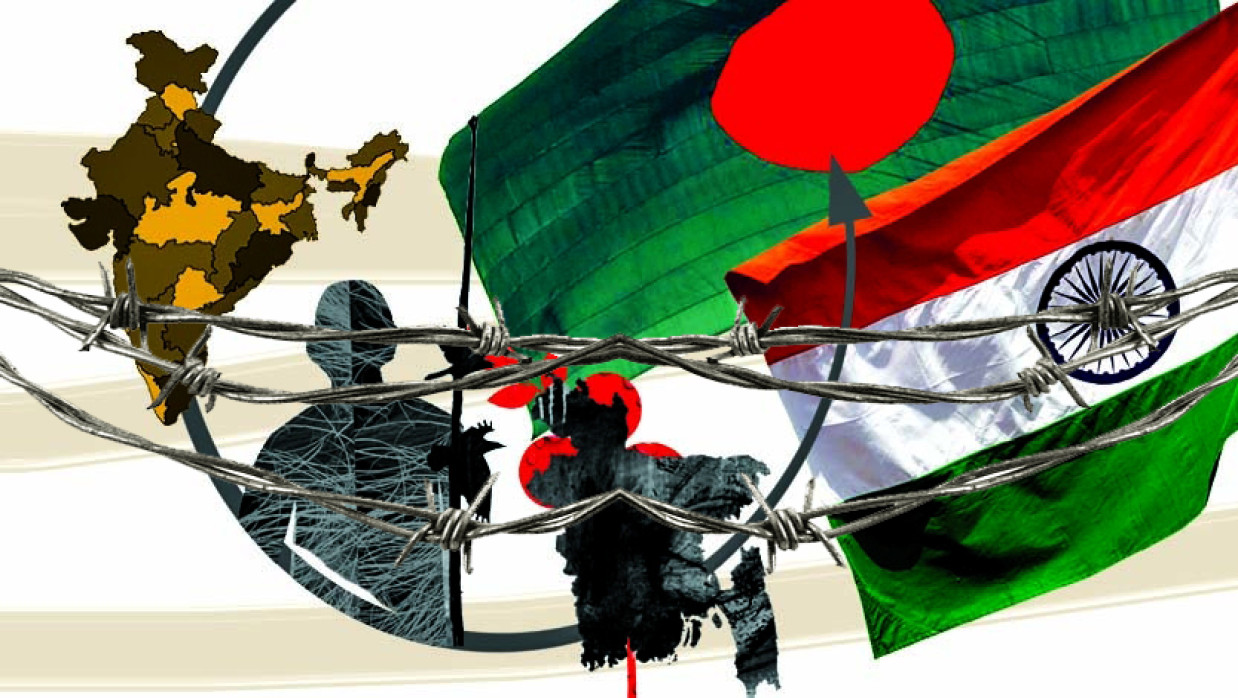
The relations between India and Bangladesh have been analyzed from the perspective of geopolitics, trade agreements, water-sharing issues, and security considerations. But beyond all of this, there is something much more deeply rooted in the link between both countries – their cultures. Unlike politics and diplomacy, culture does not operate through negotiation but crosses borders in subtle ways, shaping human imagination and identity. The reality is that India's cultural products (movies, television shows, music, the internet, and fashion) have permeated Bangladeshi society in a rather seamless way.
To analyze this cultural influence, one must refer to Antonio Gramsci and his approach to culture and power. Gramsci argues that culture is an important means of power, enabling elites to maintain hegemony in society by creating consent. Therefore, India's cultural impact upon Bangladesh can be viewed as a manifestation of soft power, making foreign cultural norms seem desirable and inevitable.
Gramsci’s Concept of Cultural Hegemony
Gramsci's concept of cultural hegemony was developed while the Italian scholar was in prison during fascism in Italy. According to Gramsci, hegemony is not based on compulsion, but on intellectual and moral leadership. The hegemonic ruling class maintains control over social institutions that shape knowledge, such as schools, the press, churches, and entertainment industries, to construct hegemonic discourse.
The process of hegemony creation in social institutions leads to the internalization of the value system of dominant groups without being realized. As a result, people become subconsciously influenced by the aesthetics, cultural expressions, and morality of the dominant group. It is critical to note, however, that hegemony does not operate in an absolute manner but rather through constant counter-hegemony negotiations.
In relation to South Asia, hegemonic processes help us understand how India exercises cultural dominance in the region. Bangladesh becomes a battleground for cultural contestation because it is heavily influenced by Indian culture and its cultural products.
Historical Context: Shared Roots, Unequal Flows
The cultural interconnections between Bangladesh and India stem from their shared history and linguistic background. While the Partition of British India divided one territory into two independent countries, it left behind a strong connection between them through a shared language, common literary works, and culture. In addition, the creation of Bangladesh as a result of the Bangladesh Liberation War established the national identity in the form of Bangladesh's language and culture.
Nevertheless, although they share a common culture, the paths of development after independence were quite different. In particular, a populous country with a developed economy and media industry, such as India, has great potential to produce a large number of cultural goods. In contrast, Bangladesh was characterized by rather poor economic development and less cultural production.
This inequality resulted in a one-sided cultural process. Indian culture, especially from West Bengal and the Hindi film world, was more available and influential in Bangladesh than Bangladeshi culture in India. This disparity is central to the idea of cultural hegemony because cultural hegemony is not only a question of shared culture; it is also a matter of power.
Media Dominance: The Machinery of Consent
The media is one of the best tools for promoting cultural hegemony, and in Bangladesh, the Indian media has gained considerable popularity. Bollywood films have become popular worldwide. Bollywood films are usually budget-friendly, market-driven, and celebrity-driven. These films make for quite an interesting watch for the people of Bangladesh.
However, the part that television plays cannot be ignored. Television serials dubbed or subtitled into Bengali from Indian serials have been the core of prime-time television for a long time. The serials of India are not meant solely for entertainment; rather, their themes revolve around family, gender, mobility, and morality. Over time, one begins to identify with such themes.
The emergence of digital platforms has only increased this cultural flow, and now Indian movies and television series can be accessed easily through various applications, evading the regulations that govern traditional channels. This continuous cultural flow and exposure create manufactured consent among the audience, as per Gramsci’s definition of hegemony.
Language and Cultural Identity: Subtle Transformations
Language holds a very special status in the identity of the people of Bangladesh, especially considering the importance of the Language Movement of 1952. Language goes beyond mere communication because it represents struggle and pride for this nation. However, cultural exchanges with the Indian subcontinent have resulted in minor linguistic changes that can be attributed to cultural hegemony.
Hindi terms have become popular among young Bangladeshis through the Indian media. This process is amplified on social networking sites, which create new meanings through hybrid languages. People tend to mix English, Hindi, and Bengali in their speech, reflecting complex cultural identities.
Such changes do not mean that Bengali identity gets compromised, as they transform it. Using certain terms from the language of India's media demonstrates how cultural hegemony works through assimilation. In other words, it does not involve replacing the Bengali language but alters it culturally over time.
Consumer Culture and Lifestyle Aspirations
Beyond notions and ideology, cultural hegemony even encompasses consumption and lifestyles. The cultural hegemony of India is evident in Bangladeshi consumption patterns across fashion, weddings, food habits, and other lifestyle choices. Particularly in the case of Bollywood, there has been an increasing impact on people's lives.
Fashion from Indian companies is extremely popular in Bangladesh. People are found to prefer items that are commonly promoted in the Indian media. Also, Indian food items and cuisines have had a strong impact on Bangladeshi families.
These patterns illustrate how cultural hegemony operates through desire. People do not feel coerced into adopting these practices; rather, they willingly embrace them as symbols of status, modernity, and sophistication. In Gramscian terms, this represents the internalization of hegemonic values within everyday life.
Digital Platforms: The New Frontier of Influence
The emergence of digital platforms has changed the nature of cultural influence, making it more instantaneous and algorithmic. Social media platforms like YouTube and TikTok have made it possible for Indian content creators to connect with the Bangladeshi audience with minimal effort.
Algorithms are key in sustaining cultural influence through digital platforms. Content that receives positive responses is further promoted, creating a feedback loop that amplifies cultural influence. The high quality and quantity of Indian content make it dominant on digital platforms, increasing its chances of receiving recommendations and consumption.
Cultural influence is strengthened in the digital age because it becomes an integral part of people’s daily activities.
Resistance and Counter-Hegemony in Bangladesh
However, despite the significant presence of Indian culture, Bangladesh has shown itself to be quite resilient to external influence, successfully retaining its cultural uniqueness. In this case, it is necessary to pay particular attention to the phenomenon of counter-hegemony developed by Antonio Gramsci, which concerns subalterns' capacity to challenge the hegemony of the ruling group and build their own cultural space.
Over the last few years, Bangladesh has attempted to popularize its national cinematography, music, and literature. The government of Bangladesh has taken measures to curb the influence of foreign mass media, while various cultural associations have organized numerous festivals celebrating native traditions. At the same time, the work of local internet artists adds diversity to Bangladeshi culture. All these activities can be regarded as part of Bangladesh's dialogue with the world.
Geopolitical Implications: Soft Power and Sovereignty
The cultural dominance of India in Bangladesh is not just a matter of physical geography. Rather, it forms part of a wider cultural diplomacy program which helps India boost its status both regionally and globally, as well as create perceptions of familiarity and affinity towards its culture.
Such dominance poses challenges to Bangladesh's cultural sovereignty. Though cultural exchange is inevitable in a globalized world, it may result in dependency and underproduction of cultural artifacts locally.
These issues take on a more geopolitical hue, inasmuch as cultural affinity may influence public opinion and, ultimately, diplomatic policymaking.
Conclusion: Negotiating Identity in a Shared Cultural Space
In light of Antonio Gramsci's ideas, the cultural impact of India in Bangladesh may be seen as an intricate manifestation of hegemony an influence that works through attraction and normalization rather than by force. This highlights the role of culture in shaping not only people’s consumption patterns but also their thought processes and aspirations.
However, this is neither a unilateral nor a linear development. Bangladesh has continued to make its mark, drawing upon its rich cultural tradition and creativity. The dialogue between Indian influence and Bangladeshi cultural identity is marked by both similarities and differences.
The final outcome of this cultural discourse would depend largely on achieving balance in terms of equality of exchange rather than asymmetry and on preserving cultural diversity despite geographical proximity.


0 Comments
LEAVE A COMMENT
Your email address will not be published