

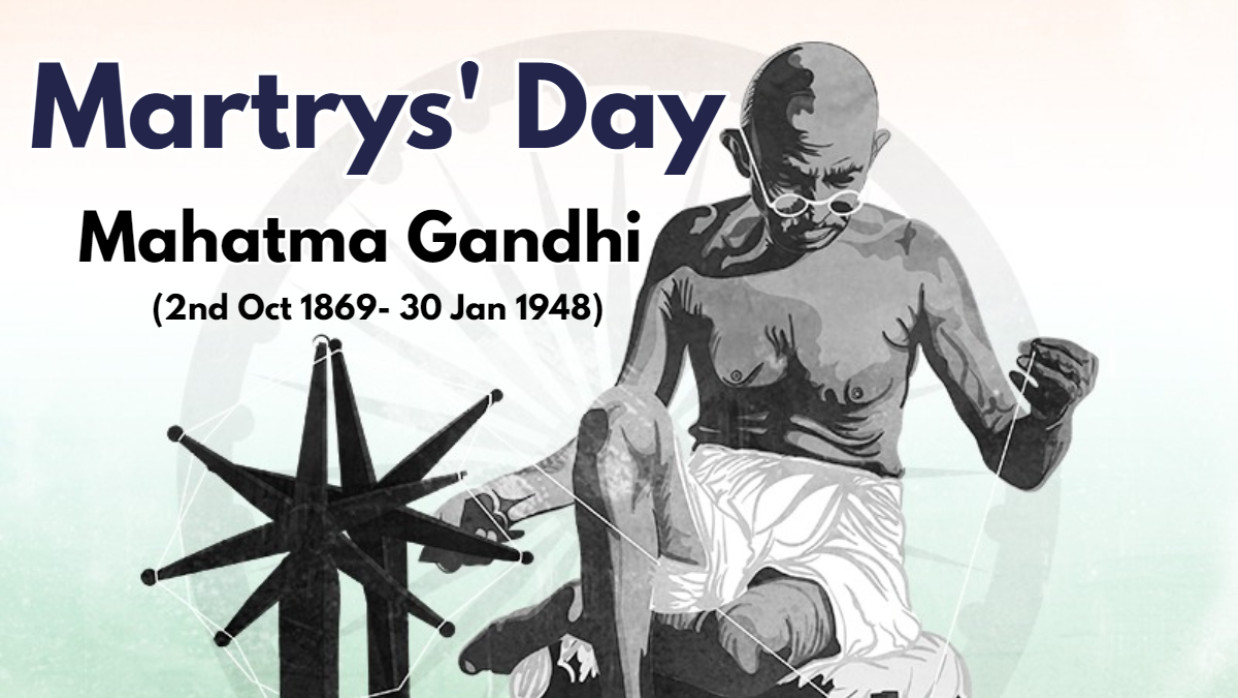
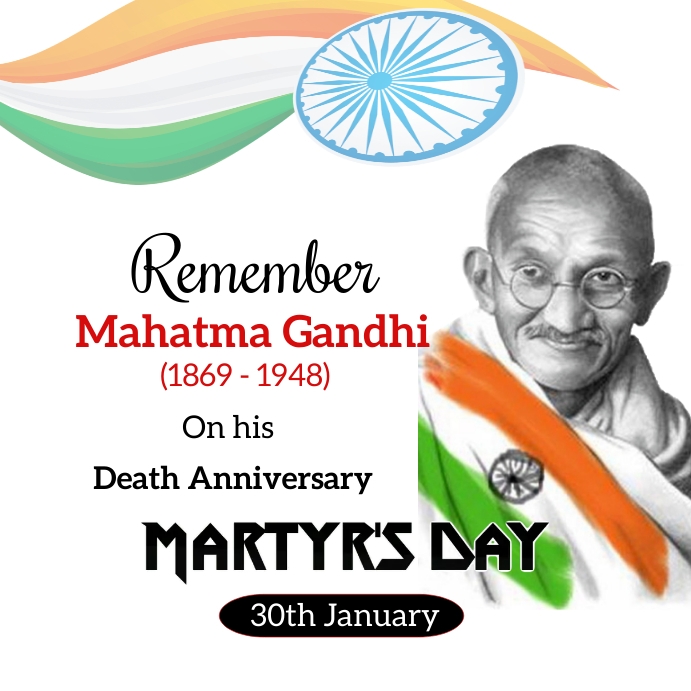
Every year on 30 January, India solemnly observes the death anniversary of Mahatma Gandhi, the father of the nation and the moral architect of its freedom struggle. Wreaths are placed at Rajghat, official statements extol his commitment to truth and non-violence, and political leaders perform ritual gestures of reverence. Yet beneath this annual ceremony lies a troubling paradox: the India being governed today stands in sharp contradiction to the India that Gandhi imagined, fought for, and ultimately died defending. The distance between Gandhian ideals and contemporary political reality has never been wider.
Gandhi was assassinated in 1948 by Nathuram Godse, a man whose ideological worldview was shaped by Hindu nationalist currents that viewed Gandhi’s inclusive vision as betrayal. Godse opposed Gandhi’s insistence on Hindu-Muslim unity, his rejection of communal politics, and his belief that moral restraint must guide political power. Gandhi understood that a nation born in hatred would never achieve lasting freedom. Tragically, the forces that once justified this hatred have not disappeared; they have re-emerged at the center of political authority.
The Rashtriya Swayamsevak Sangh (RSS), which Gandhi once described as a “communal body with a totalitarian outlook,” now exercises decisive influence over India’s ruling Bharatiya Janata Party (BJP). This ideological lineage matters because it explains the growing hostility toward Gandhi’s legacy. While the BJP leadership publicly claims ownership of Gandhi’s memory, sections of its political ecosystem openly undermine him. Statements glorifying Nathuram Godse as a patriot or a “worthy son of India” are not isolated provocations; they reveal a deeper discomfort with Gandhi’s moral authority.
Gandhi’s Hinduism was profoundly inclusive. He rejected religious exclusivity and believed that faith must cultivate compassion, humility, and coexistence. For him, Hinduism could not exist in opposition to Islam or Christianity; India’s civilizational strength lay in its pluralism. Today, however, the dominant political narrative increasingly portrays Muslims and Christians as “internal threats” to the nation. Through discriminatory laws, selective enforcement, and polarizing rhetoric, the secular fabric of the Indian polity is steadily unraveling—directly contradicting Gandhi’s vision of India as a shared moral community.
Perhaps the most disturbing aspect of this transformation is the selective appropriation of Gandhi’s symbolism alongside the systematic erosion of his legacy. Political leaders invoke Gandhi’s name in speeches and ceremonies, yet policies and practices reflect values he consistently opposed. Gandhian institutions are weakened, his philosophy is reduced to token slogans, and even welfare programs once explicitly associated with his name have been quietly rebranded. This is not a coincidence but ideological intent—an effort to hollow out Gandhi’s moral presence while retaining his image for political legitimacy.
Gandhi consistently warned against the militarization of society and the securitization of identity. He feared that defining nationalism through force, uniformity, and exclusion would corrupt both state and society. In contrast, contemporary India increasingly embraces a hard, securitized, and majoritarian worldview. National unity is enforced through coercion rather than consent, dissent is equated with disloyalty, and diversity is treated as a vulnerability instead of a strength. This represents not an evolution of the freedom struggle, but a repudiation of its ethical foundations.
Ironically, Gandhi continues to haunt Hindu hardliners precisely because his ideas expose the moral bankruptcy of exclusionary nationalism. His insistence on Hindu-Muslim unity challenges the narrative of civilizational conflict. His rejection of revenge politics undermines the glorification of strength through domination. This explains the growing attempts to diminish his stature—by portraying contemporary leaders as “bigger brands” than Gandhi, or by reframing history to suit ideological convenience.
True homage to Gandhi cannot be performed through rituals alone. It requires moral courage—the willingness to reject the ideology that justified his assassination and continues to echo in today’s politics. Honoring Gandhi means defending secularism, safeguarding minority rights, and restoring ethics to governance. It means choosing dialogue over division and justice over dominance.
On Gandhi’s death anniversary, India faces a stark choice between memory and meaning. Ritual remembrance preserves Gandhi’s image, but only ethical commitment can preserve his India. To honor Gandhi in words while erasing him in practice is not remembrance—it is betrayal. Until India confronts this contradiction, January 30 will remain not just a day of mourning, but a reminder of a republic drifting away from its moral soul.

0 Comments
LEAVE A COMMENT
Your email address will not be published