

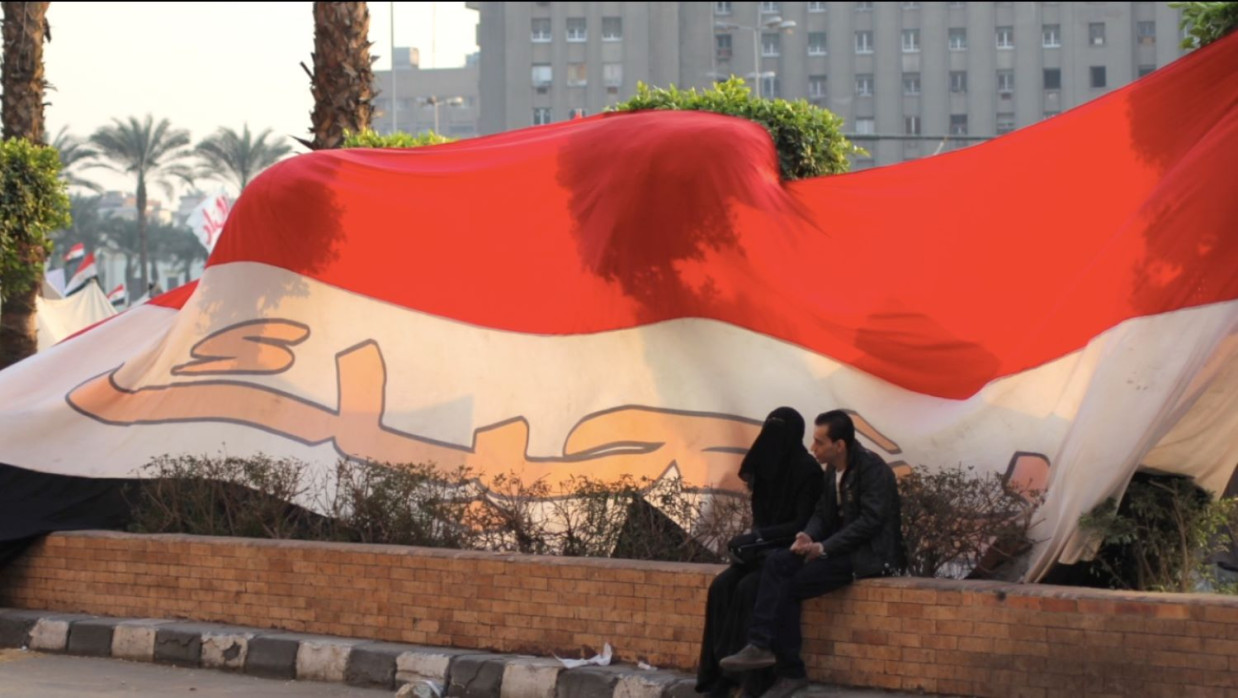
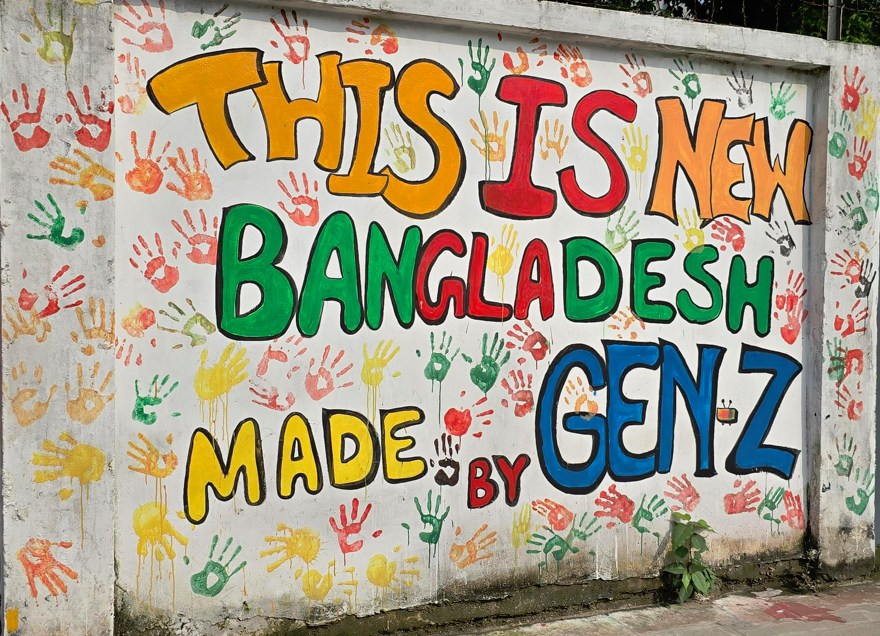
Egypt’s 2013 political crisis and Bangladesh’s current moment are not identical, but the parallels are striking enough that Bangladesh should study Egypt’s experience carefully. As nearly 128 million voters prepare to choose their representatives and vote on the July Charter on February 12, the country stands at a fragile crossroads. Bangladesh’s political future is not predetermined: it has a more active civil society than Egypt did, a more pluralistic media landscape, and a citizenry fiercely attached to electoral politics. Yet these strengths exist alongside deep vulnerabilities that echo Egypt’s ill‑fated democratic experiment.
The most important lesson from Egypt is that democracies collapse not because electorates choose the wrong leaders, but because powerful institutions refuse to accept the outcomes of democratic processes. Egypt’s brief democratic opening did not fail because of Mohamed Morsi’s governance choices; it failed because the military, intelligence agencies, police, judiciary, and bureaucracy—the “deep state”—never accepted civilian authority.
In Bangladesh today, the military does not overtly seek power, but it is undeniably a decisive force behind the scenes. Its expanded deployment, its management of security since the 2024 uprising, and its temporary sheltering of political figures—including senior Awami League (AL) leaders—underscore the extent of its influence. With the police weakened, the bureaucracy politicized, and intelligence agencies active in political matters, Bangladesh risks a situation in which the winner of the election may not be the actor who ultimately governs unless institutions are allowed to operate independently and professionally.
Another lesson from Egypt is the danger of excluding major political forces. The sidelining of the Muslim Brotherhood before and after the coup destroyed the legitimacy of Egypt’s electoral system and removed millions of voters from meaningful participation. Bangladesh’s ban on the Awami League creates a similar risk. Millions of AL supporters now find themselves without formal representation. Some may vote for the BNP, which some analysts view as functioning like a “B‑team” for the AL, but others may withdraw entirely or resort to more unpredictable forms of political expression. When a major segment of society is excluded, polarization deepens and elections lose their ability to confer legitimacy. What follows is not democratic consolidation, but a zero-sum struggle in which groups fight not to win the next election, but to survive it.
Polarization of this sort creates a vacuum that powerful institutions—most often the military—can fill in the name of restoring stability. Egypt entered 2013 divided among Islamists or (more correctly) Muslim democrats (who believed that Islam and democracy can coexist), secularists, old-regime loyalists, and a restless population that had lost patience with the slow pace of revolutionary change. Compromise became impossible, and into that breach stepped the military. Bangladesh’s polarization and divisions today, while different in origin, are similarly intense. The opposition is fragmented; the youth, both inside and outside the National Citizen Party (NCP)—formed out of the student movement that helped topple Hasina—are pushing forcefully for a new political order built on justice, transparency, and non-discrimination; and the establishment—comprising the civil service, judiciary, and security organs—tends to favor gradual change over sweeping reform.
The 2024 uprising widened these divides, leaving many Bangladeshis with lingering anger and a sense that justice has not been delivered. Some BNP factions have absorbed former Awami League figures and inherited several AL‑dominated syndicates, deepening public suspicion. Many citizens feel that past abuses by political actors or parts of the security sector remain unaddressed. A banned ruling party now functions underground or from abroad, echoing Egypt’s post‑Brotherhood dynamics where exclusion drove supporters into informal networks, making reconciliation harder. When trust collapses to this degree, elections become less meaningful than street mobilization, and the system begins drifting toward authoritarian outcomes regardless of who wins.
A further lesson from Egypt is that elections without trust are politically worthless. Egypt’s 2012 election was initially seen as legitimate, but within a year public confidence had eroded so thoroughly that a coup could be framed as a corrective. Bangladesh’s electoral system has endured decades of boycotts, accusations of rigging, and repeated breakdowns of trust. Many citizens doubt that the 2026 election will be free from manipulation. In such an environment, the challenge is not only to hold an election but to ensure that the result restores legitimacy. If citizens do not believe the system reflects their will, they may turn to protest or alternative power centers, creating an opening for unelected actors to intervene.
External actors can accelerate or impede democratic transitions. Egypt’s coup was strongly backed by the UAE, Kuwait and Saudi Arabia, who saw the Muslim Brotherhood as a threat. Bangladesh’s election is unfolding in a tense geopolitical environment involving India, China, and the United States, each with its own interests. The unresolved controversy surrounding the killing of Osman Hadi and the suspect’s flight to India has heightened public suspicion and injected foreign policy tensions directly into domestic politics. As Egypt’s experience shows, external support for particular factions can distort domestic political competition and weaken democratic institutions at their most vulnerable moments.
Elections held in climates of fear, exclusion, or mistrust are also more likely to produce violence. Egypt’s coup was followed by the Rabaa massacre and a brutal crackdown that extinguished political dissent. Bangladesh now faces its own risks. The security forces are stretched thin; tension is high in both urban and rural areas; and unresolved grievances from the uprising continue to circulate. As February 12, 2026, election approaches, the likelihood of violence—before, during, or after the vote—is real. Egypt teaches that when political transitions occur under severe strain, violence is often the outcome rather than the exception.
The overarching lesson is that democracy fails when it is designed to fail—when key actors rig the playing field long before the election, when institutions are unwilling to accept the results, and when external and internal forces align to subvert the process. Bangladesh must confront this question honestly: are its most powerful institutions prepared to respect the election outcome regardless of which coalition wins? If not, the country risks repeating Egypt’s tragic arc, where elections were held but ultimately rendered meaningless.
Despite these risks, Bangladesh still possesses the opportunity to steer its politics toward a more inclusive, durable democratic order. The country’s people have demonstrated extraordinary resilience through years of struggle, protest, and sacrifice. If Bangladesh can uphold inclusiveness, foster institutional neutrality, ensure transparency, and restore trust in its electoral process, February 12, 2026, could mark a genuine turning point—one that avoids the fate of Egypt and opens the path to a more just, accountable, and stable political future. In the end, a nation’s democratic destiny is shaped not only by its institutions but by the willingness of its people to defend the integrity of their political system. Bangladesh still has the chance to affirm that elections matter, that citizens’ voices count, and that the country’s future will be determined not by deep-state maneuvering or foreign pressure, but by the collective aspirations of its own people.

0 Comments
LEAVE A COMMENT
Your email address will not be published